Why Sun Salutation Sequences Vary Across Yoga Lineages
Compare different Sun Salutation lineages to find a sequence that matches your physical needs and goals.
https://primetempr.com/blog/why-sun-salutation-versions-differ-a-practical-guide
If you have ever attended a yoga class and felt confused because the "Sun Salutation" looked entirely different from the one you practiced the week before, you are not alone. You might find yourself in a fast-paced class jumping through transitions, only to attend a different session where the movements are slower and include different lunges or floor-based postures. This often leads to a common question: which version is the "correct" one?
The reality is that Sun Salutation variations are not "right" or "wrong" versions of a single standard. Instead, they are intentional adaptations designed for different movement goals, lineages, and physical needs. There is no universal governing body for yoga that dictates a single sequence for Surya Namaskar (the Sanskrit name for Sun Salutation). Understanding why these differences exist can help you move away from the frustration of trying to find a "perfect" sequence and toward a practice that actually supports your current mobility and energy levels.
Why Sun Salutations Look Different in Every Class
The primary reason for the variation you see in studios and online is that yoga styles vary significantly. Because yoga combines postures, breathing, and meditation in different ways depending on the tradition, the benefits and structures of specific practices are often described with uncertainty. What one style prioritizes as a "standard" warm-up, another might view as an advanced strength-building sequence.
In many modern yoga environments, the Sun Salutation is a foundational "vinyasa" or flow. However, the specific poses included in that flow are often at the discretion of the teacher or the specific lineage they follow. For example, a Hatha yoga class might use a version that includes a low lunge to focus on hip mobility, while an Ashtanga-influenced class might use a version that emphasizes upper body strength and rhythmic breathing.
This lack of a single standard is a feature of yoga, not a bug. It allows the practice to be adapted to different environments and populations. However, for a student, this can lead to a "failure mode" where you try to force your body into a version you saw online or in a previous class, assuming it is the only way to practice. This can lead to unnecessary strain or a feeling of discouragement if a specific version feels inaccessible.
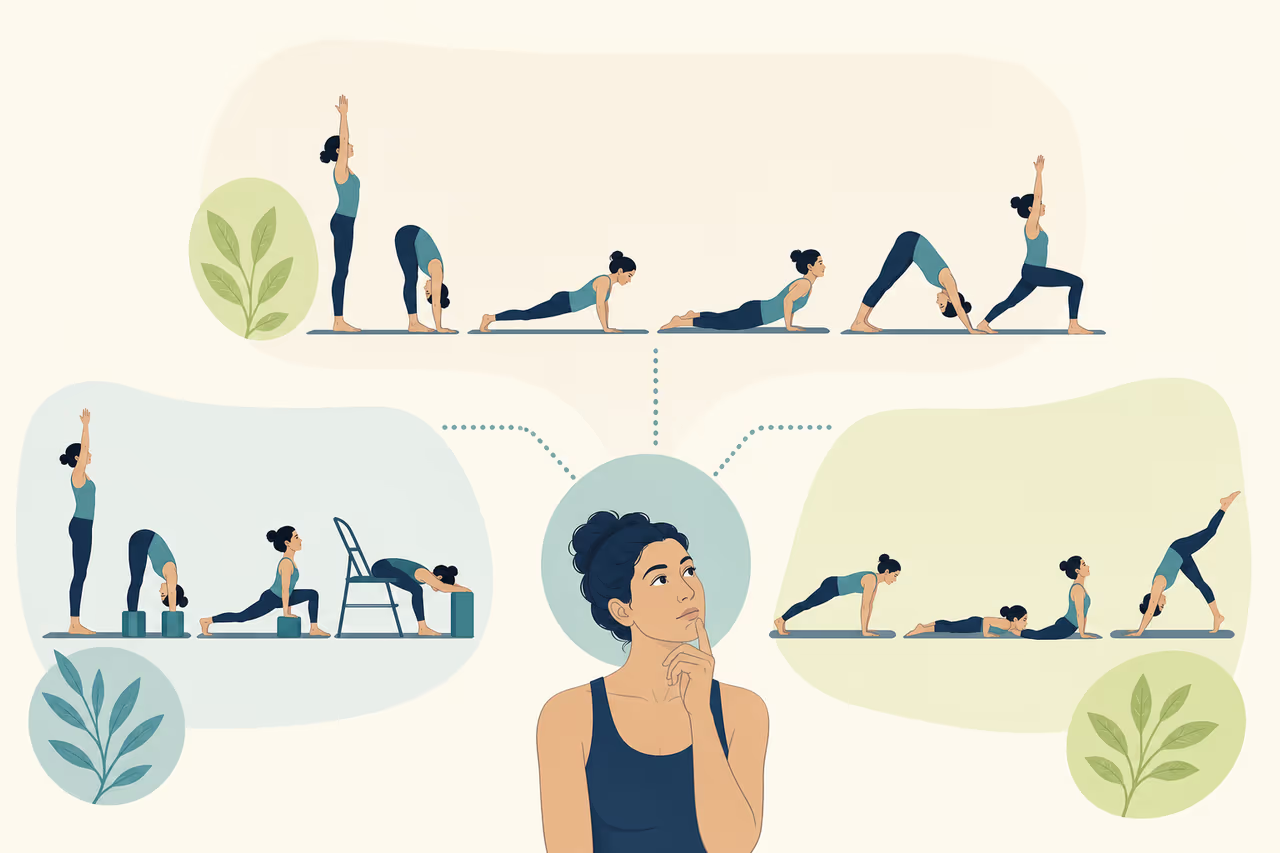
The Role of Lineage and Intent
The structure of a Sun Salutation is usually shaped by two factors: the lineage of the yoga style and the specific intent of the class.
Lineage and Tradition
Different schools of yoga have developed their own signature sequences over decades:
- Ashtanga Yoga: This style uses two specific sequences (Surya Namaskar A and B) that are practiced exactly the same way every time. The goal here is often consistency and building internal heat.
- Hatha Yoga: Often focuses on slower movements and may include more variations in the lunges or the way the body moves from the floor back to a standing position.
- Vinyasa Flow: This is where you will see the most variety. Teachers often "remix" the Sun Salutation to prepare the body for a specific "peak pose" later in the class.
Intent and Goals
A teacher might also change the version of the Sun Salutation based on what they want the students to achieve. If the goal is a gentle morning wake-up, the sequence might be modified to stay closer to the ground. If the goal is a high-intensity workout, the sequence might include more demanding transitions.
Any amount of physical activity is better than none, and all activity counts toward your health goals. Whether you are doing a complex version of a Sun Salutation or a modified version in a chair, you are still engaging in physical movement that contributes to your wellbeing.
How to Choose the Right Version for Your Body
Choosing the "right" version of a Sun Salutation requires prioritizing your own safety and current physical state over a perceived standard. If a specific version feels inaccessible or causes discomfort, the best recovery path is to pause, use props, or ask your trainer for a modification.
One of the most common misconceptions is that a "simpler" version of a Sun Salutation is less effective. This is not the case. A version that allows you to maintain steady breathing and stable joints is far more effective for long-term progress than a complex version that causes you to hold your breath or strain your muscles.
Considering Trade-offs
There are real trade-offs when choosing how to practice:
- Complexity vs. Consistency: Choosing a version that fits your body today may mean skipping more complex transitions. While you might feel like you are "missing out" on the full expression of a pose, the trade-off is a more sustainable practice that you can return to day after day without injury.
- Speed vs. Precision: Faster Sun Salutations can build cardiovascular heat, but they often come at the cost of alignment precision. Slower versions allow for more focus on how your joints are moving but may not feel as "intense."
To help navigate these choices, it is useful to understand how yoga props support accessibility and safe practice. Using blocks or a strap can often make a "difficult" version of a Sun Salutation feel much more stable and effective for your specific proportions.
Turning Confusion into Better Practice
The confusion caused by different yoga terms and sequences is an opportunity to deepen your practice. Instead of trying to memorize a static glossary, you can use those questions to start a conversation with a qualified professional.
Prime Tempr's trainer marketplace helps readers turn unfamiliar yoga language into better questions, offering guided instruction alongside static resources. When you encounter a Sun Salutation that feels foreign or physically challenging, it is a signal to ask your teacher why they teach it that way. A qualified trainer can explain the intent behind the variation and help you decide if it is the right fit for your goals.
If you are practicing at home and feel stuck, practising with a qualified trainer can provide the personalized feedback that a video or a book cannot. They can help you identify why yoga teachers offer pose options and which of those options is most appropriate for your current mobility.
Three Questions to Ask Your Yoga Teacher
Use these questions during your next class or private session to clarify why a specific Sun Salutation is used and how to make it work for you:
- What is the primary goal of this Sun Salutation sequence? (e.g., Is it for warming up the joints, building heat, or improving mobility in a specific area like the hips?)
- Are there specific modifications I can use to make this sequence feel more stable for my joints? (This opens the door for the teacher to suggest props or alternative foot placements.)
- If this version doesn't feel right for my body today, what is a safe alternative I can practice instead? (This ensures you have a "go-to" movement if the rest of the class moves into a variation that doesn't suit you.)
Frequently Asked Questions
Is one version of a Sun Salutation better than another?
No. "Better" depends entirely on your goals. A version that builds significant strength might be "better" for an athlete, while a version that focuses on gentle stretching might be "better" for someone recovering from a long day of sedentary work. All movement counts toward your physical activity goals.
Should I be worried if I can't do the version being taught?
Not at all. Yoga practices are meant to be adapted. If a transition feels too fast or a pose feels unstable, it is a sign to modify. Forcing a movement often leads to the very injuries that yoga is intended to help prevent.
How do I know which version is safe for my body?
Safety is usually indicated by your ability to breathe deeply and smoothly throughout the movement. If you find yourself gasping for air or "gritting your teeth" to finish a sequence, that version may be too intense for your current level. Consulting with a trainer is the most reliable way to find a safe path forward.
Why do some teachers use "Surya Namaskar A" and others just say "Sun Salutation"?
"Surya Namaskar A" is a specific name used in the Ashtanga and Vinyasa traditions for a set sequence of poses. "Sun Salutation" is a broader English term that can refer to any number of variations. If you are unsure, ask the teacher which lineage they are drawing from.
Watch alongside this guide
An introductory yoga flow
Watch how spoken cues, breath, and transitions work together, then compare them with the article's guidance. Source: Yoga With Adriene. This optional video is context, not evidence or personal instruction.
The YouTube player stays unloaded until you choose to watch. Loading it connects to YouTube and may allow that service to process usage data.