How Yoga Props Support Accessibility and Safe Practice
Discover how yoga props provide practical support for safe, adaptable movement without second-guessing your physical ability.
https://primetempr.com/blog/how-yoga-props-support-accessibility-and-safe-practice
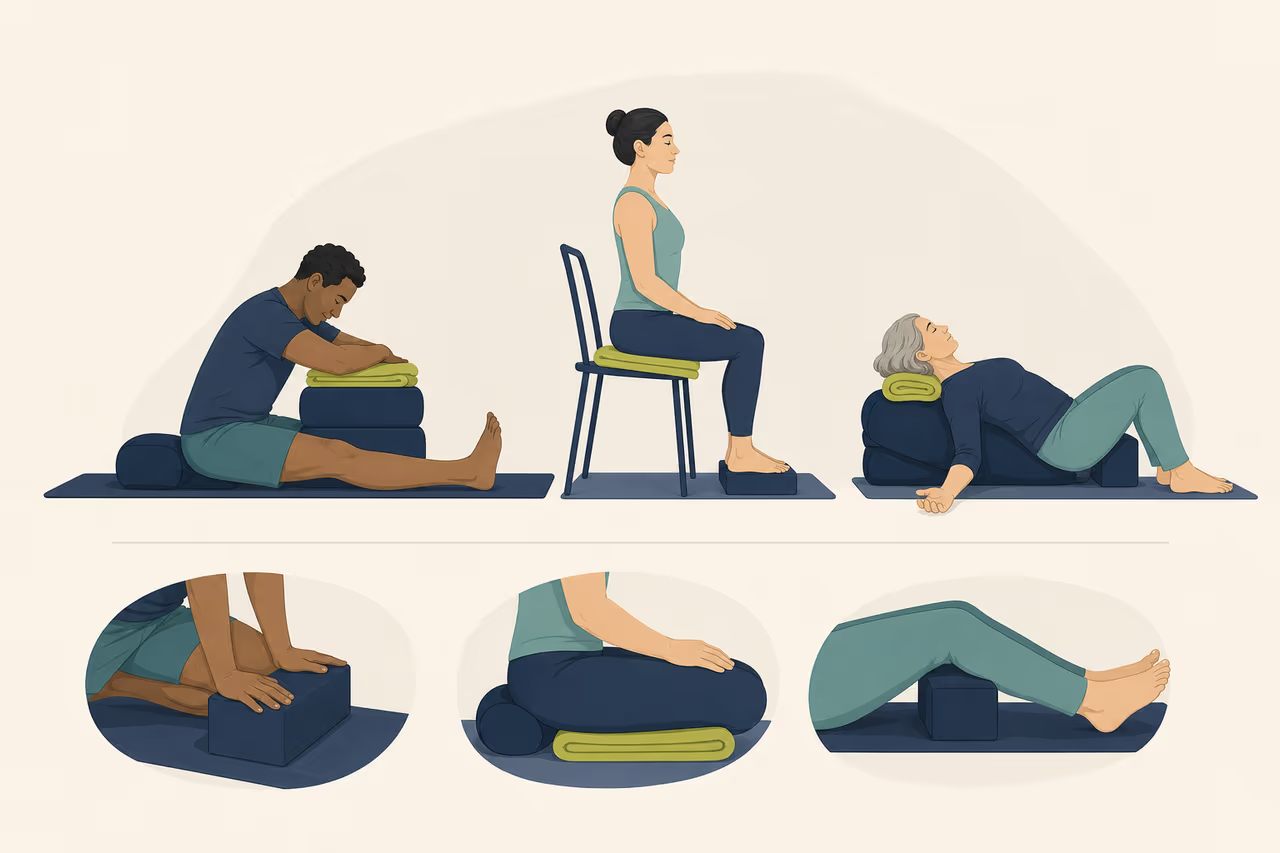
Yoga props,such as blocks, straps, blankets, and bolsters,often carry an unspoken stigma. Many people wonder if using them indicates a lack of flexibility, a lower ability level, or an inability to "properly" complete a posture. In reality, these items are practical tools that bridge the gap between individual physical needs and posture demands, making movement accessible without compromising safety.
Yoga combines postures, breathing, and meditation. Because styles vary widely and every body is different, benefits should be described with uncertainty, and injuries can occur when poses are forced beyond safe limits. Props help mitigate those risks by altering leverage, reducing strain, and providing stability.
Understanding the Role of Yoga Props
Rather than acting as shortcuts or signs of weakness, props adjust the geometry of a pose to fit your physical frame. For example, placing a block under your hand in a standing triangle pose brings the floor closer, allowing your spine to lengthen rather than forcing your torso to collapse toward the ground.
Similarly, straps help maintain connection in seated forward bends when hamstring tightness prevents reaching the feet. Blankets provide thermal comfort or elevate the hips in seated meditation to reduce lower back fatigue.
However, incorporating equipment introduces practical trade-offs. Props add physical clutter, require storage space, and demand extra setup time during a session. Static glossaries and written guides can only explain so much; they cannot replace real-time feedback from a live instructor who can spot subtle misalignments or over-efforting.
Why Physical Activity Varies and Counts
When exploring accessibility in movement, any amount of physical activity is better than none, all activity counts, and people should limit sedentary time. Movement practices do not need to look identical for every person to yield value.
| Prop Type | Common Use | Potential Benefit | Practical Trade-off |
|---|---|---|---|
| Blocks | Elevating the floor, supporting hands or seat | Reduces excessive reach and spinal rounding | Requires carrying or storing equipment |
| Straps | Bridging distance in limb-extension poses | Encourages neutral joint alignment | Can lead to pulling too hard if misused |
| Blankets | Padding joints, elevating seated postures | Improves comfort and sustained posture | Requires folding and adjustment mid-class |
A common failure mode is assuming that props are exclusively for beginners or individuals who cannot complete a pose on their own. Advanced practitioners frequently use blocks and straps to explore deeper stability, refine muscular engagement, or support recovery after fatigue or minor strains. Treating yoga benefits as guaranteed rather than variable can also set unrealistic expectations; sustainable movement relies on listening to current physical capacity rather than chasing an idealized aesthetic.
Moving From Glossaries to Guided Instruction
When self-guided prop use feels confusing, consulting a qualified instructor who can provide real-time adjustments is often the most effective path. Prime Tempr's trainer marketplace lets readers turn unfamiliar yoga language and prop questions into better real-world queries, then choose guided instruction instead of relying on a static glossary alone.
Your Prop and Practice Reflection Guide
To help integrate these concepts into your routine, work through the following reflective steps:
- Identify one movement or posture where you frequently feel strained or out of reach.
- Consider which physical support,such as height, stability, or length,might alter that sensation safely.
- Acknowledge that any amount of physical activity counts and varies by individual capacity.
- Explore a qualified trainer or class via Practise with a qualified trainer to get tailored feedback on prop use.
For more insights into terminology and class formatting, you can also review Yoga Language & Class Cues.
Sources
Watch alongside this guide
An introductory yoga flow
Watch how spoken cues, breath, and transitions work together, then compare them with the article's guidance. Source: Yoga With Adriene. This optional video is context, not evidence or personal instruction.
The YouTube player stays unloaded until you choose to watch. Loading it connects to YouTube and may allow that service to process usage data.