When a Change in Balance Needs a Health Professional
Identify concerning balance changes, learn when to seek medical evaluation, and maintain safe movement at home.
https://primetempr.com/blog/when-a-change-in-balance-needs-a-health-professional
Sudden balance changes, unsteadiness with dizziness, or recurrent trips require prompt medical evaluation rather than waiting or relying solely on home exercises.
Noticing a subtle shift in stability at home can leave older adults and families wondering if it is normal fatigue, a passing phase, or something requiring professional assessment. Treating an unexplained decline in balance as mere aging without checking underlying causes is a risky failure mode. Pushing through dizziness or unsteadiness with intense single-leg standing exercises can lead to falls. Understanding the limits of home modification helps families choose one proportionate next step.
Recognizing when balance changes are more than ordinary fatigue
Energy levels naturally fluctuate due to poor sleep, a long day, or changing weather conditions. Ordinary fatigue feels like generalized tiredness that resolves with rest, whereas a true balance shift involves mechanical unsteadiness or tilting when standing still.
Yoga styles and demands vary, and while physical activity supports overall function, a sudden decline in stability is rarely solved by standard fitness routines alone. Older adults benefit from a weekly mix of aerobic, muscle-strengthening, and balance activity matched to their abilities, but matching activity to ability requires knowing when baseline stability has shifted. If the kitchen floor feels unfamiliar or navigating a hallway requires touching the walls, it is time to look closer.
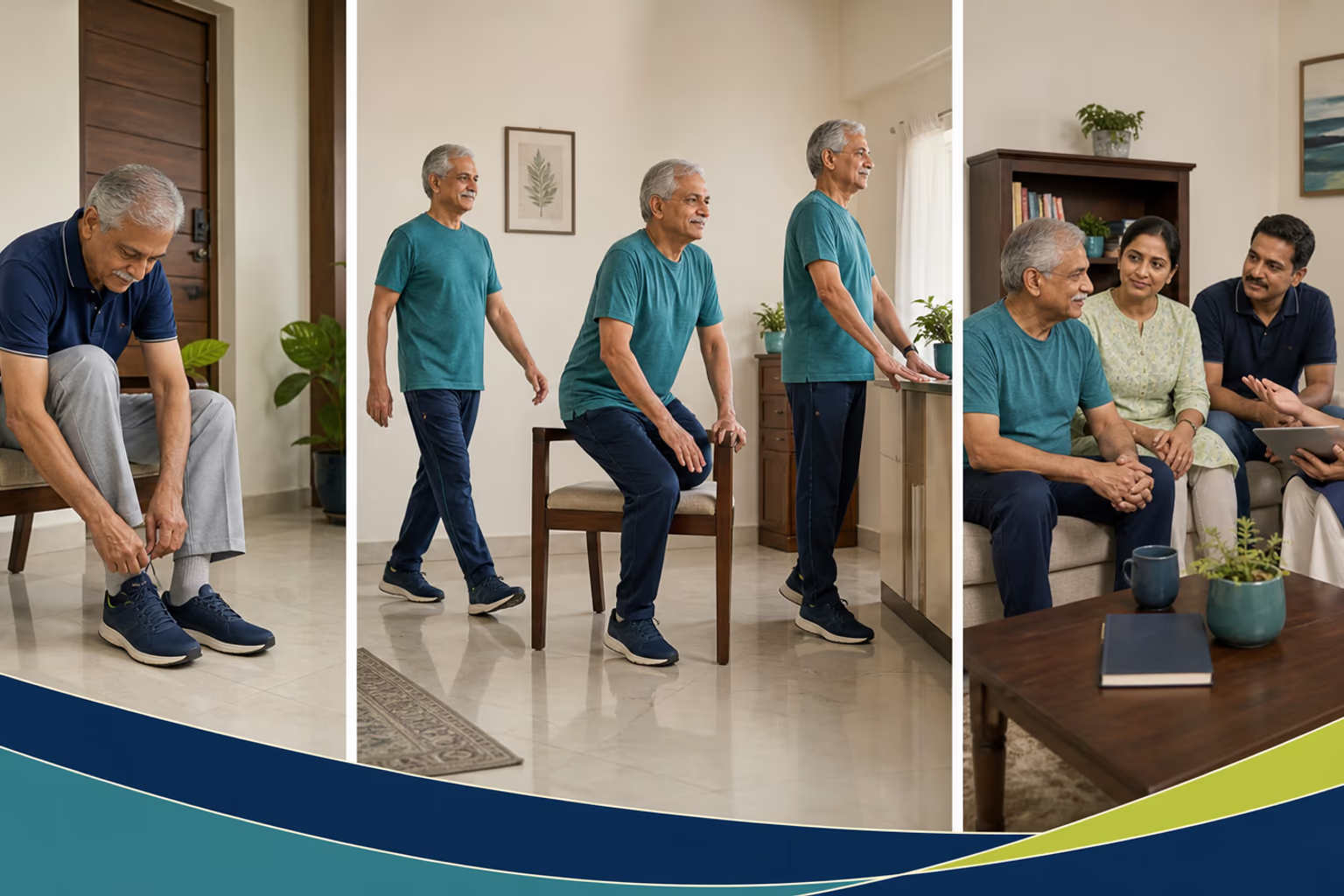
Key red flags that require prompt medical attention
Certain clinical indicators mean you should consult a doctor right away rather than waiting for a routine appointment. Watch for these specific warning signs:
- Sudden Onset: Unsteadiness that appears abruptly over the course of a few hours or days.
- Associated Symptoms: Dizziness, spinning sensations, lightheadedness, numbness in the feet, or unexplained weakness.
- Recurrent Trips: Experiencing multiple near-falls or actual falls within a single month.
- Cognitive Confusion: Sudden changes in orientation or spatial awareness alongside physical wobbliness.
Waiting until a serious fall occurs before seeking professional guidance is a dangerous gamble. Seeking professional medical evaluation takes time, but it prevents preventable falls and uncovers root causes such as inner ear issues, medication side effects, or cardiovascular factors.
Preparing for a professional balance assessment
When you visit a primary care physician or geriatric specialist, coming prepared with concrete observations makes the evaluation productive. Doctors rely on your description of daily patterns to determine whether the issue is vestibular, neurological, or musculoskeletal.
Before your appointment, note down answers to these practical questions:
- Exactly when did you first notice the unsteadiness?
- Does the feeling happen when you first stand up, or after walking for a few minutes?
- Which specific everyday routines, such as stair climbing or stepping into a shower, feel most precarious?
- What footwear do you typically wear around the house?
- Which prescription or over-the-counter medications do you take daily?
Modifying home activities for safety may feel restrictive initially, but it preserves long-term independence while you await answers.
Maintaining safe movement while seeking guidance
If professional assessment confirms no acute medical emergency, you can stay active safely by prioritizing stable, seated, or supported movements. Yoga styles and demands vary widely, and qualified instruction and appropriate modification can reduce avoidable risk.
Never force single-leg balance poses if you feel unsteady. Instead, practice gentle seated stretches or wall-supported movements in a well-lit room with a sturdy chair nearby. Prime Tempr profiles help families compare age-inclusive trainers, class pace, accessibility experience, and online options before choosing responsive support. Reviewing options like Find an age-inclusive trainer or reading How to Ask a Trainer About Fall Awareness and Class Modifications can guide your next conversation. You can also explore A Balance Confidence Plan That Does Not Begin With One Leg Standing for structured movement ideas, or read more broadly via Supporting Active Aging at Home.
When to seek professional balance evaluation
Use this practical checklist to guide your decisions around stability and medical consultation:
- Note if the unsteadiness came on suddenly or worsened noticeably over weeks.
- Check for accompanying symptoms like dizziness, lightheadedness, or numbness.
- Review whether everyday routines, such as stair climbing or kitchen tasks, have become unexpectedly difficult.
- Consult a primary care physician or geriatric specialist if unsteadiness persists or causes near-falls.
- Use Prime Tempr profiles to compare age-inclusive trainers and certified support once cleared by a clinician.
Follow-along reflection
Use the prompts below to review the idea in context, without turning it into a diagnosis or a fixed rule.
When to seek professional balance evaluation
- Review whether everyday routines (like stair climbing or kitchen tasks) have become unexpectedly difficult.
Trade-offs to keep in view
- Seeking professional medical evaluation takes time and effort, but prevents preventable falls and uncovers treatable root causes.
- Modifying home activities for safety may feel restrictive initially, but preserves long-term independence.
If this approach does not fit
If professional assessment confirms no acute medical emergency, start with stable, seated or supported movements and consult an age-inclusive trainer or physical therapist to rebuild confidence safely.
Questions to carry forward
- What counts as a normal daily fluctuation in balance versus a concerning change?
- Which specific red flags mean I should consult a doctor right away?
- How do I distinguish between general deconditioning and a vestibular or neurological issue?
- What should I expect during a medical balance assessment?
- How can I maintain safe daily movement while waiting for a professional evaluation?
Sources
Watch alongside this guide
A 15-minute workout for older adults
This National Institute on Aging routine demonstrates manageable strength and balance pacing. Use stable support and seek assessment for new or concerning changes.
The YouTube player stays unloaded until you choose to watch. Loading it connects to YouTube and may allow that service to process usage data.