How to Ask a Trainer About Fall Awareness and Class Modifications
Communicate stability needs, balance support, and pacing adjustments directly to a fitness trainer with confidence.
https://primetempr.com/blog/how-to-ask-a-trainer-about-fall-awareness-and-class-modifica
Clear, direct communication about fall awareness and stability needs helps a trainer adapt class pacing and movements safely without sacrificing independence or dignity. Many older adults and adult family members hesitate to speak up before joining a movement class. They worry about being singled out, looking weak, or burdening the instructor. However, yoga styles and demands vary significantly, and qualified instruction with appropriate modification can reduce avoidable risk.
Waiting until an awkward balance moment happens in class is a common failure mode. When transitions between the floor and standing feel rushed, or when a balance pose requires sudden agility, trying to keep quiet often leads to unnecessary strain. Instructors appreciate proactive guidance. Sharing your comfort level with standing poses or transitions ahead of time allows the teacher to offer stable props, wall space, or alternative postures before the session begins.
Why proactive communication matters in movement classes
Instructors manage diverse group rooms, online feeds, and varied fitness levels simultaneously. Without a direct conversation, a teacher may assume everyone in the room shares the same baseline stability.
Older adults benefit from a weekly mix of aerobic, muscle-strengthening, and balance activity matched to their abilities. When you communicate your specific balance considerations early, the instructor can integrate responsive pacing. This prevents you from having to guess or improvise a safe alternative halfway through a fast-paced sequence.
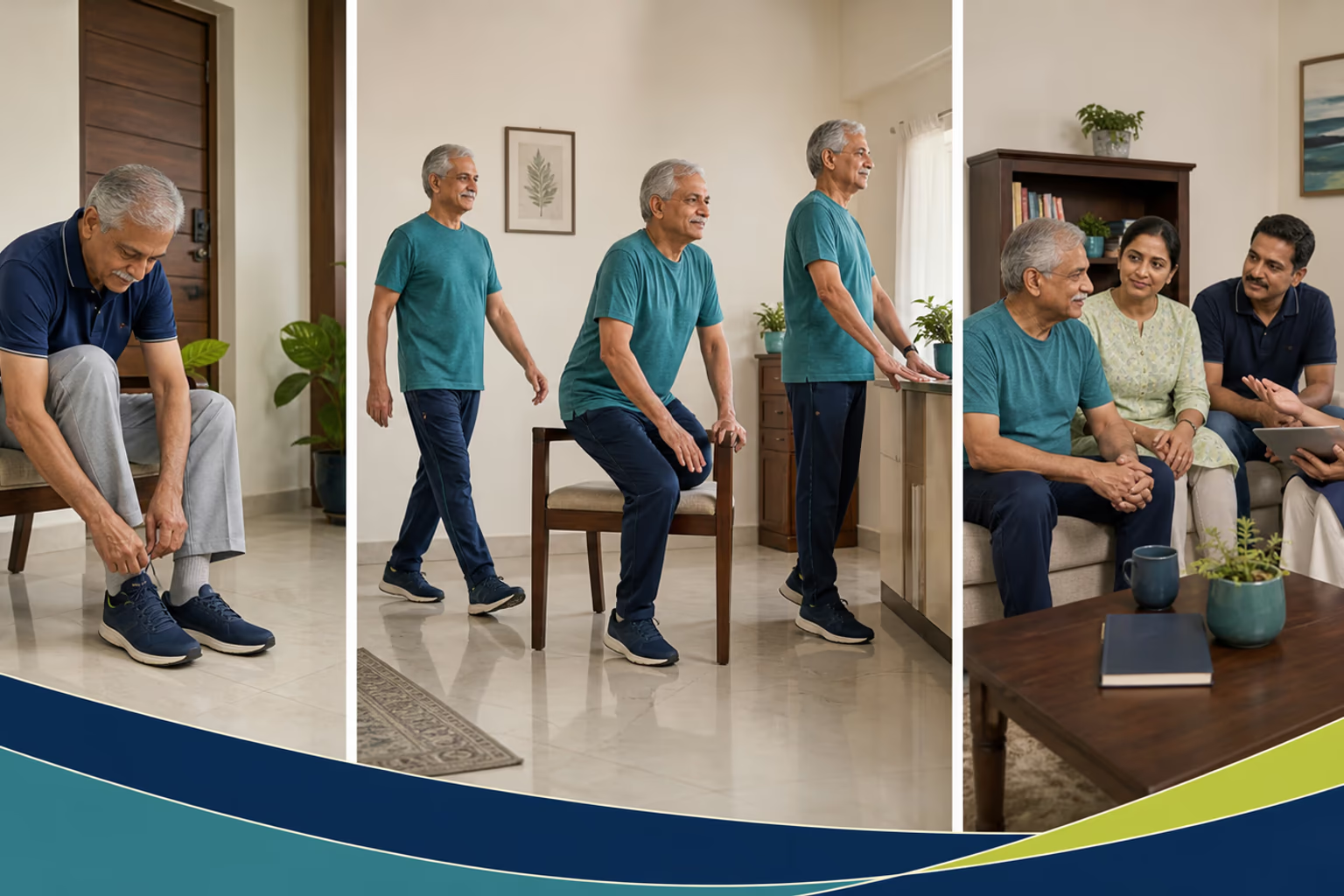
Three direct ways to ask for modifications
Approaching a trainer does not require a formal consultation or a medical explanation. Short, direct statements work best. Here are three practical ways to start the conversation:
- The Private Pre-Class Check-In: Arrive five minutes early and speak to the instructor near the front of the room or send a brief message if joining online. Say: "I am working on my balance and prefer to use a chair or wall for standing poses today. Could you the best spot in the room for that?"
- The Direct Question About Pacing: Ask the instructor before class: "How do you typically modify standing or floor transitions for different ability levels?" This opens the door for them to explain their style and offer immediate adjustments.
- The Ongoing Feedback Loop: If a specific sequence felt too fast or unstable, speak to the trainer immediately after class. Let them know: "I enjoyed the session, but the quick transitions from floor to standing caused me some hesitation. Can we plan for a slower transition next time?"
These methods help you avoid feeling singled out while securing the adjustments you need to practice with confidence.
What to look for in an age-inclusive trainer
Not every fitness studio or yoga teacher centers classes around diverse age groups and varying mobility levels. When evaluating a new instructor, studio, or online offering, look for specific indicators of accessibility experience.
An age-inclusive trainer routinely incorporates props such as chairs, blocks, straps, and wall space without making them feel like an afterthought for struggling participants. They watch the room carefully during transitions, offer clear verbal cues for stability, and check in on participants who choose modified variations. They also respect personal boundaries, understanding that skipping a pose or opting for a seated alternative is a valid choice rather than a lack of effort.
Your pre-class conversation checklist
Use this practical checklist to prepare for your next conversation with a current or prospective trainer:
- Note any specific movements, transitions from floor to standing, or balance exercises that cause hesitation during daily routines.
- Decide whether to speak to the trainer privately before class or send a quick message beforehand.
- Ask directly: "How do you typically modify balance or standing exercises for different ability levels?"
- Confirm the availability of stable props like chairs, walls, or blocks within the studio or home space.
- Prime Tempr profiles help families compare age-inclusive trainers, class pace, accessibility experience and online options before choosing responsive support.
Choosing your next step
If a group class feels too fast or rigid, pull the instructor aside before or after class to request specific, stable alternatives, or explore one-on-one sessions. Asking for modifications takes initial courage, but it prevents avoidable strain and builds long-term confidence in your movement practice.
To explore options that match your pace, Find an age-inclusive trainer or Browse yoga programmes designed for varied stability needs. For additional guidance on maintaining confidence at home, read more about Supporting Active Aging at Home.
Follow-along reflection
Use the prompts below to review the idea in context, without turning it into a diagnosis or a fixed rule.
Your pre-class conversation checklist
- Note any specific movements, transitions from floor to standing, or balance exercises that cause hesitation.
- Ask directly: 'How do you typically modify balance or standing exercises for different ability levels?'
- Confirm availability of stable props like chairs, walls, or blocks within the studio or home space.
- Compare age-inclusive trainers on Prime Tempr to find teachers experienced in individualized pacing.
Trade-offs to keep in view
- Group classes offer community and structure but may require proactive communication to secure individualized modifications.
- Asking for modifications takes initial courage but prevents avoidable strain and builds long-term confidence.
If this approach does not fit
If a group class feels too fast or rigid, pull the instructor aside before or after class to request specific, stable alternatives or explore one-on-one sessions.
Questions to carry forward
- What is the best way to bring up fall awareness with a new or current trainer?
- How do I ask for modifications without feeling singled out in a group class?
- What specific questions should I ask about class pacing and balance support?
- How can Prime Tempr help me find trainers with specific accessibility experience?
Sources
- Yoga: Effectiveness and Safety (opens in a new tab), National Center for Complementary and Integrative Health.
- Older Adult Activity: An Overview (opens in a new tab), Centers for Disease Control and Prevention.
Watch alongside this guide
A 15-minute workout for older adults
This National Institute on Aging routine demonstrates manageable strength and balance pacing. Use stable support and seek assessment for new or concerning changes.
The YouTube player stays unloaded until you choose to watch. Loading it connects to YouTube and may allow that service to process usage data.