Standing, Seated, Prone, and Supine Yoga Terms Explained
Master standing, seated, prone, and supine yoga terms to decode class instructions, navigate style variations, and adapt shapes safely.
https://primetempr.com/blog/standing-seated-prone-and-supine-yoga-terms-explained
Understanding basic orientation terms like standing, seated, prone, and supine helps clarify yoga class instructions, though static definitions are only a starting point for safe practice. Teachers often use anatomical terms quickly without explanation, leaving beginners wondering what body position is expected next.
Knowing these four core directional categories helps you follow class flow without second-guessing every instruction. However, static glossaries cannot account for individual mobility limits or personal health considerations. Learning class terminology helps comprehension, but physical practice always requires listening to your body's current state.
What Standing, Seated, Prone, and Supine Mean in Yoga
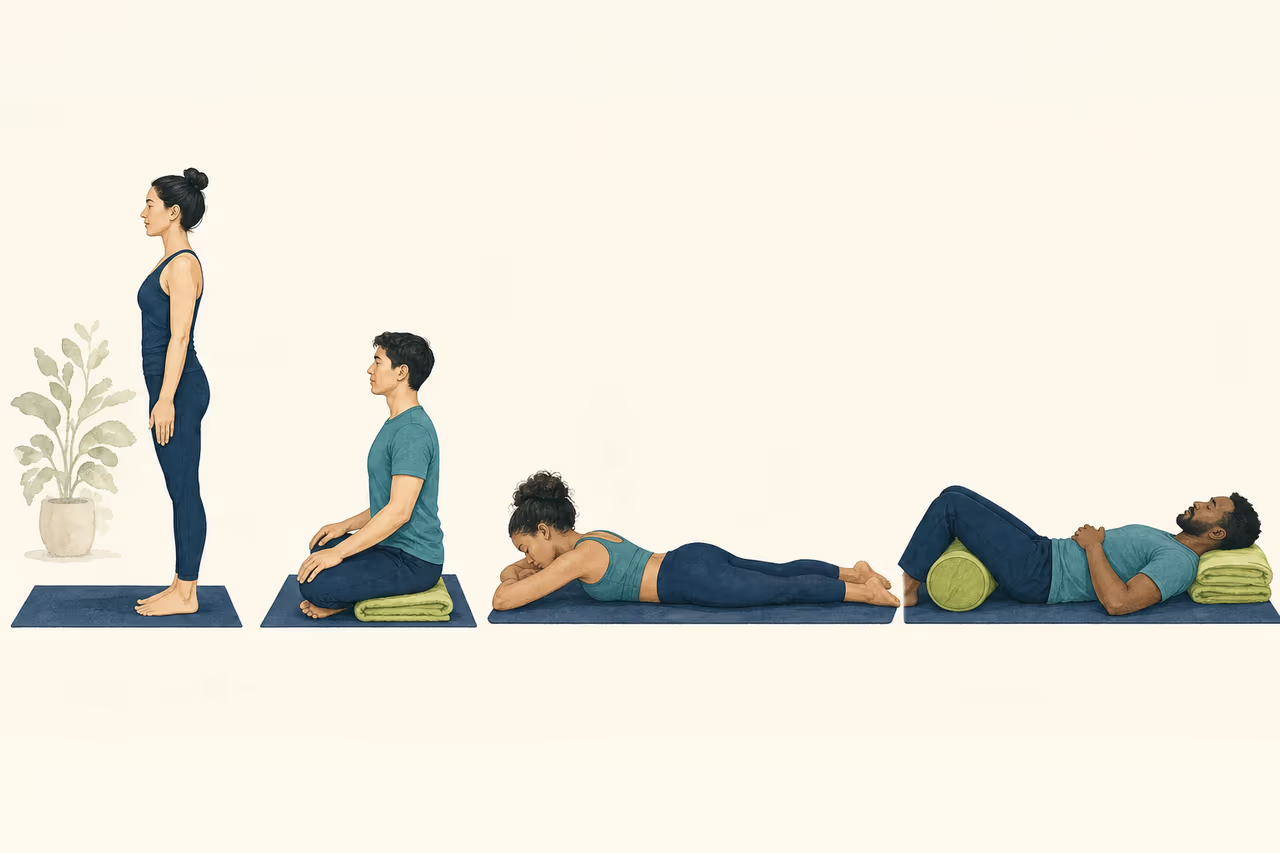
To follow class cues easily, it helps to map verbal instructions to four primary body orientations:
- Standing: Postures executed while upright on your feet, such as mountain pose, warrior sequences, or balancing shapes. These positions generally challenge lower-body stability and strength.
- Seated: Postures where your hips and sit bones are supported by the floor or a prop like a block or blanket. Examples include staff pose or easy cross-legged seat, often used for grounding or gentle forward folds.
- Prone: Postures lying face down on your mat. Common examples include cobra pose, locust pose, or crocodile pose, which engage the back body and posterior chain.
- Supine: Postures lying face up on your mat. Examples include bridge pose, supine twists, or final relaxation (savasana), which often support the spine and allow for regulated breathing.
Yoga combines postures, breathing, and meditation, but styles vary significantly in how much time they dedicate to each orientation.
Why Teachers Use Orientation Terms
Yoga instructors use these directional categories to structure sequencing and verbal cueing efficiently. Instead of describing every small movement in detail, a teacher might say, "transition to a prone position," allowing experienced students to move smoothly onto their bellies.
Styles vary widely in approach. A dynamic Vinyasa or power class might alternate rapidly between standing and prone positions through continuous movement flows. Conversely, a Yin or restorative class may spend extended periods in seated or supine shapes, focusing on gentle, sustained holds.
Any amount of physical activity is better than none, all activity counts, and people should limit sedentary time. Recognizing your current energy levels helps you decide whether an active standing sequence or a restorative supine practice fits your needs today.
Practical Limitations and Safety Considerations
While learning terminology builds confidence, treating orientation terms as rigid rules rather than general spatial categories can lead to strain.
- Styles and Benefits Vary: Because yoga styles vary widely, benefits should be described with uncertainty rather than guaranteed outcomes. What feels energizing in one class might feel overstimulating in another.
- Risk of Injury: Injuries can occur in any movement practice if you push past your body's current limits to match a posture just because it fits a category name.
- Individual Adaptability: A static glossary cannot tell you how to modify a prone backbend if your lower back feels pinched, or how to adjust a seated forward fold if your hamstrings feel tight.
If a position feels inaccessible or confusing during a session, pause, return to a neutral posture, such as sitting or standing comfortably, and ask your teacher for an alternative option.
Yoga Orientation Reference & Question Checklist
Use this practical checklist to navigate your next practice session with greater clarity:
- Review the four primary body positions: standing, seated, prone (face down), and supine (face up).
- Notice which positions feel most accessible to your joints and energy level today.
- Identify any transition that feels rushed or unclear during a class.
- Prepare one question to ask a qualified teacher before or after your next session about pose modifications.
Relying solely on a static glossary can leave gaps when your body needs a specific variation. Prime Tempr's trainer marketplace lets readers turn unfamiliar yoga language into better questions, then choose guided instruction instead of relying on a static glossary alone. You can explore options directly by browsing our guide to Practise with a qualified trainer, reviewing foundational Yoga Language & Class Cues, learning How Yoga Class Sequences Are Structured: A Practical Guide, or discovering Why Yoga Teachers Offer Pose Options (And How to Choose).
Frequently Asked Questions
What is the difference between prone and supine in yoga?
Prone means lying face down on your stomach (such as in cobra pose), while supine means lying face up on your back (such as in a supine twist or savasana).
Do I have to do every pose exactly as instructed?
No. Physical practice always requires listening to your own body. If a standard posture or transition causes discomfort, pause and ask your teacher for a suitable alternative.
Why do some classes skip standing poses entirely?
Yoga styles vary considerably. Restorative, Yin, and gentle classes often focus primarily on seated, supine, or prone shapes to encourage deep relaxation and passive joint mobility rather than active standing strength.
Sources
Watch alongside this guide
An introductory yoga flow
Watch how spoken cues, breath, and transitions work together, then compare them with the article's guidance. Source: Yoga With Adriene. This optional video is context, not evidence or personal instruction.
The YouTube player stays unloaded until you choose to watch. Loading it connects to YouTube and may allow that service to process usage data.