Open Hip and Closed Hip Yoga Terminology: A Practical Guide
Master open and closed hip yoga cues to understand pelvic rotation limits and protect your joint safety during practice.
https://primetempr.com/blog/open-hip-vs-closed-hip-yoga-terminology-a-clear-guide
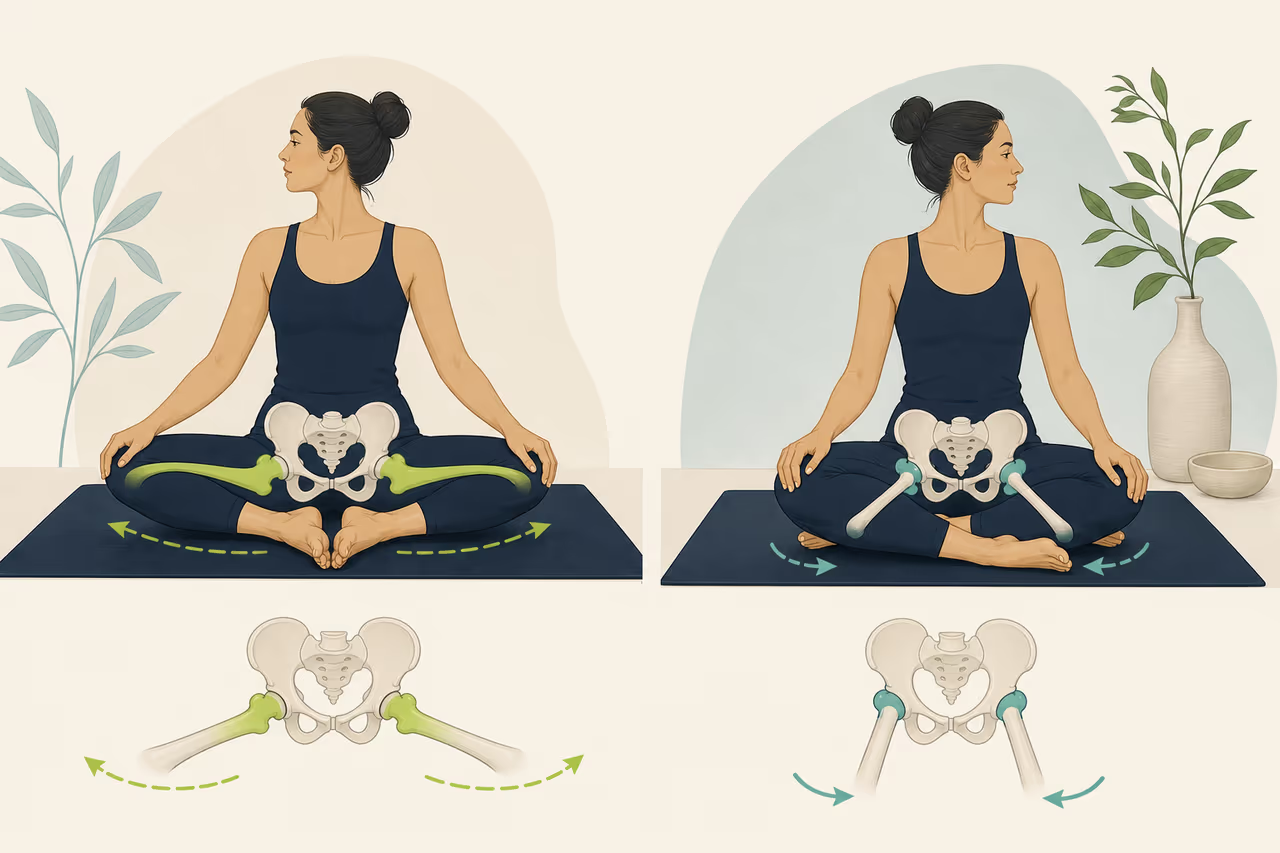
Open and closed hip terminology in yoga describes pelvic and leg rotation relative to the torso, but these terms are instructional cues rather than rigid biological absolutes. When a yoga instructor calls out an "open hip" or "closed hip" position, they are usually giving a shorthand instruction for how to orient your pelvis and thigh bones in space. However, these phrases frequently cause confusion for practitioners trying to figure out how to position their bodies safely without straining their joints.
What Open Hip and Closed Hip Mean in Class
An "open hip" position generally means your thigh bone is rotating outward in the hip socket, and your pelvis may open to the side of your mat. Common examples include Warrior II, Triangle Pose, or Tree Pose, where the outer hip contracts and the knee tracks outward.
A "closed hip" position means your pelvis remains square or faces the front of the mat, with both hip points pointing forward. Examples include Warrior I, High Lunge, and Pyramid Pose, where the pelvis is level and neutral.
Review these structural differences to compare how these postures function during a sequence:
| Terminology Focus | Pelvic Orientation | Common Pose Examples | Typical Sensations |
|---|---|---|---|
| Open Hip | Rotated outward; pelvis turns to the side | Warrior II, Triangle, Half Moon | Outer hip engagement, inner thigh stretch |
| Closed Hip | Level and square; pelvis faces forward | Warrior I, High Lunge, Pyramid | Hamstring stretch, hip flexor stretch, core balance |
Why Yoga Teachers Use These Terms
Teachers use these directional cues to help students build stability, distribute weight evenly, and transition safely through standing sequences. For example, keeping your hips "closed" in a lunge helps maintain balance by keeping your center of gravity centered over your feet. Conversely, "opening" the hips in standing poses allows for a broader base of support along the length of the mat.
Yet, these cues can introduce friction if treated as strict universal mandates. Human skeletal anatomy,specifically the depth and angle of the hip socket,varies widely from person to person. What looks like a fully "closed" or "open" pose for one person might pinch or strain another's joint structure. Yoga combines postures, breathing and meditation; styles vary, benefits should be described with uncertainty, and injuries can occur. Following generic alignment cues without listening to personal sensation can lead to discomfort or injury.
Recognizing Your Own Limits and Safety
If a pose cue causes pinching, sharp pain, or joint strain, Be sure to back out of the range of motion. Static glossaries cannot account for individual skeletal variations. Instead of forcing your body into an extreme angle to match a literal translation of an "open" or "closed" instruction, use props for support or reduce your stance.
Physical activity looks different for every person, and any amount of physical activity is better than none, all activity counts, and people should limit sedentary time. Finding a sustainable practice means prioritizing joint comfort over achieving a specific aesthetic shape. If you want to explore these postures more deeply, you can read more about Yoga Language & Class Cues or learn how How Yoga Props Support Accessibility and Safe Practice can help you adapt poses to your body.
Three Questions to Ask Your Yoga Teacher About Hip Cues
Static definitions have limits on the mat. Use targeted questions during or after class to clarify your alignment. Prime Tempr connects you with instructors to turn unfamiliar terms into better questions, prioritizing guided instruction over a static glossary.
- Is this pose intended to rotate my pelvis inward (closed) or outward (open)?
- Where should I feel muscular engagement versus joint pressure?
- What modification or prop can I use if my hips feel restricted in this shape?
When you are ready for individualized feedback on how your unique anatomy interacts with these common cues, you can Practise with a qualified trainer to receive personalized guidance tailored to your mobility and goals.
Sources
Watch alongside this guide
An introductory yoga flow
Watch how spoken cues, breath, and transitions work together, then compare them with the article's guidance. Source: Yoga With Adriene. This optional video is context, not evidence or personal instruction.
The YouTube player stays unloaded until you choose to watch. Loading it connects to YouTube and may allow that service to process usage data.