Moving Again: A Realistic Guide to Post-Festival Routines
Restart your movement routine by choosing a proportionate, low-friction practice that respects your current energy and environment.
https://primetempr.com/blog/moving-again-a-realistic-guide-to-post-festival-routines
Restarting your routine after a period of celebrations is not about "getting back on track" or punishing your body for missed days. It is about choosing a proportionate level of movement that fits your current energy, home environment, and local weather safety. When you treat the disruption as a normal part of life rather than a failure, you remove the pressure to overcompensate, making it easier to return to a sustainable rhythm.
Physical activity can happen in many settings and can be adapted to ability, weather, and circumstance. Any amount of movement is better than none, regardless of whether it matches the intensity of your usual practice.
Check your environment first
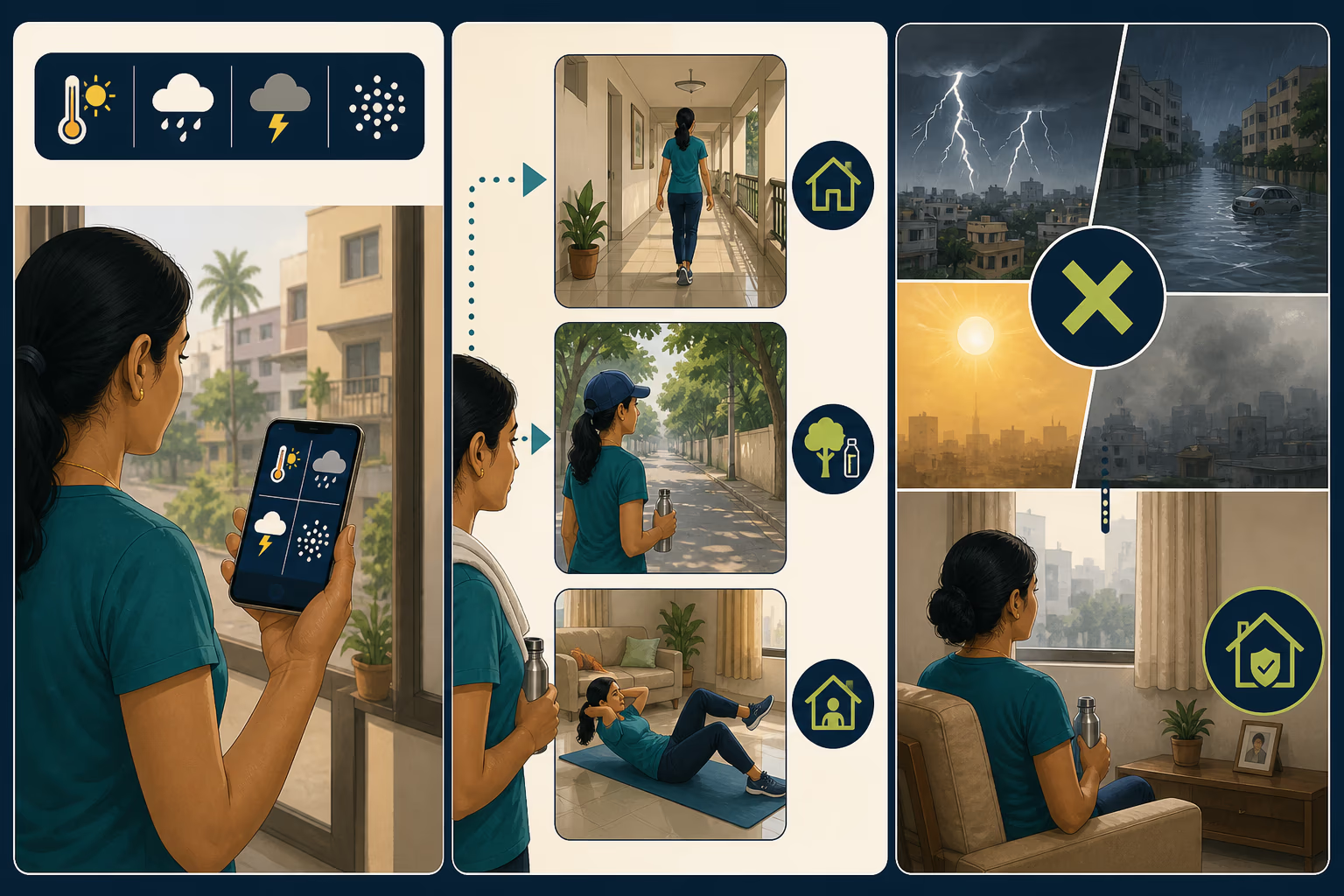
Before you decide on a specific movement, assess your immediate surroundings. Your environment,including local weather conditions and air quality,dictates what is safe and practical for the day. India's National Disaster Management Authority publishes current public-safety guidance for heat waves, cold waves, floods, lightning, and other seasonal hazards through the SACHET portal.
Checking these conditions is a necessary step before you commit to a routine. If the air quality is poor or the weather is extreme, attempting high-intensity outdoor exercise is not a productive way to restart. Instead, look for ways to adapt your movement to the indoors. If you are unsure how to adjust your practice when external conditions are challenging, read our guide on When the Air Is Unsafe: A Practical Guide to Indoor Movement.
Your 3-Tier restart plan
When you are ready to move again, use this tiered approach to select an option that matches your current capacity. Do not feel compelled to jump straight into a full-length session if your energy is low or your schedule is crowded.
| Tier | Action | Time Commitment |
|---|---|---|
| Check | Review local air quality and weather safety (SACHET). | 2 minutes |
| Minimum | Mindful breathing or gentle stretching in a quiet corner. | 5 minutes |
| Normal | Your usual yoga practice or a brisk walk. | 20 minutes |
How to use this plan
- The minimum tier: This is your recovery path. If you feel overwhelmed or tired, commit only to five minutes of gentle movement. This keeps the habit alive without requiring significant physical or mental exertion.
- The normal tier: Once you have established the minimum, you can progress to your standard routine. If this feels too difficult on a given day, scale back to the minimum tier immediately.
- Stop rule: If you experience sharp pain, dizziness, or extreme fatigue, stop the activity. Movement should be restorative, not a source of physical strain.
Find support that fits
One of the biggest hurdles to maintaining a routine is finding a practice that adapts to your life, not the other way around. You may be balancing a desk job, a multigenerational household, or limited space, all while navigating changing weather.
Prime Tempr helps readers find nearby and online trainers whose schedules, spaces, and practice formats fit local climate and seasonal routines. When you search for support, look for trainers who understand that your availability may fluctuate. A trainer who offers flexible, seasonal support can help you navigate these transitions more effectively than a rigid program. You can Find flexible local support through our platform to connect with instructors who prioritize sustainable, consistent movement over high-intensity streaks.
Trade-offs and reality
Be sure to acknowledge the trade-offs of this approach. Prioritizing consistency over intensity means your progress may feel slower than if you were pushing for maximum physical output. However, this method is significantly more sustainable in the long term.
Similarly, choosing indoor movement for safety may limit the variety of exercises you can perform compared to outdoor options. This is a deliberate choice to protect your health. By accepting these limitations, you move away from the "all or nothing" mindset that leads to burnout.
If you find that your current environment or schedule is consistently preventing you from practicing, use this as a signal to adjust your expectations rather than a reason to quit. The goal is to build a rhythm that survives the inevitable interruptions of daily life, whether those are festivals, work deadlines, or changing weather patterns. Start small, stay safe, and remember that any movement is a successful step forward.
Follow-along reflection
Use the prompts below to review the idea in context, without turning it into a diagnosis or a fixed rule.
Your 3-Tier restart plan
- Check local air quality and weather safety (SACHET).
- Minimum: 5 minutes of mindful breathing or gentle stretching.
- Normal: 20 minutes of your usual practice or a brisk walk.
- Next Step: Find a local trainer who offers flexible, seasonal support.
Trade-offs to keep in view
- Prioritizing consistency over intensity means progress may feel slower but is more sustainable.
- Choosing indoor movement for safety may limit the variety of exercises compared to outdoor options.
If this approach does not fit
If the planned movement feels too difficult, scale back to a 5-minute stretch or a simple walk, and prioritize checking local safety guidance before deciding on the next step.
Questions to carry forward
- How do I restart without feeling like I need to 'make up' for missed days?
- What is the simplest way to move when I'm tired or busy?
- How do I check if it's safe to exercise outdoors today?
- How can I find local support that understands my schedule?
Watch alongside this guide
Just walk
This short walking overview is a visual reminder that useful activity can stay simple. Apply the article's local weather, air-quality and public-safety checks first.
The YouTube player stays unloaded until you choose to watch. Loading it connects to YouTube and may allow that service to process usage data.