How to Plan Your Summer Walks Around Heat and Household Schedules
Learn to adapt your walking routine to summer heat and household demands without sacrificing safety or consistency.
https://primetempr.com/blog/how-to-plan-your-summer-walks-around-heat-and-household-sche
Successful summer walking is not about rigid early-morning discipline. It is about matching your movement to local safety conditions and the reality of your daily household schedule. When you treat movement as a flexible part of your life rather than a strict requirement, you avoid the frustration of "all-or-nothing" thinking and keep your body active even when the weather or your responsibilities shift.
Check the conditions first
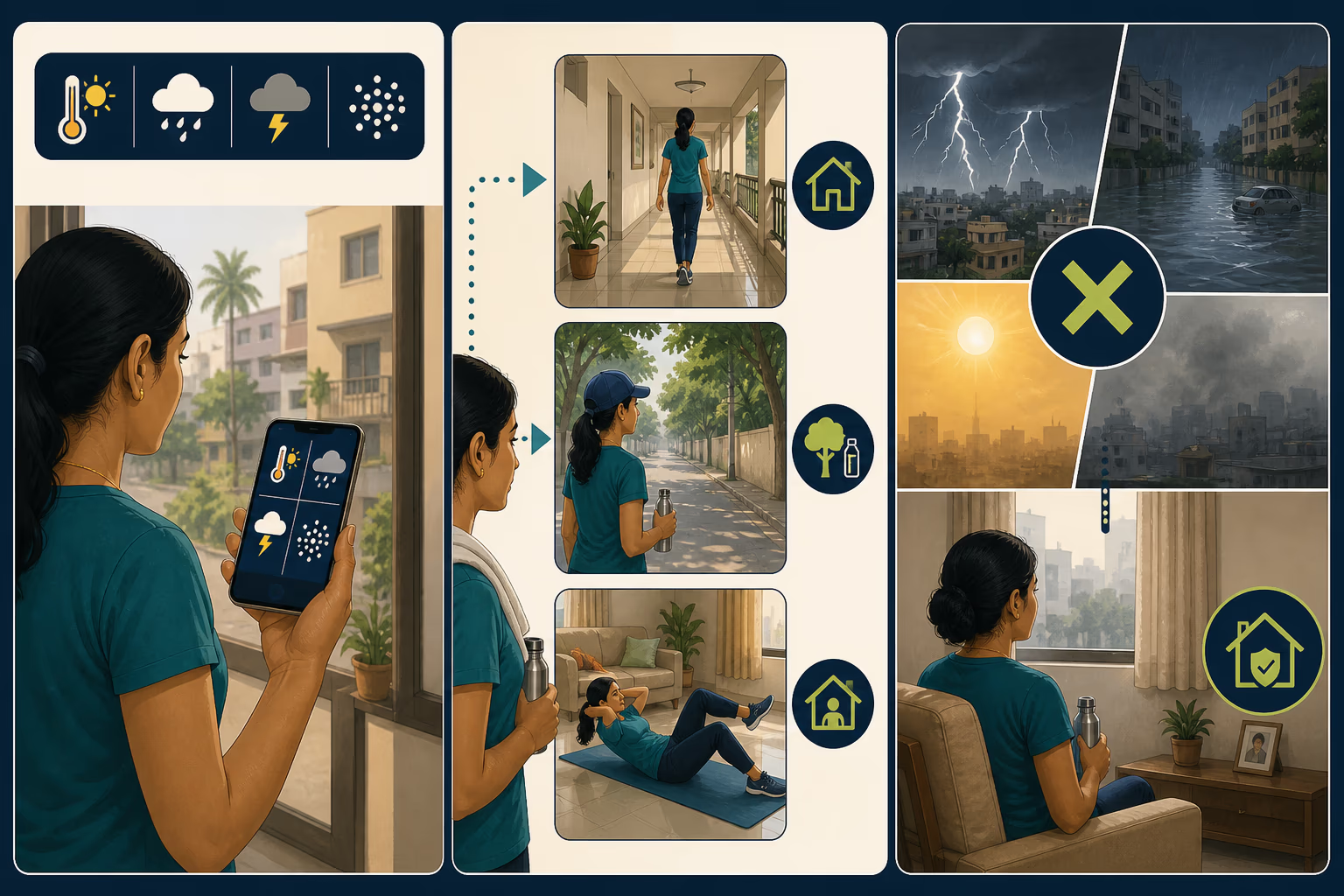
Safety is the non-negotiable foundation of any outdoor routine. Before you lace up your shoes, you must assess whether the environment is appropriate for physical activity. Public-safety guidance for heat waves and other seasonal hazards should be consulted to ensure safety during outdoor activity. In many regions, heat and humidity can reach dangerous levels well before noon, and air quality can fluctuate based on local traffic and industrial patterns.
Start by checking official weather alerts or local air quality indexes. If an official heat wave warning is in effect, the safest choice is to move your activity indoors or postpone it entirely. Do not assume that your usual route is safe simply because you have walked it before. Environmental conditions change daily, and your body's ability to regulate temperature can be compromised by high humidity, which prevents sweat from evaporating effectively.
Find your realistic window
Many people feel they must wake up at dawn to beat the heat, but this is often impractical in a multigenerational household or for those with demanding work schedules. If you cannot wake up at 5:00 AM, you have not failed. You simply need to find a window that works for your specific life.
Consider the "micro-windows" in your day. Perhaps you can walk for 15 minutes after the morning rush but before the heat peaks, or perhaps a short walk in the late evening, once the sun has set and temperatures have dropped, is more sustainable. Physical activity can be adapted to various settings, weather conditions, and personal circumstances, and any amount is beneficial. If you only have time for a 10-minute walk, that is a success. It is far better to walk for a short time consistently than to force a long, unsafe walk that leaves you exhausted or overheated.
When walking isn't the answer
There will be days when the heat is too intense, the air quality is poor, or your family responsibilities simply do not allow for an outdoor excursion. On these days, the most important step is to avoid the trap of thinking that if you cannot walk outside, you must do nothing.
If your outdoor plan fails, pivot to indoor movement. This could involve simple bodyweight exercises in a shaded room, yoga stretches, or even pacing within your home. The goal is to maintain the habit of movement, not to adhere to a specific location. If you find yourself consistently unable to walk due to external constraints, it may be time to rethink your routine entirely. You can use Prime Tempr to find local and online trainers whose schedules, spaces, and practice formats fit your local climate and your specific household constraints. A trainer can help you design an indoor routine that keeps you moving safely regardless of the weather outside.
Get support that fits your life
Adapting to summer is a skill, not a test of willpower. If you feel overwhelmed by the need to balance your health with the demands of your household, you do not have to figure it out alone. Prime Tempr helps readers find nearby and online trainers whose schedules, spaces, and practice formats fit local climate and seasonal routines. Whether you need a trainer who can guide you through a 20-minute indoor session or someone who can help you identify the safest times to be active in your specific neighborhood, personalized support makes a significant difference.
Your summer movement safety check
Use this guide to build a sustainable, flexible approach to your summer activity.
- Check local heat and air quality alerts before planning your route. If conditions are extreme, stay indoors.
- Identify one "Plan B" indoor movement option. This could be a set of stretches, a short yoga sequence, or indoor pacing.
- Set a realistic, flexible time window. Account for your family's morning routine and your own work commitments. If the morning is too busy, look for a window in the late evening.
- Find a local trainer via Prime Tempr to help you build a sustainable, climate-adapted practice. Visit Find flexible local support to start your search.
Remember that your routine is meant to serve you, not the other way around. By prioritizing safety and accepting that your schedule may need to shift, you can maintain your health throughout the summer months.
Related reading
Watch alongside this guide
Just walk
This short walking overview is a visual reminder that useful activity can stay simple. Apply the article's local weather, air-quality and public-safety checks first.
The YouTube player stays unloaded until you choose to watch. Loading it connects to YouTube and may allow that service to process usage data.