How to Interpret Sensation Language in Yoga Class
Decode ambiguous yoga teacher cues, learn the difference between productive effort and joint strain, and find out why static glossaries fall short.
https://primetempr.com/blog/how-to-interpret-sensation-language-in-yoga-class
Yoga classes are filled with unfamiliar phrases like "find your edge," "soften into the posture," or "observe sensation," leaving practitioners unsure whether they are working safely or pushing too hard. Sensation language in yoga class is an invitation to observe rather than a rigid rule to follow, requiring personal context and qualified guidance to interpret safely.
Treating poetic class cues as strict anatomical instructions that must be achieved at all costs is a frequent failure mode. Another common pitfall is assuming that any intense physical sensation equals progress, or relying solely on static definitions without checking in with personal physical limits. Because yoga combines postures, breathing, and meditation with styles that vary widely, benefits should be described with uncertainty, and injuries can occur.
When a class cue feels ambiguous or uncomfortable, pause the movement, scale back the physical intensity, and consult with a qualified teacher for personalized feedback.
Why Yoga Language Sounds Ambiguous
Yoga instruction often blends physical mechanics with subjective observation. Unlike a weightlifting session that counts repetitions or a running track measured in distance, a yoga class relies on descriptive and sometimes poetic cues to help you navigate shapes.
Because yoga combines postures, breathing, and meditation, and because teaching styles vary significantly, teachers use language that encourages internal awareness rather than uniform positioning. This variety can be disorienting. A cue that feels clear in a gentle restorative class may carry a different tone in a vigorous vinyasa session. Recognizing that styles and individual reactions vary helps remove the pressure to decode every sentence as an absolute command.
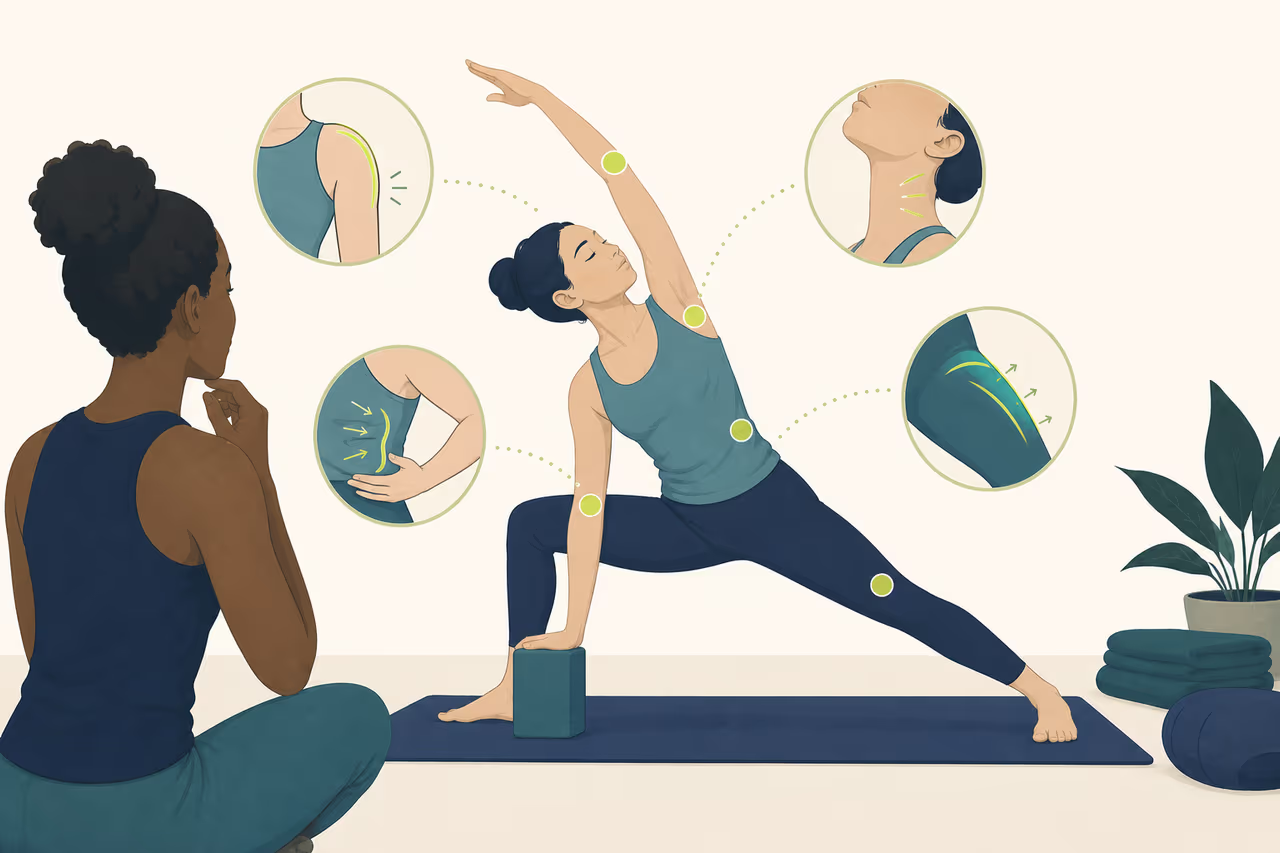
Interpreting Common Sensation Cues
What do common yoga class cues actually mean in practice? Understanding physical activity and posture within a class setting requires looking at how your body responds in real time. Any amount of physical activity is better than none, all activity counts, and people should limit sedentary time, but moving safely means paying close attention to your body's signals.
| Common Yoga Cue | What It Typically Points To | What to Watch Out For |
|---|---|---|
| "Find your edge" | Exploring the boundary where muscular work meets resistance. | Crossing into sharp joint pain or breath-holding. |
| "Soften into the posture" | Releasing unnecessary tension in resting muscles. | Collapsing structural support or forcing a joint past its range. |
| "Observe sensation" | Noticing temperature, stretch, or effort without judgment. | Ignoring warning signs of sharp pain or dizziness. |
To help clarify these moments, use a structured approach when a cue feels unclear. The following decision guide can help you assess what is happening in your body:
- Pause and locate where the sensation is occurring in the body.
- Assess whether the feeling is steady, smooth breathing or strained holding.
- Determine if the sensation is muscular effort or joint stress.
- Choose to scale back, stay steady, or ask a teacher for clarification.
The Practical Limits of Static Glossaries
Reading a list of definitions online can give you a starting vocabulary, but static glossaries cannot account for your unique daily energy, mobility, or injury history. Interpreting sensation language takes practice and honest self-assessment rather than a quick fix.
When you rely only on written definitions, you miss the dynamic feedback that happens in a live environment. A phrase that sounds safe in print might require modification depending on how your body feels on a given day. This is why generalized instructions have inherent limits and why individualized context matters.
Next Steps: Turning Questions into Better Practice
Navigating yoga language does not require memorizing every term on your own. When a cue leaves you wondering whether you are working productively or risking strain, the most reliable path is direct, qualified dialogue.
Prime Tempr's trainer marketplace lets readers turn unfamiliar yoga language into better questions, then choose guided instruction instead of relying on a static glossary alone. You can explore options to practise with a qualified trainer who can observe your movement, provide tailored feedback, and help you adapt cues to your actual physical limits. For further reading on how cues and poses function across different styles, explore resources on Yoga Language & Class Cues and Yoga Pose Names and What They Mean: A Clear Guide, as well as insights on Why Yoga Alignment Cues Vary by Teacher (And What It Means for You).
Sources
Watch alongside this guide
An introductory yoga flow
Watch how spoken cues, breath, and transitions work together, then compare them with the article's guidance. Source: Yoga With Adriene. This optional video is context, not evidence or personal instruction.
The YouTube player stays unloaded until you choose to watch. Loading it connects to YouTube and may allow that service to process usage data.