Why Yoga Alignment Cues Vary by Teacher and What It Means for You
Learn why yoga alignment cues differ across styles and find practical ways to navigate conflicting instructions safely on your mat.
https://primetempr.com/blog/why-yoga-alignment-cues-vary-by-teacher-and-what-it-means-fo
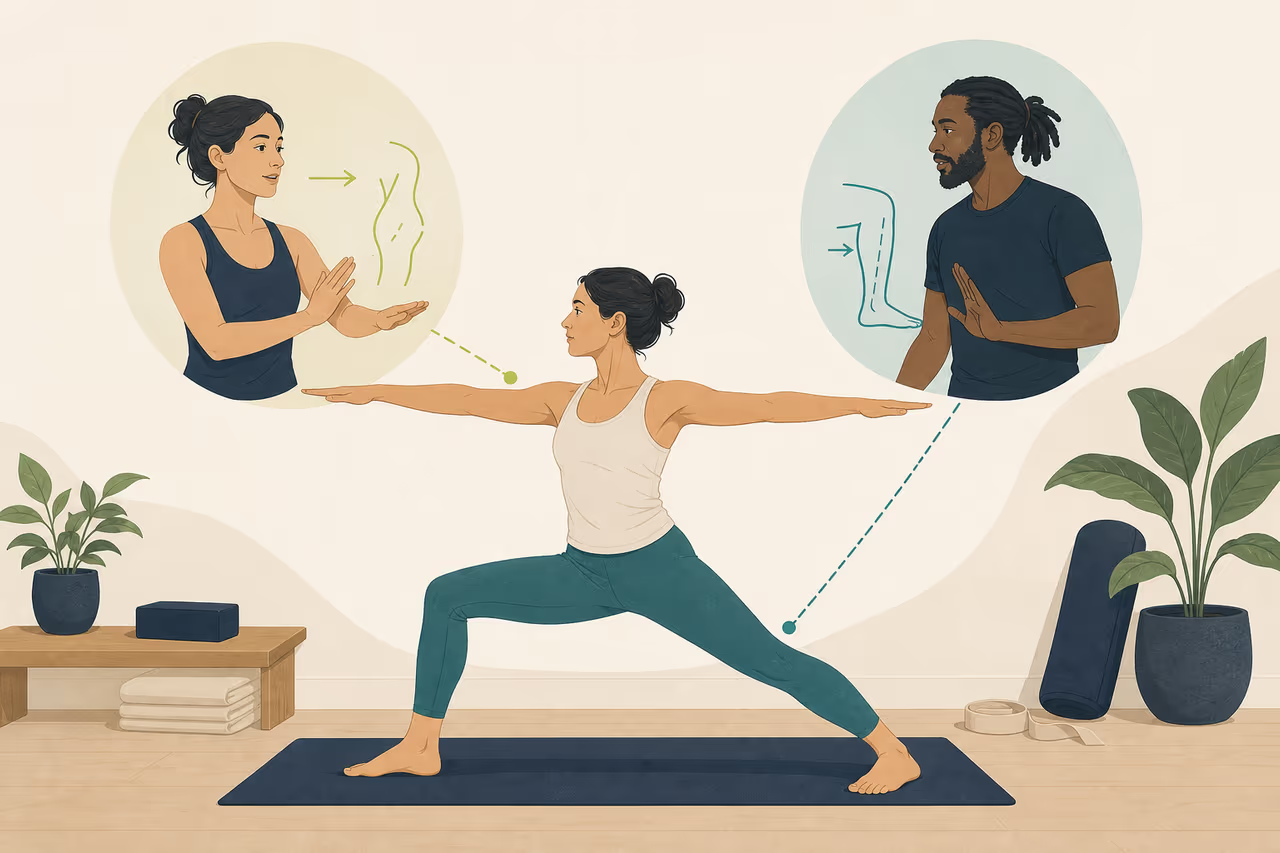
Hearing contrasting instructions from two different yoga teachers can leave you wondering which form is correct or safe. One instructor might tell you to tuck your tailbone firmly, while another in the same week advises you to maintain a natural lumbar curve. This confusion is entirely normal. Yoga combines postures, breathing, and meditation; styles vary, benefits should be described with uncertainty, and injuries can occur.
Understanding why these differences exist helps you move away from searching for a single "correct" way to perform a shape and toward treating alignment cues as helpful navigational tools for your own body.
Why Alignment Instructions Change From Class to Class
Yoga alignment cues vary because different teaching methods, historical lineages, and modern movement insights emphasize different physical priorities. When you step onto a mat, the language you hear is rarely a rigid anatomical law. Instead, it is an interpretation shaped by how a particular school of thought views stability, leverage, and breath.
For example, a traditional lineage-based class might prioritize strict geometric shapes to achieve a specific energetic or structural expression. Conversely, a contemporary class influenced by modern biomechanics might encourage more variable joint movement, recognizing that human skeletal structures differ widely from person to person.
| Cue Type | Common Focus | Potential Limitation |
|---|---|---|
| Lineage-Based Cues | Uniform geometry, traditional form | Can overlook individual skeletal variations |
| Biomechanically Focused Cues | Joint tracking, personal comfort, load distribution | Can sometimes feel overly analytical or abstract |
| Somatic Cues | Internal sensation, felt experience | Harder to standardize or measure externally |
Neither approach is inherently right or wrong. They simply reflect different teaching priorities, which explains why moving between studios often exposes you to contradictory phrasing.
Separating Absolute Safety Rules From Stylistic Preferences
When faced with conflicting advice, it helps to distinguish between baseline safety considerations and stylistic preferences. While any amount of physical activity is better than none, all activity counts, and people should limit sedentary time, practicing safely requires listening to your body rather than forcing a shape to match a literal translation of a cue.
True safety boundaries are generally broad: avoiding sharp joint pain, managing breath rate so you do not hyperventilate, and respecting acute healing needs. Stylistic cues, on the other hand, dictate how you reach a destination,such as whether your back foot is angled at 45 degrees or 90 degrees in a standing posture.
Treating stylistic preferences as absolute safety rules is a common failure mode. Straining your joints to force a shape just because a teacher phrased an instruction rigidly can lead to unnecessary fatigue or strain.
How to Turn Confusing Language Into Better Questions
Static glossaries cannot account for real-time body variations or teaching style differences. When a cue feels ambiguous or contradicts what you learned elsewhere, guessing can cause frustration or cause you to abandon practice altogether.
Instead of treating confusion as a personal failing, use it as an opportunity to engage. When conflicting cues cause confusion, pause to assess your own comfort, treat cues as temporary navigational suggestions rather than strict rules, and bring questions directly to a qualified teacher.
To help bridge the gap between unfamiliar terminology and personal understanding, Prime Tempr's trainer marketplace lets readers turn unfamiliar yoga language into better questions, then choose guided instruction instead of relying on a static glossary alone. Working directly with a knowledgeable instructor allows you to explore why a particular movement is requested and how it serves your specific range of motion.
Three Questions to Ask When Cues Conflict
When you encounter instructions that seem to contradict each other, pause and consider these three practical questions to ground your practice:
- What specific part of my body was this cue trying to direct?
- Did following the instruction ease my movement or create unnecessary tension?
- Can I ask this teacher after class to clarify the intent behind their phrasing?
Asking these questions shifts your focus from trying to please an instructor to actively evaluating your own physical feedback. Over time, this awareness transforms confusing language into a deeper understanding of your own movement patterns.
Continue with guidance
Use this article as orientation, then Practise with a qualified trainer when you want responsive guidance or a practice format matched to you.
Sources
Watch alongside this guide
An introductory yoga flow
Watch how spoken cues, breath, and transitions work together, then compare them with the article's guidance. Source: Yoga With Adriene. This optional video is context, not evidence or personal instruction.
The YouTube player stays unloaded until you choose to watch. Loading it connects to YouTube and may allow that service to process usage data.