How to Build a Seasonal Routine When Winter Never Really Arrives
Build a sustainable, modular movement routine that adapts to your local climate, family schedule, and air quality.
https://primetempr.com/blog/how-to-build-a-seasonal-routine-when-winter-never-really-arr
A sustainable seasonal routine in mild-winter climates is not about fighting the weather or your schedule; it is about building a modular practice that adapts to air quality, heat, and family life without guilt. The pressure to maintain a perfect fitness routine often clashes with the reality of living in cities where winter is barely a season. When you live in a space shared with family, juggle a desk job, and navigate unpredictable air quality or festival schedules, a rigid plan is often the first thing to break.
The myth of the perfect seasonal routine
Many people view a successful fitness routine as one that remains consistent in intensity regardless of external factors. This is a common failure mode. When you treat a missed session as a failure of discipline, you create a cycle of guilt that makes it harder to return to movement. In reality, physical activity can happen in many settings and can be adapted to ability, weather, and circumstance. Any amount of movement is better than none.
Consistency is not about doing the same high-intensity workout every day. It is about maintaining a relationship with movement that survives the disruptions of daily life. If your city does not experience a true winter, your "seasonal" challenges are likely related to humidity, shifting air quality, or the social intensity of festival seasons. These are not obstacles to overcome; they are variables to integrate into your plan.
Safety first: checking your local conditions
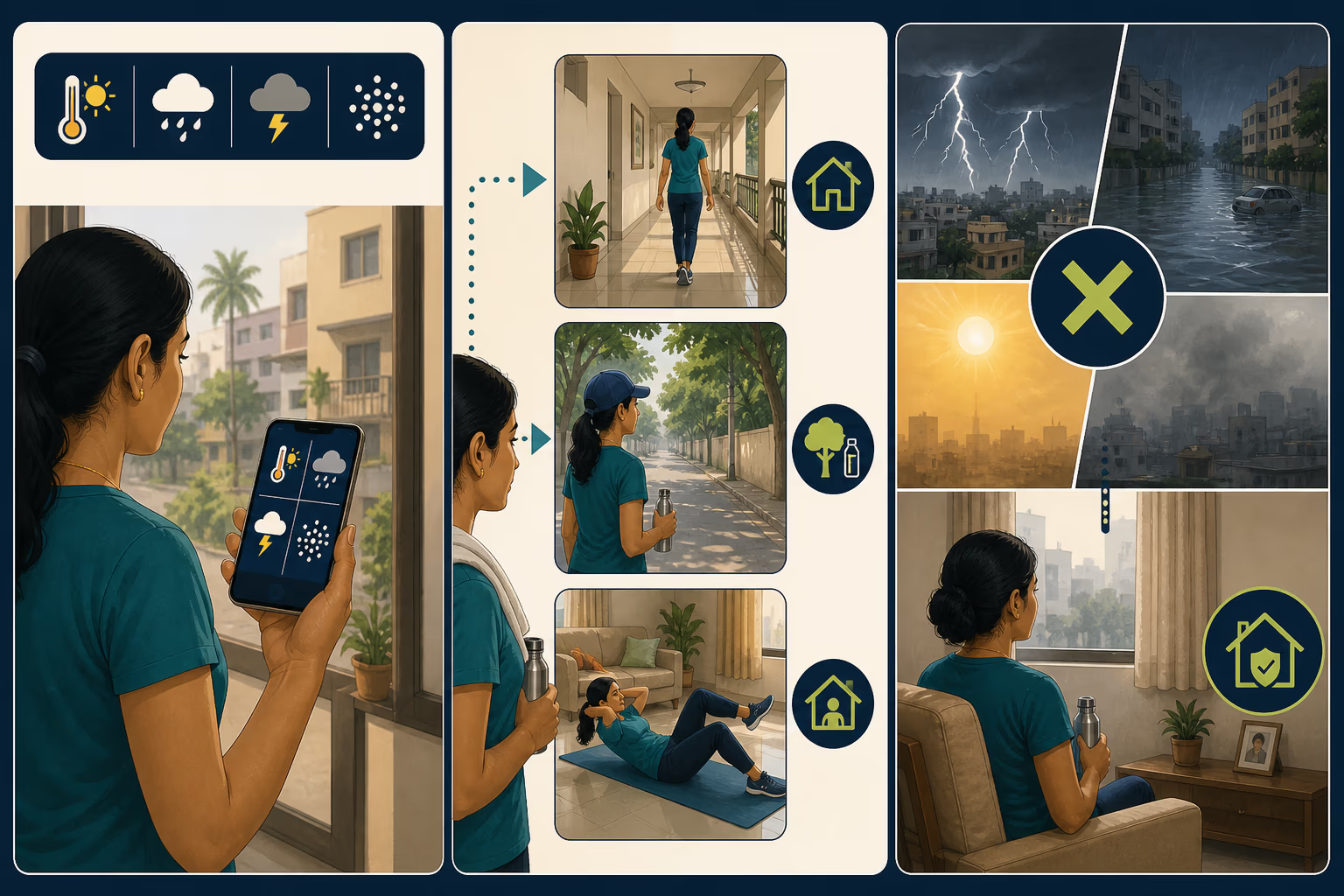
Before you plan your outdoor movement, you must account for environmental factors. Ignoring air quality or heat warnings in favor of a rigid routine is a significant risk. India's National Disaster Management Authority publishes current public-safety guidance for heat waves, cold waves, floods, lightning, and other seasonal hazards through the SACHET portal.
Checking these resources takes less than a minute and should be the first step in your daily planning. If the air quality is poor or a weather warning is in effect, your routine must be flexible enough to shift indoors or reduce in intensity. You can learn more about managing these transitions in our guide on When the Air Is Unsafe: A Practical Guide to Indoor Movement.
Building your modular movement plan
The most effective way to stay consistent is to have a "menu" of options rather than a single, non-negotiable task. By defining a minimum and a normal version of your practice, you eliminate the need to decide what to do when your schedule is tight or your environment is uncooperative.
- The Minimum Version: This is your 5 to 10-minute floor. It might be simple stretching, a few rounds of breathwork, or gentle mobility movements in your living room. The goal here is simply to maintain the habit of moving, regardless of how busy your day is.
- The Normal Version: This is your 20 to 30-minute target. This could be a brisk walk, a guided yoga session, or a bodyweight routine. This is what you aim for on days when your schedule and the local environment allow for more time.
Prioritizing flexibility means accepting that some weeks will have less physical output than others. During festival weeks, for example, your "Normal Version" might be impossible to achieve. That is not a failure; it is a seasonal adjustment. When the plan fails, reset by choosing the minimum version and prioritize rest or safety over intensity.
Finding support that fits your life
One of the biggest challenges in maintaining a routine is finding guidance that respects your constraints. Many standard fitness programs assume you have a dedicated gym space, an hour of free time, and perfect weather.
Prime Tempr helps readers find nearby and online trainers whose schedules, spaces, and practice formats fit local climate and seasonal routines. Whether you need a trainer who understands the limitations of a small home space or one who offers short, high-impact sessions that fit between family commitments, we can help you connect with the right support. You can Find flexible local support to ensure your practice is built around your life, not the other way around.
Your seasonal movement menu
Use this checklist to create a routine that survives the unpredictability of your city's climate and your family's schedule.
- Check local conditions: Consult the SACHET portal for air quality and weather alerts before planning outdoor activity.
- Define your 'Minimum Version': Commit to 5 to 10 minutes of gentle movement at home. This is your baseline for busy days.
- Define your 'Normal Version': Aim for 20 to 30 minutes of activity, such as a walk or a guided session, when conditions and time permit.
- Identify a flexible trainer: Look for professionals who offer short-format sessions or online options that fit your specific space and time constraints.
- Schedule around life: Plan your movement during natural gaps in your family or festival schedule, rather than trying to force it on top of high-pressure events.
Managing the trade-offs
Adapting to local air quality may mean moving indoors more often than you prefer. While outdoor movement can be refreshing, your health must come first. If you find yourself frustrated by the need to stay inside, remember that the benefit of movement comes from the activity itself, not the setting.
Similarly, over-committing to high-intensity workouts during busy festival weeks is a common trap. When you have family visiting or social obligations, your energy is already being taxed. Choosing a lower-intensity, shorter session during these times is a strategic decision that preserves your long-term consistency. By viewing your routine as a modular system, you move away from the all-or-nothing mindset and toward a sustainable, lifelong habit.
Watch alongside this guide
Just walk
This short walking overview is a visual reminder that useful activity can stay simple. Apply the article's local weather, air-quality and public-safety checks first.
The YouTube player stays unloaded until you choose to watch. Loading it connects to YouTube and may allow that service to process usage data.