Choosing Balance and Mobility Classes
Compare class movements, access, support and teaching before booking. A reassuring class name cannot guarantee suitability.
https://primetempr.com/blog/a-practical-guide-to-finding-safe-balance-and-mobility-class
When choosing a balance or mobility class, ask how the session works before relying on its title. "Gentle," "accessible" and "all levels" do not tell you whether its movements, support and pace fit your needs.
A class cannot guarantee safety. Clear answers can help you decide whether to try it or look for a different option.
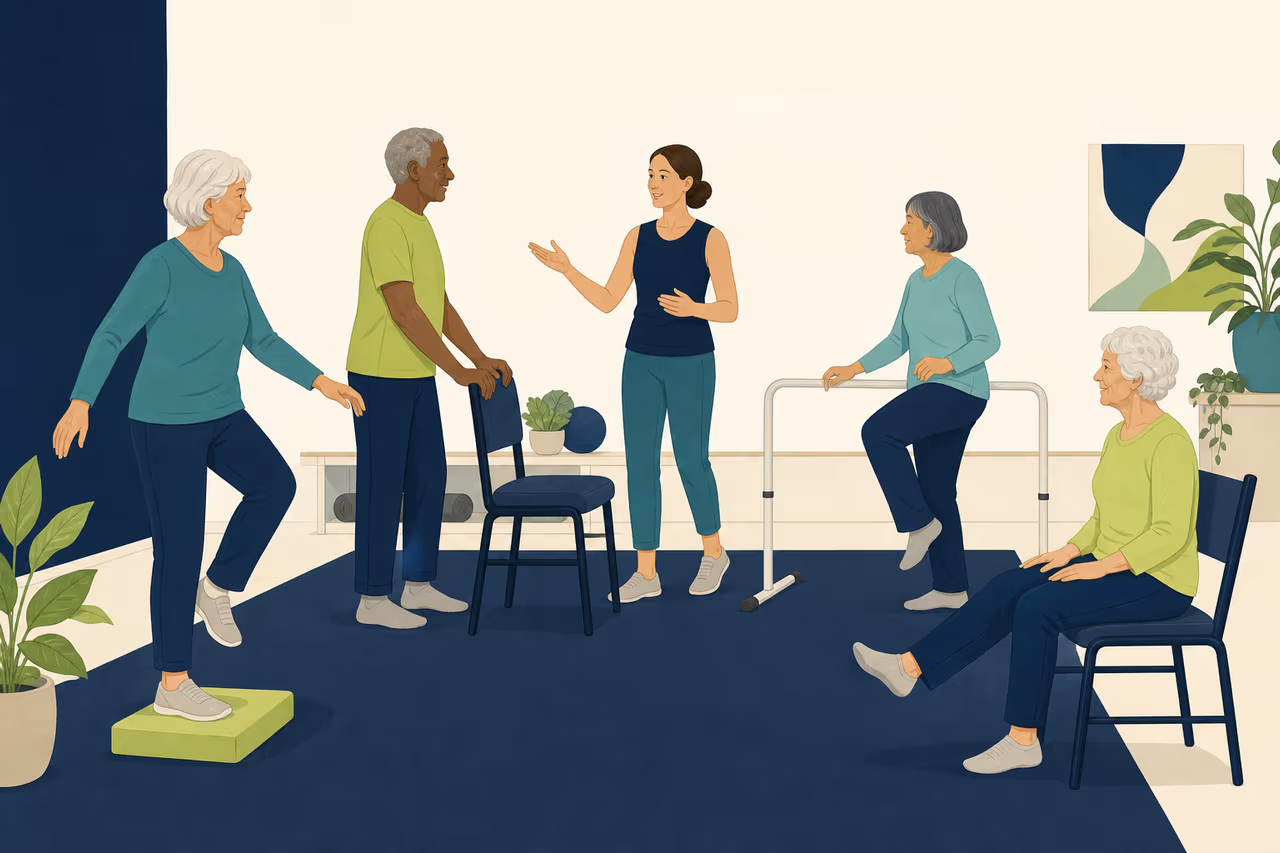
Ask about the movements and support
Find out whether the class includes floor transitions, unsupported standing or quick changes of direction. Ask what alternatives are available and whether you can remain seated, use suitable support or skip a movement.
Chairs, walls and other props can be useful, but their presence alone does not establish that the activity is appropriate. Ask how the instructor chooses and checks them.
Confirm the practical access details
Check the route from arrival to the practice room, including steps, lifts, doors and toilets. Ask about space for a mobility aid if relevant. Confirm the features you need directly; photographs may not show the whole route.
For an online class, ask what space and support are required at home and how the instructor can respond if you need help.
Find out how instruction is handled
Ask about the instructor's relevant training and experience, the class size and how they offer individual alternatives. A small class may allow more attention, but it does not guarantee it.
You can ask to observe or discuss your needs privately before booking. You should be able to decline a physical adjustment or stop an activity without pressure.
Keep medical assessment separate
Repeated falls, new dizziness or a significant change in mobility needs appropriate healthcare advice. A general group class or private lesson is not automatically a replacement for rehabilitation or assessment.
If you have individual advice about activity, discuss how the class would accommodate it. Do not assume that an instructor's confidence means every movement is suitable.
Decide after seeing the ordinary experience
Notice whether instructions are understandable, there is time to change position and alternatives are actually offered. You can leave if the class does not fit. There is no requirement to complete a session to judge it fairly.
For related ideas, browse Supporting Active Aging at Home.
Sources
- CDC: Older adult activity overview (opens in a new tab).
- NCCIH: Yoga effectiveness and safety (opens in a new tab), relevant when the class uses yoga; not a guarantee about a particular provider.
Watch alongside this guide
Accessible yoga for every body
This class demonstrates chair and support options that make the article's accessibility principles easier to see in practice. Source: Vancouver Coastal Health. This optional video is context, not evidence or personal instruction.
The YouTube player stays unloaded until you choose to watch. Loading it connects to YouTube and may allow that service to process usage data.