Yoga Without Kneeling: A Practical Guide
Practice yoga without kneeling by choosing accessible formats, modifying common poses, and using Prime Tempr to find supportive instructors.
https://primetempr.com/blog/yoga-without-kneeling-a-practical-guide
Many standard yoga classes rely on kneeling for transitions, lunges, or floor sequences. If kneeling causes discomfort or is not accessible for your range of motion, you are not alone. Kneeling is not a requirement for a meaningful practice. By selecting specific formats and communicating your needs to an instructor, you can build a sustainable, knee-friendly routine.
Why Kneeling Is Common (and Why You Can Skip It)
Modern studios often use kneeling as a default position to provide a stable base for floor-based transitions. It simplifies balance and isolates specific muscle groups in the hips and core. However, kneeling is a stylistic choice rather than a fundamental requirement of yoga.
Yoga styles and demands vary; qualified instruction and appropriate modification can reduce avoidable risk. If a pose causes pain or prevents you from engaging with the practice, it is not a failure of your body. You have the agency to skip, modify, or replace any pose that does not work for your joints.
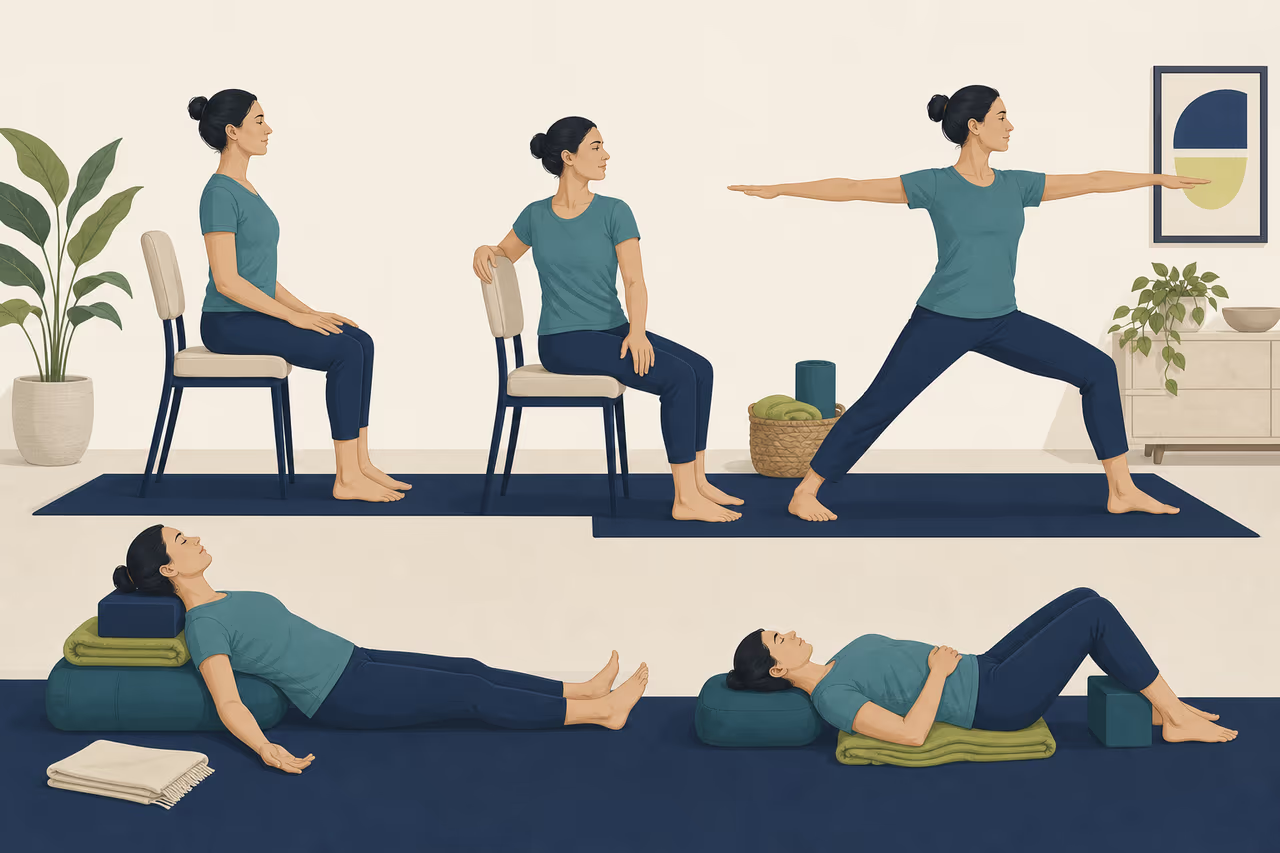
Yoga Formats That Prioritize Standing or Seated Movement
Not all yoga classes require floor-based sequences. To avoid kneeling, look for formats that focus on standing or seated postures.
Chair Yoga
Chair yoga is often the most accessible format for those who need to avoid kneeling. These classes use a chair as a primary prop, allowing you to perform stretches, strength-building movements, and breathwork while seated or using the chair for support while standing. It is an effective way to maintain mobility without needing to reach the floor. You can learn more about this approach in our Chair Yoga for Beginners: A Practical Guide.
Standing Yoga
Standing yoga classes focus on balance, core strength, and leg stability without requiring floor transitions. These classes often utilize wall support or blocks to assist with alignment. Because these sessions keep you upright, they eliminate the repetitive pressure on the kneecaps associated with traditional flow classes. For more on what to expect, read our guide on What to Expect From a Standing Yoga Class.
Gentle or Restorative Yoga
While not always kneeling-free, "Gentle" or "Restorative" classes often move at a slower pace, which provides more time to request modifications. However, be aware that "gentle" is not a universal term; some gentle classes still include floor-based work. Always check the class description or contact the studio directly to ask about the frequency of kneeling.
How to Communicate Your Needs to a Teacher
Self-advocacy is a vital part of a sustainable practice. You do not need to be an expert to ask for what you need. Speak with the instructor before the session begins.
A simple, direct approach works best: "I have some knee sensitivity and need to avoid kneeling. Could you help me identify standing alternatives for the floor-based portions of the class?"
Most qualified instructors will offer specific modifications, such as:
- Using blocks: Placing blocks under your hands during a lunge to keep your torso upright and reduce pressure on the back knee.
- Standing variations: Replacing a kneeling pose with a standing balance or a wide-legged forward fold.
- Prop support: Using a folded blanket or a bolster to cushion the knees, or using a chair to support your weight during transitions.
Finding the Right Support Through Prime Tempr
A major hurdle in finding an accessible class is not knowing what to expect before you arrive. Prime Tempr’s trainer and location profiles allow you to compare formats and contact a business to confirm the accessibility details that matter to you.
Instead of guessing whether a studio’s "all-levels" class will be knee-friendly, you can use our directory to find instructors who explicitly list "accessible yoga," "chair yoga," or "mobility-focused" in their profiles. Find an accessible class near you to start narrowing down your options.
Your Knee-Friendly Practice Checklist
Use this checklist to ensure your next yoga session is supportive and comfortable.
- Identify your specific range of motion limits: Know which movements cause discomfort so you can clearly communicate them.
- Contact the studio or teacher ahead of time: Ask specifically about the frequency of kneeling in their classes.
- Arrive early: Use the time before class to request specific modifications for poses like Tabletop or Low Lunge.
- Use props: Always have blocks, chairs, or folded blankets ready to support your joints.
Trade-offs and Realities
Approach your practice with realistic expectations. Specialized classes, such as chair yoga, may have more limited availability than general flow classes. Modifying poses in a group setting requires self-advocacy; you may need to speak up if an instructor suggests a pose that does not work for you.
Remember, older adults benefit from a weekly mix of aerobic, muscle-strengthening, and balance activity matched to their abilities. Whether you are practicing in a studio or at home, the goal is to find movement that is sustainable and matches your current capacity, rather than pushing through pain to meet an arbitrary standard of what a "yoga pose" should look like.
Sources
- Yoga: Effectiveness and Safety (opens in a new tab), National Center for Complementary and Integrative Health.
- Older Adult Activity: An Overview (opens in a new tab), Centers for Disease Control and Prevention.
Watch alongside this guide
Accessible yoga for every body
This class demonstrates chair and support options that make the article's accessibility principles easier to see in practice. Source: Vancouver Coastal Health. This optional video is context, not evidence or personal instruction.
The YouTube player stays unloaded until you choose to watch. Loading it connects to YouTube and may allow that service to process usage data.