Yoga for Healthy Ageing: A Practical Guide
Build a sustainable yoga practice that prioritizes safety, supports mobility, and meets your unique physical needs as you age.
https://primetempr.com/blog/yoga-for-healthy-ageing-a-practical-guide
Healthy ageing through yoga is not about achieving specific poses or mastering complex sequences; it is about selecting a sustainable, balanced practice that integrates strength, mobility, and breathwork while respecting your individual physical limits. Many people are overwhelmed by "yoga for seniors" marketing, which often obscures the reality that not all classes are created equal. To build a practice that truly supports your longevity, you must look past the aesthetic of the pose and focus on functional independence and comfort.
The Role of Yoga in Healthy Ageing
Yoga is versatile, but it functions best as one component of a broader lifestyle. Public health guidelines note that older adults benefit from a weekly mix of aerobic, muscle-strengthening, and balance activity matched to their abilities. Yoga can contribute to these goals, particularly for balance and strength, when tailored to your current physical state.
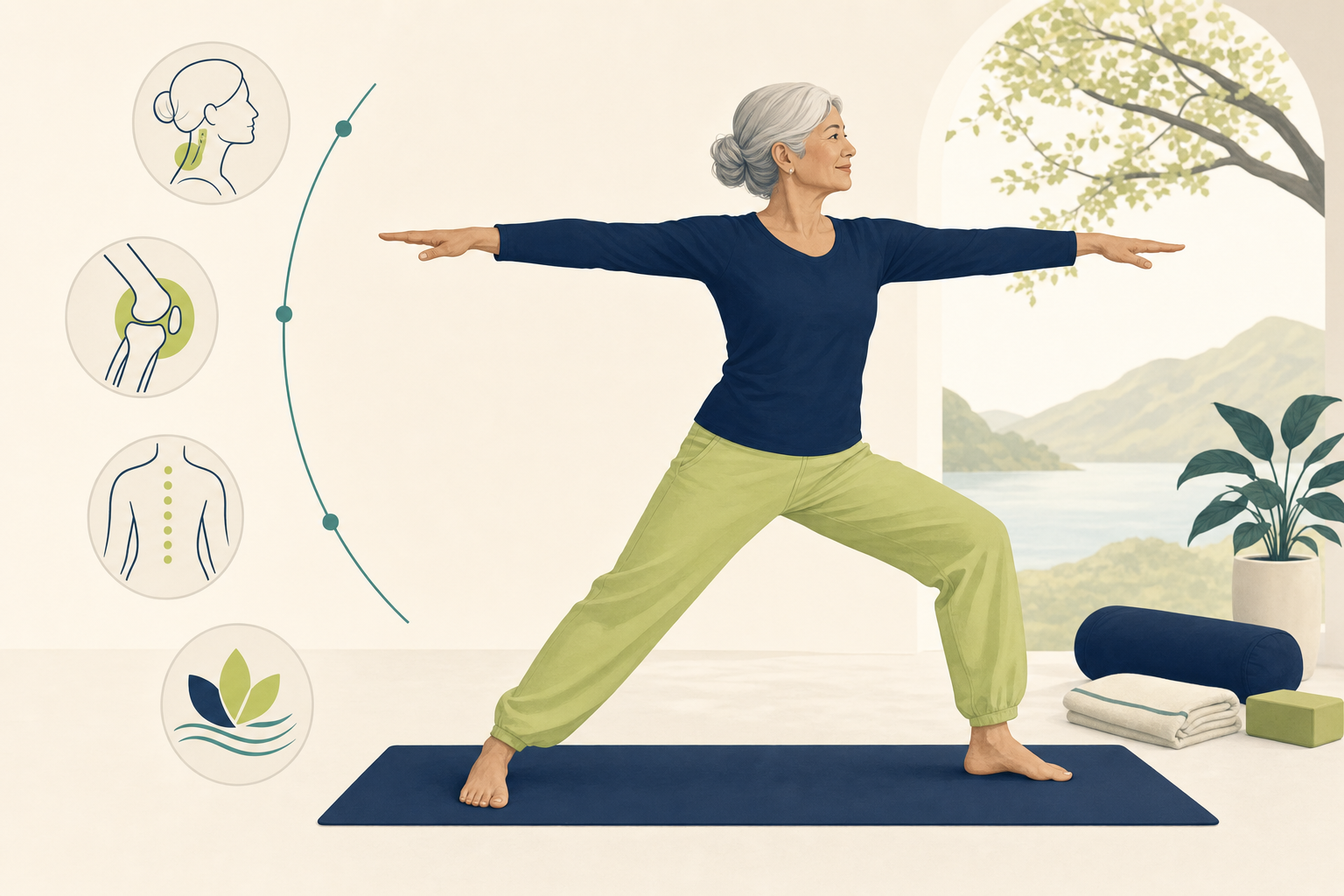
The primary goal of a healthy ageing practice is to maintain the ability to move through daily life with ease. This requires prioritizing three areas: mobility, to maintain a range of motion for daily tasks; strength, to support joints and posture; and balance, to reduce the risk of falls and improve coordination.
Yoga does not replace all forms of exercise. It works best when combined with activities like walking or resistance training to ensure you meet your body's diverse needs for cardiovascular health and bone density.
Understanding Safety and Modification
A common failure mode for many beginners is assuming that all yoga classes are equally accessible. In reality, yoga styles and demands vary significantly; qualified instruction and appropriate modification are essential to reduce avoidable risk. A high-intensity "power" flow may be inappropriate for someone managing joint inflammation, while a gentle, restorative class might lack the muscle-strengthening components necessary for bone health.
"No pain, no gain" is a dangerous philosophy when applied to yoga as you age. If a class feels too intense, or if you feel pressure to push into a pose that causes pain, stop immediately. Use props like blocks, straps, or chairs to modify the movement. If the environment or the instructor does not accommodate these needs, it is a sign that the class may not be the right fit for your current mobility level.
Common Risks and How to Mitigate Them
- Overstretching: Pushing beyond your natural range of motion can lead to ligament strain. Focus on controlled, active movement rather than passive, deep stretching.
- Balance Challenges: If you are prone to dizziness or instability, ensure your practice includes wall-supported poses or chair-based options.
- Ignoring Limitations: Always communicate your health history, including any recent surgeries or chronic conditions, to your instructor before the first session.
How to Evaluate a Class or Teacher
Finding a teacher who understands healthy ageing is as important as the practice itself. When evaluating a studio or private instructor, look for evidence of specialized knowledge.
- Ask about modifications: Does the teacher explicitly mention how to adapt poses for different body types and mobility levels?
- Observe the class structure: Does the sequence include a balance of strength-building (holding poses) and mobility work (moving through ranges of motion)? Avoid classes that focus exclusively on flexibility.
- Check for credentials: Look for teachers who have completed continuing education in areas like geriatric yoga or therapeutic movement.
Your Healthy Ageing Practice Checklist
Use this guide to make informed decisions about your movement practice.
- Assess your current mobility and balance needs: Before choosing a class, be honest with yourself about what your body needs right now, not what it could do ten years ago.
- Prioritize strength and balance: Ensure your chosen practice isn't just about stretching. You need to build the strength to support your joints.
- Communicate your health history: Always speak to your instructor before the first session to ensure they are aware of your specific limitations.
- Prime Tempr's trainer and location profiles give you a place to compare formats, locations, and available information, allowing you to contact a business directly to confirm the accessibility details that matter to you.
Trade-offs in Practice
Progress in healthy ageing is measured by functional independence and comfort, not by the depth of a stretch or the duration of a pose. If a studio environment is unsuitable or a teacher's style is too fast-paced, seek a different setting. This is a practical adjustment, not a personal failure.
If a class environment proves unsupportive, remain encouraged. A proactive, informed approach helps you build a sustainable practice that supports your well-being for years to come.
Continue with guidance
Use this article as orientation, then Find an accessible class when you want responsive guidance or a practice format matched to you.
Sources
- Yoga: Effectiveness and Safety (opens in a new tab) – National Center for Complementary and Integrative Health
- Older Adult Activity: An Overview (opens in a new tab) – Centers for Disease Control and Prevention
Watch alongside this guide
Accessible yoga for every body
This class demonstrates chair and support options that make the article's accessibility principles easier to see in practice. Source: Vancouver Coastal Health. This optional video is context, not evidence or personal instruction.
The YouTube player stays unloaded until you choose to watch. Loading it connects to YouTube and may allow that service to process usage data.