Why Squat Depth Is Not Just About Mobility
Discover how anatomy and stability dictate squat depth, why forcing range backfires, and how to assess your movement patterns.
https://primetempr.com/blog/why-squat-depth-is-not-just-about-mobility
If you find your squat depth limited, you might assume you simply need to stretch more. While flexibility is a component of movement, it is rarely the only factor,or even the most important one,determining how deep you can go. The belief that "deeper is always better" often leads to frustration or unnecessary strain, as it ignores the fundamental roles that bone structure and stability play in your movement mechanics.
Any amount of physical activity is better than none, and all activity counts toward health benefits. Moving within a range that feels stable and controlled allows you to capture the full benefits of the exercise.
The Myth of the Perfect Squat
There is a pervasive idea that a "perfect" squat requires your hips to drop below your knees. This standard is often borrowed from competitive weightlifting or specific athletic disciplines, but it is not a universal requirement for health.
Prioritizing depth over control risks compromising your form. Forcing your body into an unprepared position can cause you to round your spine, lift your heels, or shift your weight unevenly. These compensations reduce exercise effectiveness and can increase discomfort.
Focus on movement quality instead of chasing an arbitrary depth. Can you maintain a neutral spine and even weight distribution through your feet? If so, your squat is successful regardless of hip height. Remember that any amount of physical activity is better than none, and all activity counts toward health benefits.
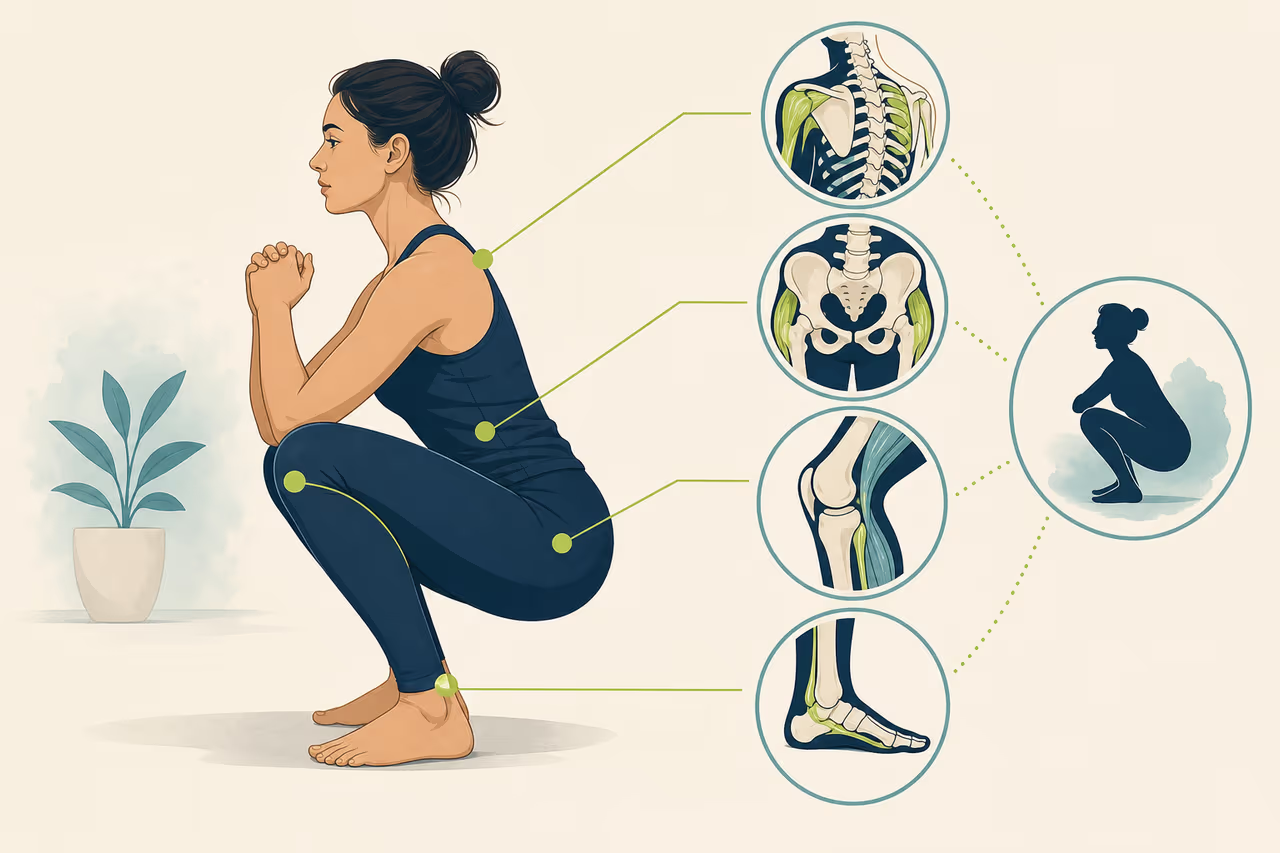
Anatomy, Stability, and Mobility
Three primary factors influence your squat depth: mobility, stability, and your unique skeletal anatomy.
1. Skeletal Anatomy
Your hip joint is a ball-and-socket joint, and the way the "ball" (the head of your femur) sits in the "socket" (the acetabulum of your pelvis) varies significantly from person to person. Differences in the depth, angle, and orientation of your hip socket can physically limit how far your thigh can move toward your torso before bone hits bone. No amount of stretching can change your bone structure. If you have reached your anatomical limit, forcing more depth will only create tension, not progress.
2. Stability
Stability is the ability to control your joints while moving. You might have the flexibility to reach a deep position, but if your core, glutes, and stabilizers cannot support you there, your body will instinctively "brake" to keep you safe. Often, what feels like a mobility restriction is actually your nervous system protecting you from a position where you lack the strength to recover.
3. Mobility
Mobility is the combination of flexibility and the strength to control that range of motion. It is different from passive flexibility, which is simply how far a muscle can stretch. You can learn more about these distinctions in our guide: Mobility vs Flexibility Explained: What’s the Difference?.
Squat Comfort Audit
Use this reflection tool to assess your current squat practice and determine if your focus needs to shift.
| Assessment Point | Question to Ask |
|---|---|
| Control | Can I move through my current range without pain or shaking? |
| Foundation | Do my heels remain grounded throughout the entire movement? |
| Alignment | Is my spine neutral, or am I rounding to reach the bottom? |
| Goal | Is my goal general health or a specific performance metric? |
For general health, adults should aim for 150 to 300 minutes of moderate activity and muscle strengthening on at least two days per week. If your current squat depth lets you perform these strengthening movements safely and consistently, you are meeting the goal.
When to Seek Professional Guidance
A generic mobility routine is sometimes insufficient for understanding your body specific needs. If you feel restricted, experience persistent discomfort, or want to know if your mechanics are optimized for your anatomy, seeking an outside perspective can help.
A qualified trainer can observe your movement patterns in real time, identify whether limitations stem from stability, anatomy, or technique, and provide personalized cues. Prime Tempr helps readers compare trainers and local movement businesses when a generic mobility routine needs observation, progression, or a format matched to the individual.
If you are ready to move beyond self-guided guesswork, you can find a yoga teacher or movement professional who can help you build a sustainable, personalized practice.
Working with a professional allows you to:
- Identify your baseline: Understand what your current range of motion looks like without judgment.
- Personalize your cues: Learn how foot placement or stance width can change your squat based on your specific hip anatomy.
- Build stability: Shift your focus from "stretching deeper" to "strengthening the range you have."
Remember, the goal of movement is longevity and consistency. By letting go of the pressure to achieve a "deep" squat, you open the door to a more sustainable practice that respects your body’s unique design.
Sources
- Physical activity (opens in a new tab), World Health Organization.
- Top 10 Things to Know About the Physical Activity Guidelines (opens in a new tab), Office of Disease Prevention and Health Promotion.
Watch alongside this guide
The science of stretch
A Harvard Medical School researcher explains stretching concepts that add useful context to this mobility guide. Source: Conversations That Matter. This optional video is context, not evidence or personal instruction.
The YouTube player stays unloaded until you choose to watch. Loading it connects to YouTube and may allow that service to process usage data.