Mobility vs Flexibility: Understanding the Difference in Movement
Discover the practical difference between flexibility and mobility, how they shape daily movement, and when to seek professional guidance.
https://primetempr.com/blog/mobility-vs-flexibility-explained-what-s-the-difference
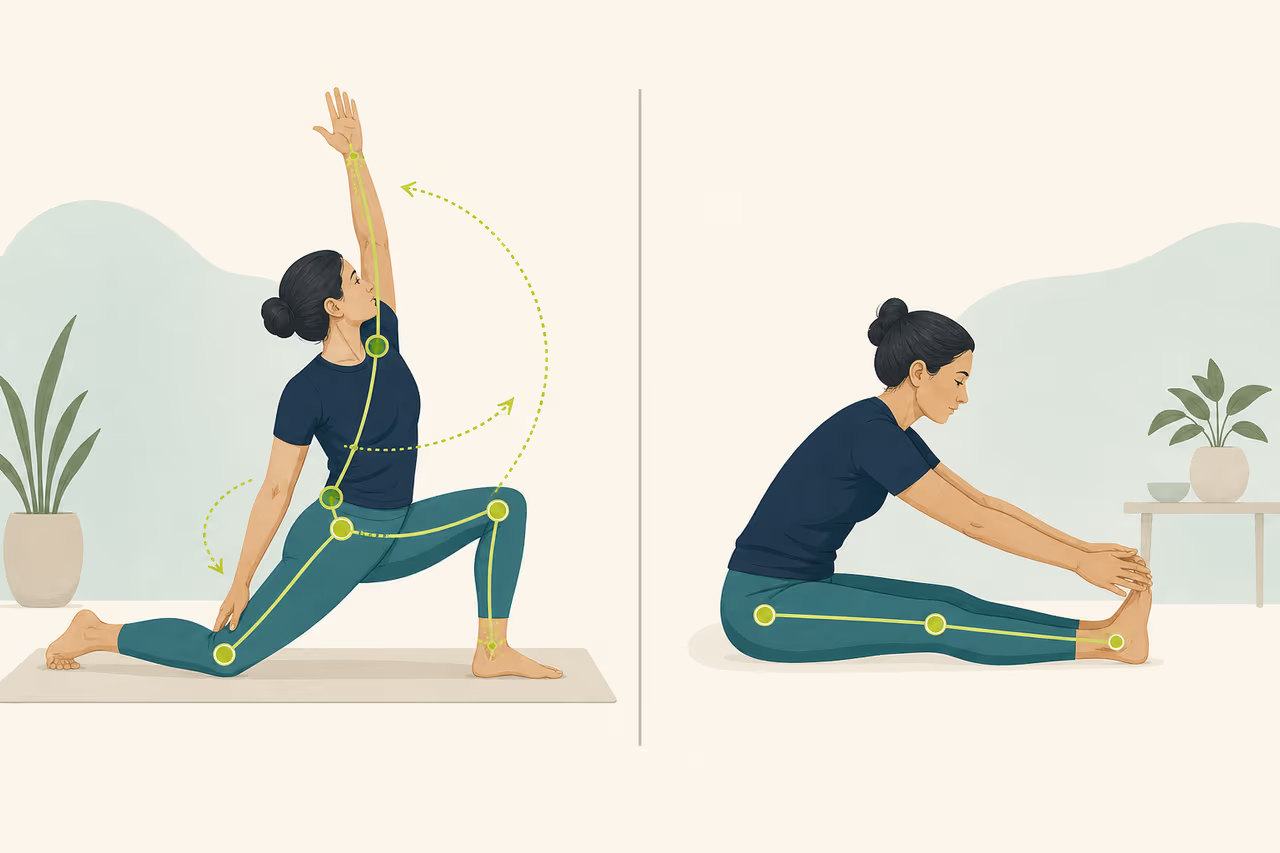
Flexibility is the ability of a muscle or muscle group to lengthen passively, such as when you hold a hamstring stretch on the floor. Mobility is different because it is your active, neuromuscular control through a full range of motion, requiring strength, coordination, and stability around a joint. Confusing passive stretching with active joint control is a common misstep that can lead to stalled progress or routines that fail to support daily physical needs.
Understanding how these two qualities differ helps you build a more balanced approach to physical wellbeing, whether you are practicing independently or exploring options via Mobility & Flexibility.
The Core Difference: Flexibility vs. Mobility
To understand why someone might be able to touch their toes during a passive forward fold yet struggle to lift their leg high with control during a standing movement, it helps to look at the mechanics of each concept.
Flexibility focuses on tissue extensibility. It tells you how far your muscles and connective tissues can stretch when an external force, like gravity, a strap, or your own hands, pulls them apart. It remains largely a passive state.
Mobility combines flexibility with strength, balance, and motor control. It governs how well you can move a joint under your own muscular power. You might have ample flexibility in your hips, but without corresponding hip mobility and strength, your body may lack the stability required to navigate uneven ground or transition smoothly from the floor to standing.
Key Comparisons in Movement
| Attribute | Flexibility | Mobility |
|---|---|---|
| Primary Focus | Passive muscle length and tissue extensibility | Active joint control, strength, and coordination |
| How It’s Tested | Holding a stationary stretch or split | Executing controlled, unassisted joint rotations or dynamic movements |
| Main Limitation | Nervous system tension or structural tissue length | Lack of muscular strength, stability, or motor control within a range |
Treating flexibility as the only measure of physical health is a frequent failure mode. Stretching aggressively into deep discomfort without developing active joint control often leaves joints vulnerable and strength underdeveloped.
How They Fit Into Daily Movement and Health
Both flexibility and mobility function as supporting elements within a broader, active lifestyle rather than acting as standalone cures for physical discomfort. General physical activity guidelines emphasize a holistic view of health that goes beyond isolated stretching routines.
According to public health data, any amount of physical activity is better than none, all activity counts, and muscle strengthening benefits everyone. Adults can work toward 150 to 300 weekly minutes of moderate aerobic activity and muscle strengthening on at least two days.
When you integrate mobility and flexibility work into a routine that already includes regular walking, moderate exercise, and resistance training, your body receives the varied mechanical inputs it needs to adapt. Ignoring muscle strengthening guidelines in favor of isolated stretching can leave gaps in your physical capacity, particularly as muscle mass and joint resilience naturally fluctuate over time.
When to Practice Independently vs. Seeking Guidance
Self-guided stretching and online movement videos offer high accessibility, allowing you to practice at home on your own schedule. However, independent practice has trade-offs. Self-guided routines lack external observation, meaning it is easy to overlook blind spots, compensate with neighboring joints, or reinforce unhelpful movement patterns.
Targeted mobility work requires consistency and patience rather than quick fixes. If your progress stalls, if your joints feel persistently stiff despite regular stretching, or if you find it difficult to translate passive flexibility into active control, structured feedback proves invaluable.
When a generic mobility routine needs observation, progression, or a format matched to the individual, Prime Tempr helps readers compare trainers and local movement businesses to find professional support. Working with a qualified trainer or studio instructor allows you to receive individualized feedback on your form, ensuring your practice matches your unique physical requirements. You can also explore local options directly by checking out resources to find yoga near you.
Choosing Your Movement Focus: Flexibility vs. Mobility
To help clarify your next steps, consider the following decision guide:
- Assess whether your current routine includes both passive stretching and active joint control.
- Incorporate muscle-strengthening activities on at least two days per week alongside your mobility practice.
- Accumulate moderate aerobic activity according to personal capacity and health guidelines.
- Consider seeking localized trainer support if you need personalized observation or progression.
Recovery from stalled progress or overly aggressive stretching often involves returning to baseline movements, reducing intensity, focusing on active control over passive range, and exploring trainer-led guidance if your form or comfort remains uncertain.
Sources
Watch alongside this guide
The science of stretch
A Harvard Medical School researcher explains stretching concepts that add useful context to this mobility guide. Source: Conversations That Matter. This optional video is context, not evidence or personal instruction.
The YouTube player stays unloaded until you choose to watch. Loading it connects to YouTube and may allow that service to process usage data.