Why Everyday Tasks Matter More Than Pose Depth in Later Adulthood
Measure movement progress through everyday independence and daily living tasks rather than arbitrary flexibility or pose depth.
https://primetempr.com/blog/why-everyday-tasks-matter-more-than-pose-depth-in-later-adul
True movement progress in later adulthood is measured by ease in daily living tasks, like rising from a chair, carrying groceries, or walking without hesitation, rather than arbitrary flexibility or pose depth. Traditional fitness advice often defines progress by how deep into a yoga pose someone can stretch or how long they can hold a difficult balance. This aesthetic focus can cause frustration, unnecessary strain, or giving up altogether.
By shifting the metric of success away from the yoga mat and into the living room, older adults and their families can build a realistic, sustainable approach to lifelong mobility and independence.
Why pose depth is a misleading measure of progress
Focusing primarily on how far a joint can bend or how deep a stretch can reach ignores the actual mechanical demands of daily life. Yoga styles and demands vary widely, and qualified instruction with appropriate modification can reduce avoidable risk. An individual might achieve an impressive reach on a mat while still struggling to stand up from a low sofa or maintain balance while carrying household objects. Pushing for extreme flexibility without foundational joint stability can increase injury risks. Aesthetic milestones do not translate reliably to functional capability. A person does not need to touch their toes to live independently, but they do need adequate lower body strength to rise from a seated position and reliable balance to navigate changing floor surfaces.
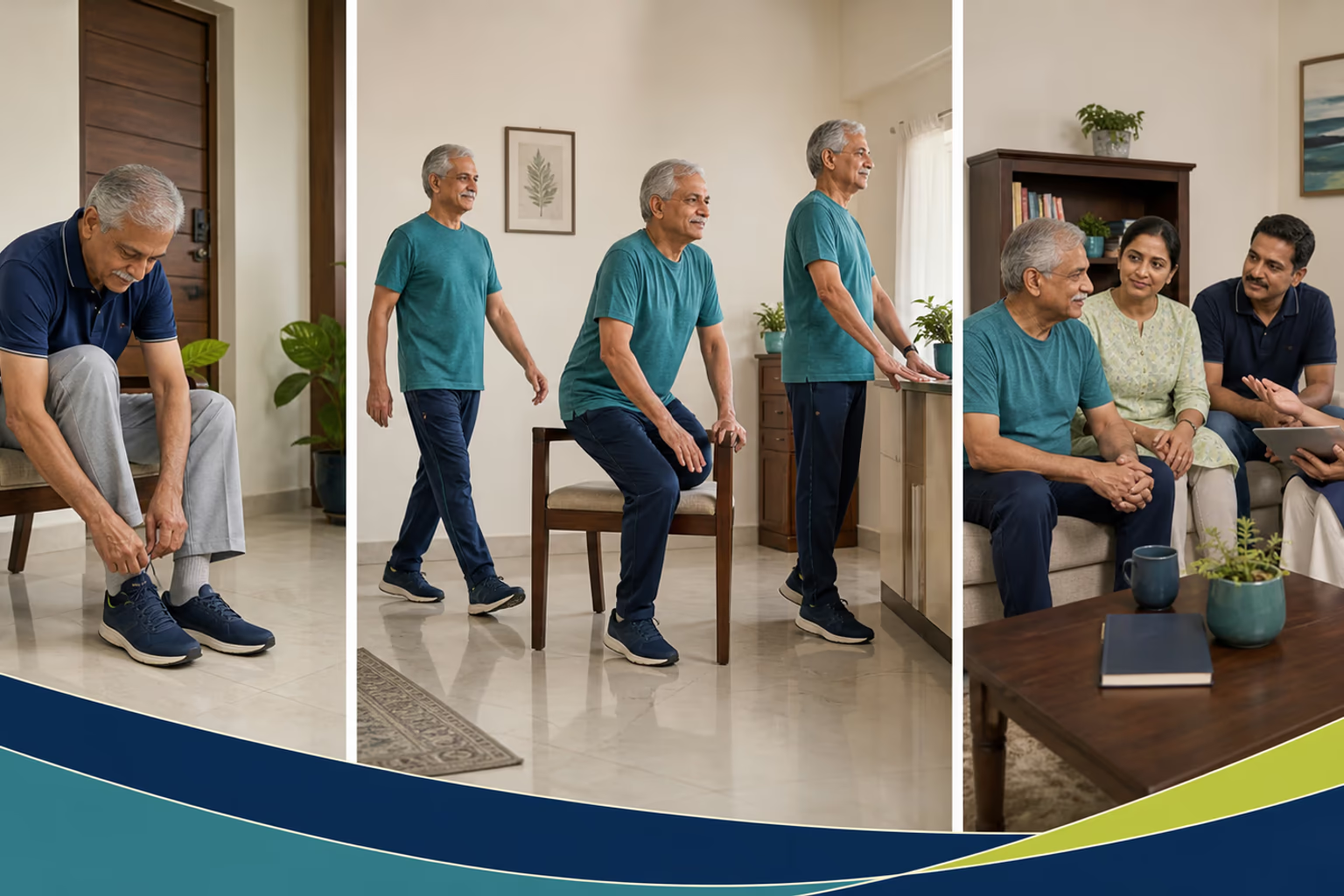
Shifting focus to everyday movements and tasks
Older adults benefit from a weekly mix of aerobic, muscle-strengthening, and balance activity matched to their abilities. Rather than logging workout intensities or measuring angles of extension, functional tracking looks at real-world capability.
Everyday tasks reflect genuine improvements in strength, balance, and mobility because they utilize multiple muscle groups and coordination patterns simultaneously. Stepping out of a car, reaching overhead to retrieve a kitchen item, or walking to a nearby shop all demand integrated physical health that static stretching metrics fail to capture. When families observe these moments, they can assess physical health through practical outcomes rather than rigid numbers.
Practical Trade-offs and knowing when to seek support
Moving away from standard pose depth means letting go of visual aesthetics and conventional fitness milestones in favor of practical, quiet capability. Functional tracking requires honest daily self-observation rather than relying on a structured gym workout log. This choice removes social comparison in favor of personal utility, focusing entirely on what helps an individual move through their day with confidence.
However, functional tracking also has limits. If daily task tracking feels overwhelming, or if pain or new unsteadiness arises, pause the current routine, rely on stable support, and seek guidance from a qualified instructor or clinical professional. Yoga styles and demands vary; qualified instruction and appropriate modification can reduce avoidable risk. Prime Tempr profiles help families compare age-inclusive trainers, class pace, accessibility experience, and online options before choosing responsive support. Readers can explore options to Find an age-inclusive trainer or review broader strategies through Supporting Active Aging at Home. For those looking to structure their routines safely, a well-rounded approach can be found in A Simple Weekly Plan That Combines Walking, Strength, and Balance.
Daily task progress reflection
Use this reflection guide to observe functional changes during your normal routines without turning movement into a rigid test.
- Notice ease of rising from a low chair or bed without needing to grab nearby furniture.
- Observe confidence when carrying household items or groceries from room to room.
- Check stability and comfort when stepping up or down stairs during regular routines.
- Evaluate overall breathing ease and stamina during routine morning activities.
- Review whether movement choices continue to support personal independence and comfort.
Setting and Safety Note: Practice these reflections during normal daily activities in well-lit rooms with clear floor space. Keep stable walls, sturdy chairs, or handrails within arm's reach. If you experience sharp pain, sudden dizziness, or unexpected fatigue, stop immediately and rest. If new or concerning physical changes persist, consult a healthcare professional before continuing physical activity.
Follow-along reflection
Use the prompts below to review the idea in context, without turning it into a diagnosis or a fixed rule.
If this approach does not fit
If daily task tracking feels overwhelming or if pain or new unsteadiness arises, pause the current routine, rely on stable support, and seek guidance from a qualified instructor or clinical professional.
Questions to carry forward
- Why is pose depth a misleading measure of fitness for older adults?
- What everyday tasks reflect genuine improvements in strength, balance, and mobility?
- How can older adults and family members track functional changes without rigid testing?
- What are the physical and practical trade-offs of shifting focus away from traditional yoga alignment metrics?
- How do I find qualified guidance when looking for age-inclusive trainers?
Sources
- Yoga: Effectiveness and Safety (opens in a new tab), National Center for Complementary and Integrative Health
- Older Adult Activity: An Overview (opens in a new tab), Centers for Disease Control and Prevention
Watch alongside this guide
A 15-minute workout for older adults
This National Institute on Aging routine demonstrates manageable strength and balance pacing. Use stable support and seek assessment for new or concerning changes.
The YouTube player stays unloaded until you choose to watch. Loading it connects to YouTube and may allow that service to process usage data.