When Should You Exercise for Better Sleep?
Learn how daytime movement supports rest, why workout timing remains personal, and how to build a practical wind-down routine.
https://primetempr.com/blog/when-should-you-exercise-for-better-sleep
The most effective time to exercise for better sleep is whenever you can consistently fit it into your schedule. While common belief suggests evening workouts ruin sleep quality, the reality is more nuanced. Consistent daytime activity is a foundational pillar of sleep health, but your ability to transition from high-energy movement to a calm state often matters more than the specific hour on the clock.
We help readers find restorative yoga, meditation, and trainer-led support while keeping educational content separate from medical care or personalized diagnosis. If you struggle with sleep, remember that lifestyle adjustments serve as supportive tools rather than replacements for professional medical advice.
The link between activity and rest
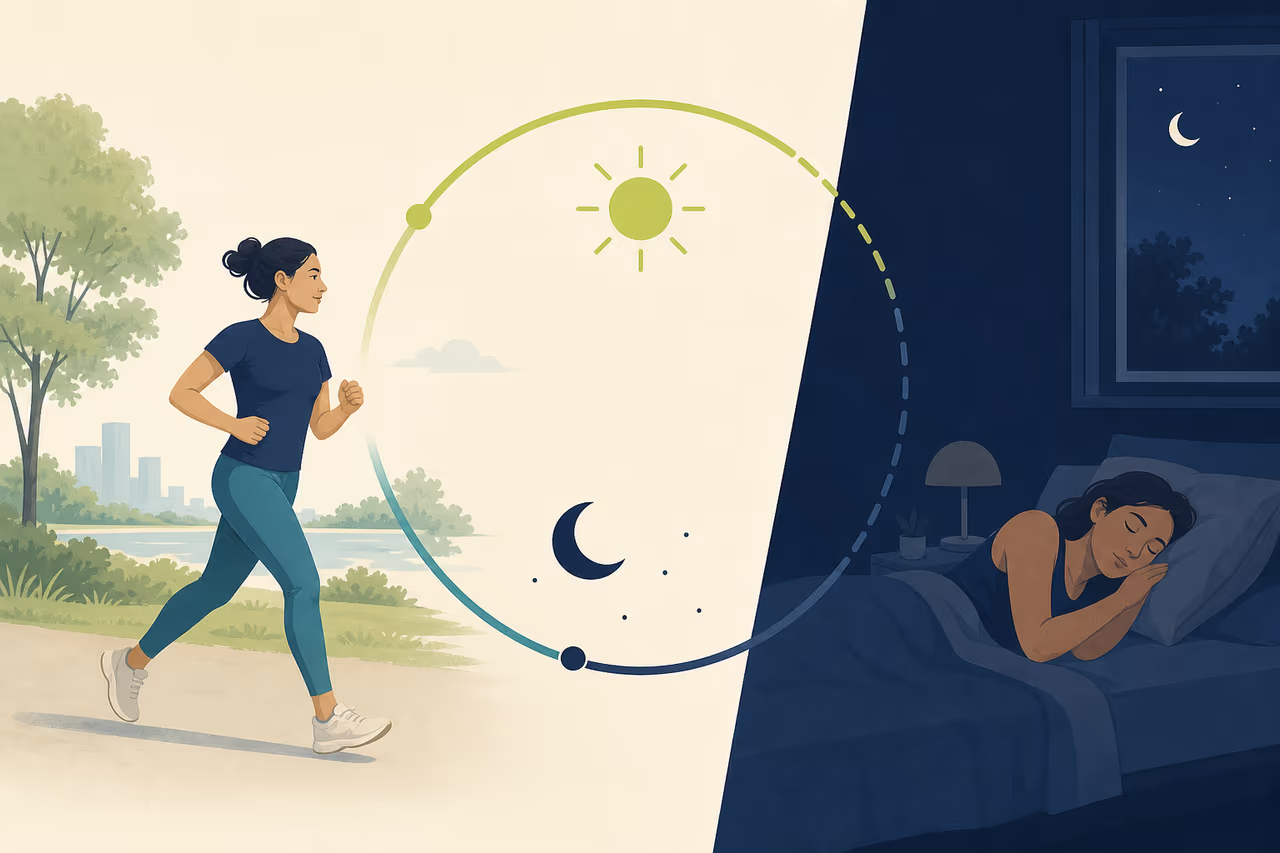
Physical activity acts as a regulator for your internal clock. Engaging in regular movement throughout the day reinforces a consistent sleep-wake cycle, which is essential for healthy sleep. When you move your body, you expend energy and increase your core temperature; as your body cools down afterward, it sends a biological signal that it is time to prepare for rest.
However, individual needs vary significantly. Some people find that a high-intensity workout in the evening leaves them feeling energized and alert, making it difficult to fall asleep. Others find that exercise at any time of day helps them release physical tension, leading to a deeper, more restorative night. There is no universal "perfect" time to exercise; the goal is to observe how your own body responds to different schedules.
Does timing really matter?
If you find yourself feeling "wired" after an evening workout, the timing might be a factor, but it is rarely the only one. The intensity of the exercise and your personal stress levels play significant roles.
Common trade-offs in exercise timing
| Timing | Potential Benefit | Potential Trade-off |
|---|---|---|
| Morning | Establishes a consistent routine; boosts alertness. | May be difficult to sustain if you are not a morning person. |
| Afternoon | Often coincides with peak physical performance. | Can be interrupted by work or mid-day fatigue. |
| Evening | Helps release the day’s accumulated stress. | High-intensity movement may delay sleep onset for some. |
If you can only exercise in the evening, you do not necessarily need to stop. Instead, consider adjusting the intensity or the nature of the movement. If a heavy lifting session or a high-intensity interval class leaves you tossing and turning, try shifting those sessions to earlier in the day and reserving the evening for lower-intensity practices.
Creating a transition routine
The transition from movement to rest is often the missing link in a healthy sleep routine. If you exercise late, your body needs a clear "off-switch" to signal that the period of exertion has ended and the period of recovery has begun.
Relaxation techniques, such as slow, rhythmic breathing and progressive relaxation, can be effective during this transition. These practices help lower your heart rate and shift your nervous system into a more receptive state for sleep. You can explore restorative guidance to find professional support in building these habits, or start with simple, self-guided practices.
Your Evening Transition Checklist
If you want to improve your sleep quality, use this checklist to bridge the gap between your workout and your bed:
- Aim for a buffer: Complete higher-intensity movement at least 2 hours before your planned bedtime.
- Prioritize the cool-down: If you must exercise late, dedicate at least 15 minutes to cooling down with slow, rhythmic breathing or gentle mobility work.
- Control your environment: Dim the lights in your home immediately following your workout to reduce blue light exposure.
- Shift the focus: Replace high-stimulation activities, like scrolling through social media or catching up on work emails, with a 10-minute restorative yoga sequence. You can find inspiration in our guide on Yoga Before Bed.
- Prepare the space: Ensure your bedroom is cool, dark, and quiet to signal to your body that it is time for rest.
For more specific techniques on using your breath to calm the nervous system, our guide on Slow Breathing for Sleep offers practical steps to get you started.
When to seek professional support
While lifestyle adjustments like consistent movement and relaxation routines support better sleep, they are not a cure-all. If you consistently struggle with falling or staying asleep, or if your sleep issues affect your daily functioning, consult a healthcare professional.
Sleep disorders often require personalized diagnosis and treatment that go beyond general wellness advice. Never treat exercise as a substitute for professional medical care if you suspect an underlying health condition.
Sources
- Heart-Healthy Living: Get Enough Good-Quality Sleep (opens in a new tab), National Heart, Lung, and Blood Institute.
- Relaxation Techniques: What You Need To Know (opens in a new tab), National Center for Complementary and Integrative Health.
Watch alongside this guide
Stress management
Use this concise Mayo Clinic explainer alongside the article's practical steps for stress, sleep, and recovery. Source: Mayo Clinic. This optional video is context, not evidence or personal instruction.
The YouTube player stays unloaded until you choose to watch. Loading it connects to YouTube and may allow that service to process usage data.