What Vinyasa Means in Yoga: A Practical Guide
Understand how vinyasa functions as both a class style and a physical movement to navigate your practice safely.
https://primetempr.com/blog/what-vinyasa-means-in-a-yoga-class-a-clear-guide
In a yoga class, the word "vinyasa" usually refers to one of two things: a specific style of class where poses flow together, or a short sequence of transitional movements used to reset between poses.
Understanding this distinction is one of the first hurdles for new students. Because the term is used interchangeably to describe both the overall structure of a class and a specific physical action, it can lead to confusion. You might sign up for a "Vinyasa Flow" class (the style) and then hear the teacher say, "Take a vinyasa" (the movement).
Knowing which definition applies helps you manage your energy, read class descriptions, and decide if a movement fits your body today.
Vinyasa as a Style vs. A Movement
The word "vinyasa" is derived from Sanskrit, often translated as "to place in a special way." In a modern studio setting, this translates to the coordination of movement with breath.
Vinyasa as a Yoga Style
When you see "Vinyasa" on a studio schedule, it describes a style of yoga where the practice is dynamic. Instead of holding a single pose for a long period, you move from one posture to the next, often using the inhale and exhale to time the transitions.
Because yoga styles vary significantly between teachers, a "Vinyasa" class with one instructor may feel very different from another. One might focus on slow, mindful mobility, while another might lead a fast-paced, high-intensity session. Remember that while many people find these classes beneficial for strength and flexibility, injuries can occur in any style of yoga.
Vinyasa as a Movement Sequence
During a class,even one that isn't labeled as a Vinyasa style,a teacher might say, "Take a vinyasa" or "Flow through your vinyasa." In this context, they are referring to a specific four-part transitional sequence used to reset the spine and prepare for the next series of poses.
| Context | What it means | What to expect |
|---|---|---|
| Class Style | The overall format of the session. | Continuous movement, breath-synchronized transitions, and varying intensity. |
| Movement Sequence | A specific set of transitions between poses. | A sequence typically involving a plank, a low push-up, a backbend, and a resting pose. |
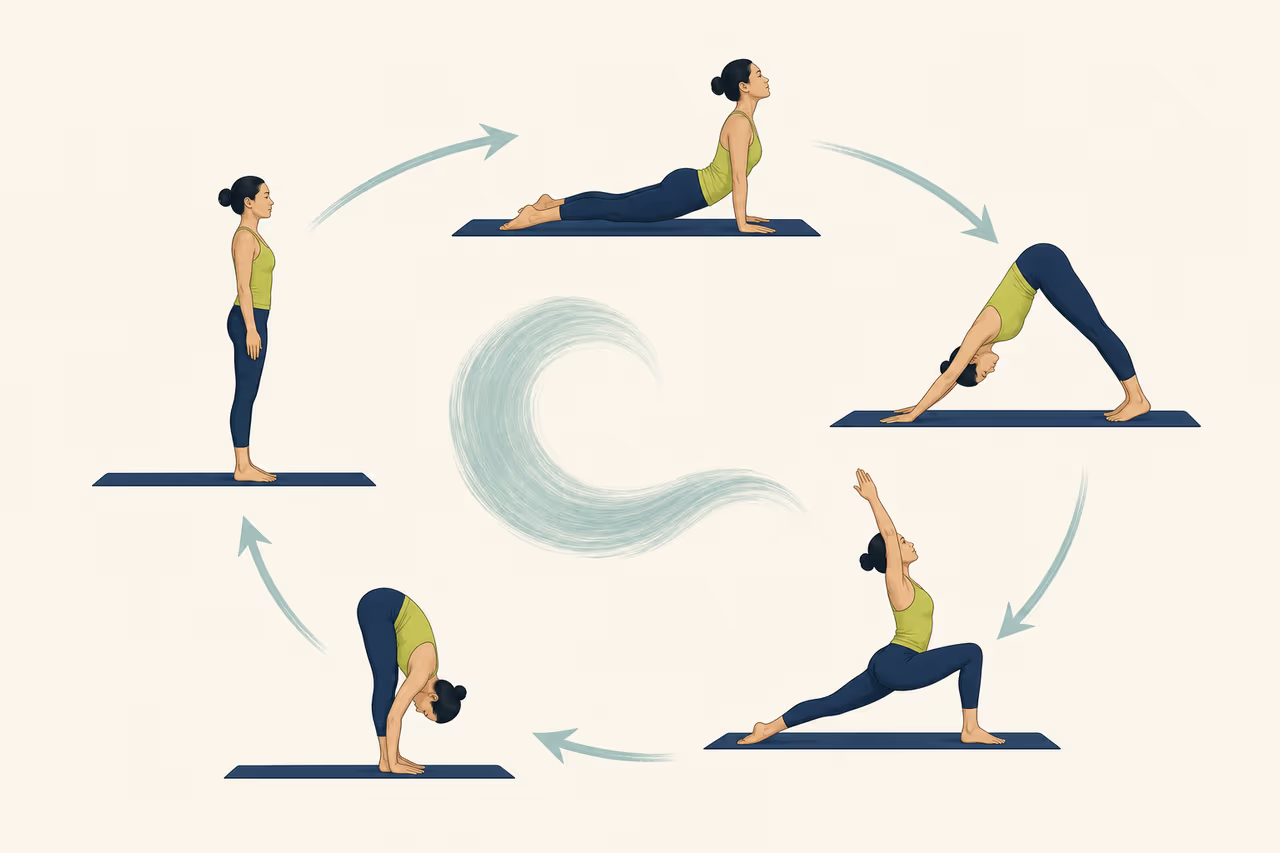
What Happens When a Teacher Says "Take a Vinyasa"
When a teacher invites the class to "take a vinyasa," they are offering a bridge between two parts of the practice. While the exact poses can be modified, the standard sequence usually involves:
- Plank Pose: Moving from a standing or seated position into a high push-up position.
- Chaturanga Dandasana: Lowering the body toward the floor, keeping the elbows tucked in.
- Upward-Facing Dog or Cobra: A backbend where the chest opens forward.
- Downward-Facing Dog: Pushing the hips back and up into an inverted "V" shape.
This sequence is often used as a "reset." However, it is not a mandatory requirement for yoga. If a teacher says "take a vinyasa," it is an invitation, not a command. You can always choose to skip the sequence and meet the rest of the class in Downward-Facing Dog or a resting pose.
Why You Don't Have to Do Every Vinyasa
One of the most common failure modes for students is feeling pressured to perform every vinyasa sequence, even when it causes pain or extreme fatigue. It is a mistake to assume that "vinyasa" must always be a fast-paced, sweaty workout to be "correct."
Managing Intensity and Fatigue
Vinyasa sequences can increase heart rate and physical intensity. While this can be a goal for some, it may not be suitable for every student or every day. If you are tired, recovering from an injury, or simply not feeling the need for high intensity, skipping the vinyasa is a valid choice.
According to the World Health Organization, any amount of physical activity is better than none, and all activity counts toward your health goals. Choosing a lower-impact version of a transition or resting instead of a full sequence keeps you participating safely.
The Recovery Path
If a vinyasa sequence feels inaccessible or overwhelming, you have several options:
- Pause and Rest: Move directly into Child’s Pose (kneeling with your forehead on the mat) and wait for the next instruction.
- Step Back: Instead of jumping or flowing through the push-up, simply step back into Downward-Facing Dog.
- Modify the Push-up: Drop your knees to the mat during the transition to reduce the load on your shoulders and wrists.
Prioritizing steady breathing and physical safety matters more than keeping pace with the group.
How to Approach Vinyasa in Your Next Class
Use this checklist to navigate the use of vinyasa in your practice.
- Check the class description: Before booking, see if the description specifies "Vinyasa" as the style or if it mentions "vinyasa-style transitions." This helps set expectations for the pace. You can learn more about this in our guide on how to read a yoga class description.
- Identify your "rest" pose: Before the class starts, decide what pose you will use if you need to skip a transition. Child’s Pose or a simple Downward-Facing Dog are common choices.
- Ask your trainer: If you are unsure about the movements, arrive a few minutes early and ask, "What modifications do you suggest if I want to skip the vinyasa transitions today?"
- Listen to your body: If your breath becomes ragged or you feel sharp pain, it is a signal to slow down or modify. Why yoga teachers offer pose options is exactly for this reason,to help you find the version of the pose that works for you.
How to Ask for What You Need
Yoga terminology can feel like a barrier, but these terms are communication tools rather than tests.
Prime Tempr’s trainer marketplace lets you turn unfamiliar yoga language into better questions. Instead of relying on a static glossary, you can practise with a qualified trainer who can explain these concepts in real-time. A trainer can help you understand why a certain transition is being used and how to adapt it to your current fitness level, mobility, or recovery needs.
When you work with a trainer, you can move past the "what" of vinyasa and focus on the "how" that works for your body. This personalized guidance ensures that you aren't just following a sequence of movements, but building a practice that supports your long-term wellbeing.
FAQ: Common Questions About Vinyasa
Is a vinyasa sequence mandatory in every yoga class?
No. Vinyasa sequences are common in Vinyasa Flow, Ashtanga, and Power Yoga, but they may be entirely absent in Hatha, Yin, or Restorative classes. Even in a class where they are frequently used, you always have the option to skip them.
How do I know if a 'Vinyasa' class is the right fit for me?
Consider your current energy levels and physical goals. If you are looking for continuous movement and a moderate to high-intensity workout, Vinyasa may be a good fit. If you prefer to hold poses longer or need a more sedentary, relaxing practice, a different style might be better. Remember that any amount of activity is beneficial, so choose the style that you are most likely to enjoy and sustain.
Why do teachers ask me to 'take a vinyasa' during class?
Teachers use it as a way to "neutralize" the body between different sides of a pose (like doing a pose on the right side, then the left) or between different sequences. It helps maintain the "flow" and heat of the class.
Can I do yoga if I can't do a vinyasa?
Absolutely. Many people practice yoga for years without ever performing a full vinyasa transition. Yoga is a broad practice that combines postures, breathing, and meditation; the specific transitional sequence known as a "vinyasa" is just one small part of that tradition.
Sources
- Yoga: Effectiveness and Safety | https://www.nccih.nih.gov/health/yoga-effectiveness-and-safety (opens in a new tab)
- Physical activity | https://www.who.int/news-room/fact-sheets/detail/physical-activity (opens in a new tab)
Watch alongside this guide
An introductory yoga flow
Watch how spoken cues, breath, and transitions work together, then compare them with the article's guidance. Source: Yoga With Adriene. This optional video is context, not evidence or personal instruction.
The YouTube player stays unloaded until you choose to watch. Loading it connects to YouTube and may allow that service to process usage data.