What to Wear to Yoga: Comfort, Fit, and What You Can Skip
Choose comfortable, flexible yoga clothes from your existing wardrobe with this practical guide to proper fit and common pitfalls.
https://primetempr.com/blog/what-to-wear-to-yoga-comfort-fit-and-what-you-can-skip
Comfortable, stretchy clothing that allows free movement and stays in place during postures is all you need for a yoga class. Specialized gear and expensive brands are entirely optional.
Uncertainty about what clothes to wear to a yoga class often leads to overthinking or buying unnecessary specialized items. Because yoga combines postures, breathing, and meditation while styles vary, your clothing should support physical movement without adding distraction.
Key Features to Look for in Yoga Clothes
When selecting an outfit from your current wardrobe, focus on functionality rather than fashion labels. The primary goal is uninhibited movement across various physical postures.
- Stretch and Mobility: Fabrics with a bit of spandex or elastane allow your hips, knees, and spine to move freely through deep stretches.
- Secure Fit: Clothes should stay close to your body so they do not shift or slide awkwardly when you change positions.
- Breathability: Soft, moisture-wicking materials help regulate your temperature as your body warms up during active movement or in heated room environments.
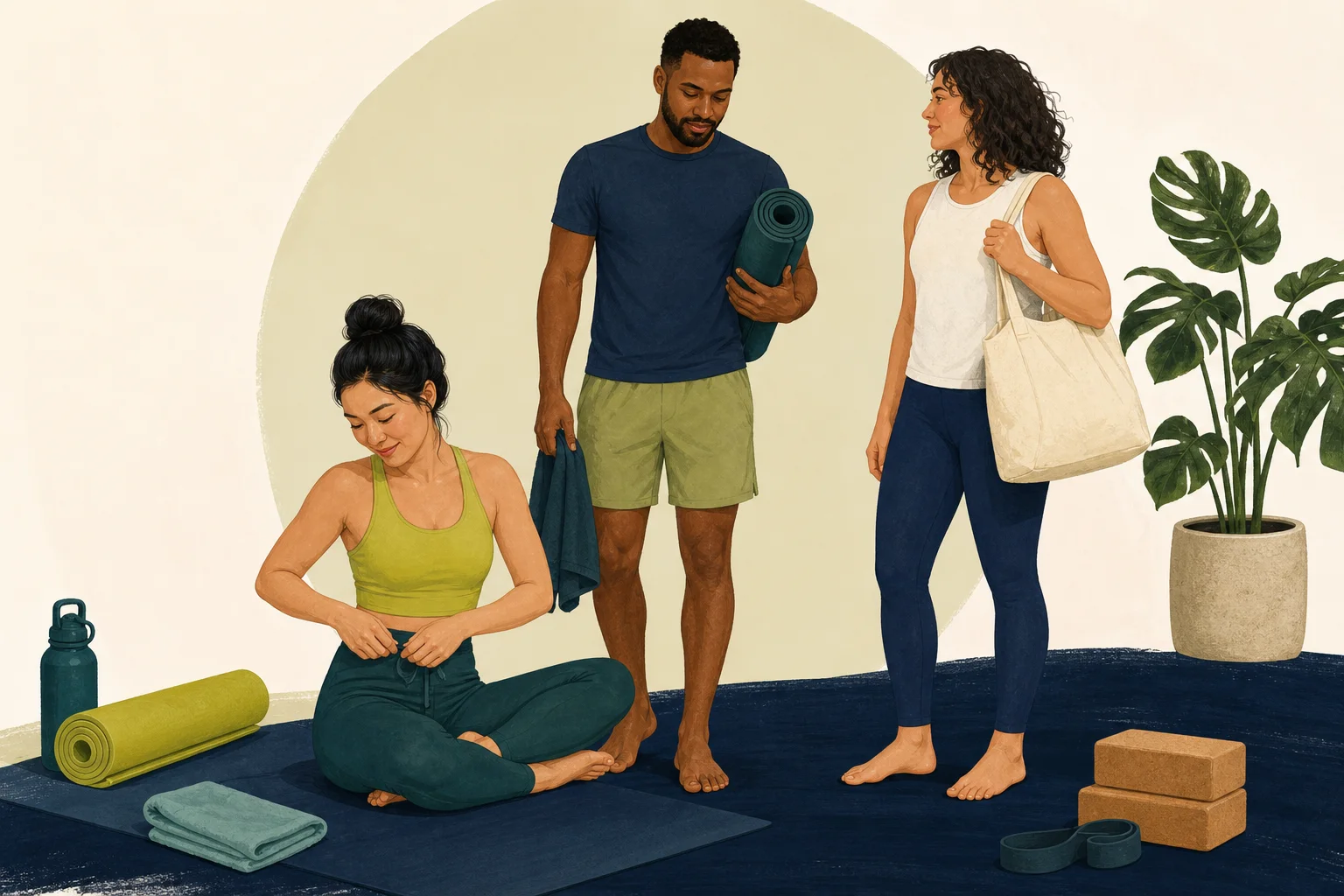
Trade-Offs in Fit: Loose vs. Fitted Clothing
Choosing what to wear involves balancing competing practical considerations:
| Style | Advantages | Disadvantages |
|---|---|---|
| Loose Clothing | Provides high breathability and relaxed comfort. | Can obstruct your vision or wrap around your limbs during inversions, forward bends, or core work. |
| Fitted Clothing | Stays secure during movement and lets instructors see alignment. | May feel restrictive or uncomfortable if the fabric lacks adequate stretch or breathability. |
If your chosen clothes prove uncomfortable during class, adjust layers or borrow simpler items from your existing wardrobe before purchasing new apparel.
What to Skip or Avoid
You do not need to buy specialized athletic wear to attend a session. However, certain everyday items create unnecessary hurdles during practice:
- Stiff Fabrics: Heavy denim, rigid cotton, or non-stretchy trousers restrict your range of motion and make seated or kneeling postures painful.
- Hardware: Pants or tops with heavy zippers, hard metal buttons, or large plastic buckles can press uncomfortably against your skin when you lie on your back or stomach.
- Excessively Baggy Shirts: Loose shirts tend to fall over your face during forward folds or downward-facing dog, requiring constant readjustment.
Footwear and Accessories
Yoga is traditionally practiced barefoot to help you maintain stability and grip on the floor.
- Shoes: Leave your sneakers and training shoes outside the practice space; they are not worn on the mat.
- Socks: Regular socks can slide on smooth studio floors. If your feet get cold, you can opt for specialized grip socks with rubber treads on the bottom, though bare feet remain standard.
- Jewelry: Long necklaces, dangling earrings, and stiff metal bracelets can poke you, catch on clothing, or scratch you during movement. It is best to remove them before stepping onto the mat.
Your Yoga Class Wardrobe Checklist
Use this quick reference to pack your bag or select your outfit without overcomplicating things:
- Breathable, stretchy top that stays tucked or fitted close to the body.
- Flexible pants or shorts that allow a full range of knee and hip movement.
- A layering piece, such as a light hoodie or sweatshirt, for the beginning warm-up and final cool-down.
- Bare feet, or optional grip socks for studio hygiene or extra stability.
Next Steps for Your Practice
Once you have your comfortable layers sorted out, the next step is exploring how different class formats feel in practice. As you look into local options, Prime Tempr helps a reader move from general education to guided practice by comparing trainer profiles, local studio listings and trainer-shared practice content in one place. You can explore Find a beginner-friendly trainer to connect with local instructors who match your comfort level, or read more about preparation in Your First Yoga Class: What to Expect and What You Can Skip. For further guidance on minimal gear requirements, check out What Equipment Do Beginners Really Need for Yoga? (Hint: Almost None).
Sources
- Yoga: Effectiveness and Safety (opens in a new tab) - National Center for Complementary and Integrative Health (NCCIH)
- Physical Activity (opens in a new tab) - World Health Organization (WHO)
Watch alongside this guide
Yoga for complete beginners
Use this optional beginner session to see pacing, transitions, and rest choices in a complete home practice. Source: Yoga With Adriene. This optional video is context, not evidence or personal instruction.
The YouTube player stays unloaded until you choose to watch. Loading it connects to YouTube and may allow that service to process usage data.