What to Expect From Your First Beginner Step Class
Learn coordination basics and step height management in your first beginner class for sustainable aerobic progress.
https://primetempr.com/blog/what-to-expect-from-your-first-beginner-step-class
A beginner step class is a rhythmic aerobic workout performed using a raised platform. If you are considering your first session, the primary challenge is not just physical exertion, but the coordination required to transition between stepping patterns. Success on your first day is defined by finding a sustainable rhythm that allows you to move safely and consistently rather than mastering complex choreography.
The reality of a beginner step class
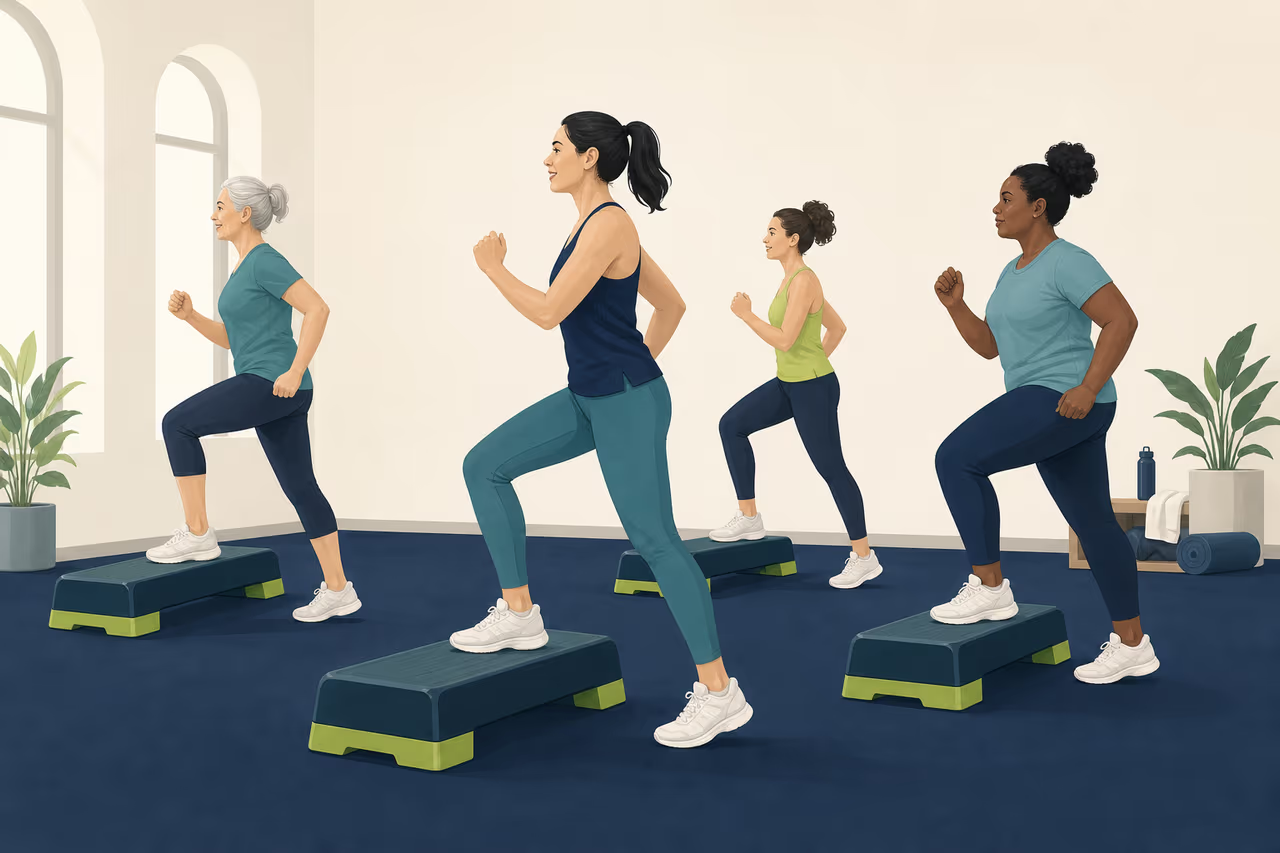
When you walk into a beginner step class, you should expect a structured environment where the instructor leads the group through repetitive movement patterns. The class typically begins with a warm-up, moves into the core "step" portion where the choreography is introduced, and concludes with a cool-down.
Remember that any amount of physical activity is better than none, and all activity counts toward your health goals. You do not need to be a professional dancer or have perfect coordination to participate. Most beginner classes are designed to introduce basic movements,such as the "basic step" (stepping up with one foot, then the other, and down in the same order),that form the foundation for everything else. If the choreography feels overwhelming, the most effective strategy is to strip the movement back to this basic step. By focusing on the "up-up, down-down" rhythm, you can maintain your aerobic effort without needing to follow complex patterns that may distract you from your form.
Understanding the physical demands
Step aerobics is an aerobic activity designed to increase your heart rate and challenge your cardiovascular system. According to current guidelines, adults should aim for 150 to 300 minutes of moderate aerobic activity per week, supplemented by muscle-strengthening activities on at least two days. A step class can be a significant contributor to these weekly aerobic minutes.
However, there are trade-offs to consider:
- Coordination requirements: Step classes demand more mental focus and coordination than steady-state activities like walking.
- Impact levels: While often categorized as lower impact than running, high-repetition stepping can tax the knees if your form goes unmonitored or the step height is too aggressive.
- Pacing: Group classes may move faster than your personal learning curve. If you struggle, remember you can perform movements on the floor without the platform until you feel confident with the rhythm.
How to handle the choreography
If you feel lost during a class, you are not alone. It is a common experience for beginners to feel "behind" the beat. The most effective recovery path is to prioritize rhythm over complex arm movements or fancy footwork.
If the choreography becomes too fast, drop the arm movements and focus entirely on your feet. If the impact feels too high, lower your step platform or remove it entirely. The goal is to keep moving at a pace that allows you to maintain your breath. If you cannot hold a conversation while moving, you are likely working at an intensity that is too high for a beginner.
Your First Step Class: A Pre-Class Checklist
Before you attend your first session, use this checklist to ensure you are set up for a positive experience:
- Check the class description: Look for "beginner" or "introductory" labels to ensure the pace matches your current experience level.
- Arrive 5 minutes early: Introduce yourself to the instructor and ask for a quick demonstration of basic step safety.
- Start with the lowest step height: You can always increase the height in future sessions, but starting low protects your joints and allows you to focus on your form.
- Prioritize rhythm: If you lose the pattern, return to a simple "up-up, down-down" until you catch the beat again.
- Use the 'talk test': Ensure you are working at a sustainable aerobic intensity where you can speak in short sentences.
Integrating step into a balanced practice
While a step class helps meet aerobic activity targets, it is most effective when integrated into a broader, well-rounded movement routine. Relying solely on one type of exercise can lead to repetitive strain or boredom.
Prime Tempr helps readers connect broad activity guidance with trainers and yoga businesses that can provide a balanced, repeatable programme and human accountability. Whether you want to pair step classes with mobility work, strength training, or restorative yoga, finding a trainer who understands your full movement picture helps you avoid overexertion or burnout.
If you are unsure how to balance your weekly activity, consider looking for local trainers who can help you integrate aerobic classes with other forms of movement. Understanding the differences between low impact and high impact can also help you choose a routine that actually sticks, ensuring you stay active in a way that feels sustainable for your body.
Sources
- Physical activity (opens in a new tab), World Health Organization.
- Top 10 Things to Know About the Physical Activity Guidelines (opens in a new tab), Office of Disease Prevention and Health Promotion.
Watch alongside this guide
Just walk
This short walking overview reinforces the guide's focus on accessible, repeatable movement rather than elaborate equipment. Source: American Heart Association. This optional video is context, not evidence or personal instruction.
The YouTube player stays unloaded until you choose to watch. Loading it connects to YouTube and may allow that service to process usage data.