Low Impact vs. High Impact: Choosing What Actually Sticks
Balance low and high impact movement to build a sustainable daily routine that supports your long-term health.
https://primetempr.com/blog/low-impact-vs-high-impact-how-to-choose-what-actually-sticks
The most effective exercise is not the one with the highest impact or the most intense burn; it is the one you can sustain consistently while balancing your body's need for both challenge and recovery. Many people feel overwhelmed by the pressure to choose between "hard" workouts and "gentle" movement, often assuming that high-intensity training is the only path to health. In reality, your body benefits most from a balanced approach that respects your current baseline and long-term goals.
Defining the Difference
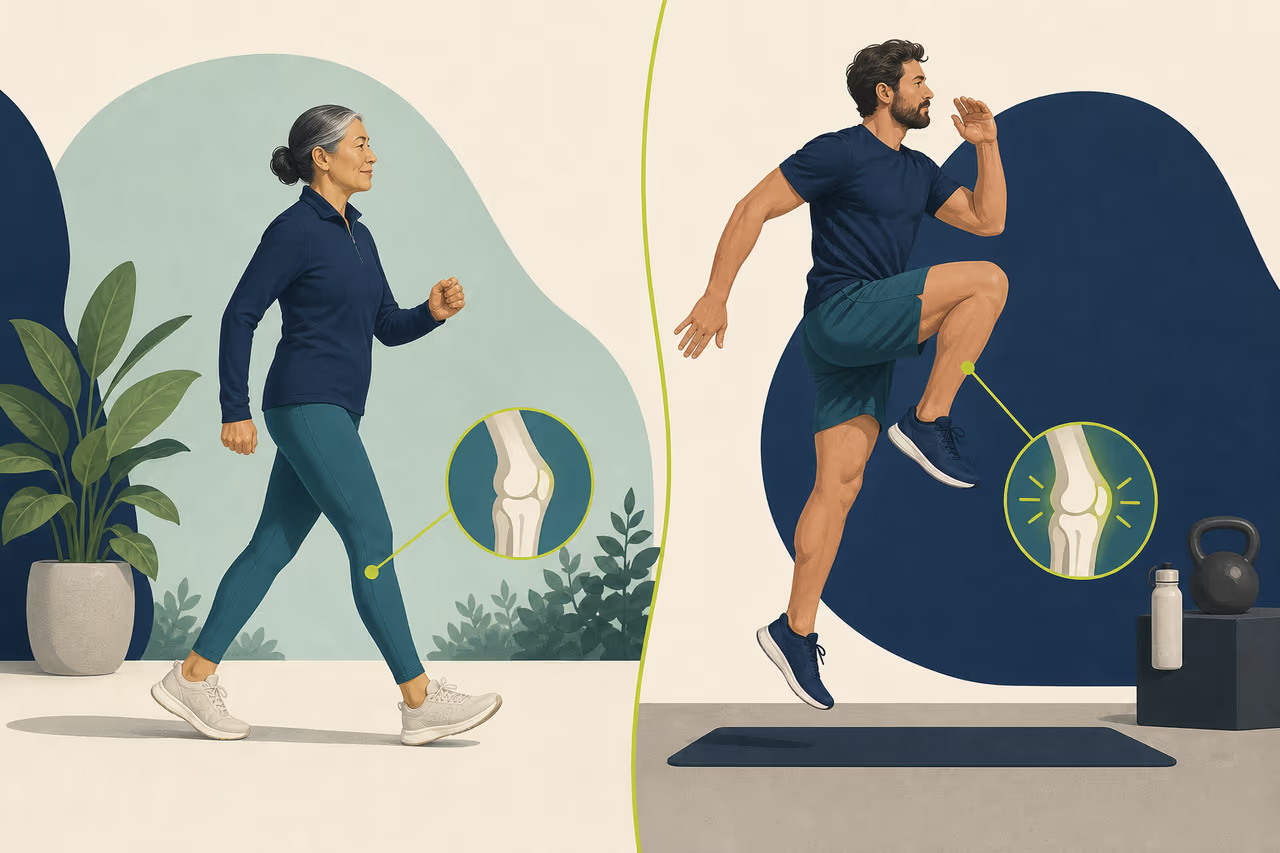
The fundamental difference between low and high impact exercise comes down to how your body interacts with the ground.
- High Impact: These are activities where both feet leave the ground at the same time, such as running, jumping rope, or plyometrics. These movements exert significant force on your joints, which can be an effective way to improve bone density over time. However, this force also increases the mechanical stress placed on your ankles, knees, and hips.
- Low Impact: These are activities where at least one foot remains in contact with the ground at all times. Examples include walking, swimming, cycling, and most forms of yoga. Because there is less jarring force, these activities are generally more accessible to a wider range of people and are easier to perform frequently without needing extensive recovery time.
Remember that any amount of physical activity is better than none, and all activity counts toward your health. You do not need to choose one "style" exclusively; the goal is to find a mix that keeps you moving without leading to burnout or injury.
The Case for Low Impact
Low impact movement forms the foundation of a sustainable routine. Because these activities are less taxing on the joints, they are simpler to maintain as a daily habit. If you are starting fresh or returning after a break, low impact movement builds consistency without risking immediate overtraining.
Yoga, for example, offers a unique blend of low impact movement that builds strength, improves mobility, and encourages breathwork,all of which are essential for long-term physical health. By focusing on a low impact baseline, you create a "movement floor" that you can rely on even on days when your energy is lower or your joints feel stiff. This consistency is far more valuable than the intensity of a single, sporadic session.
When to Consider High Impact
High impact exercise can play a role in a well-rounded routine, provided your body is prepared for the load. If you are looking to improve specific cardiovascular markers or bone density, higher intensity movements can be effective. However, the "failure mode" many people fall into is rushing into high impact work before they have established a stable, low impact foundation.
If you introduce higher impact movements, do so gradually. Monitor your body over the next 24 to 48 hours. Persistent joint pain or extreme fatigue preventing movement the next day indicates that current volume or intensity is too high.
Current health guidelines state that adults should aim for 150 to 300 minutes of moderate aerobic activity weekly, plus muscle-strengthening exercises on two or more days. You can reach these targets by combining low and high impact activities. Use walking or yoga for daily movement, for instance, and add two days of higher-intensity strength or aerobic training.
Building a Balanced Practice
Scaling these activities to fit your life presents a challenge, which is where professional guidance helps. Prime Tempr connects readers with trainers and yoga businesses to provide a balanced, repeatable programme and human accountability.
A trainer assesses your joint comfort and energy levels to decide if you are ready for more intensity or need to stabilize your routine. They supply objective feedback often missing when self-diagnosing fitness needs.
Choosing Your Movement Baseline
Use this guide to determine where to direct your energy right now.
- Assess your current joint comfort: If you have existing discomfort, stick to low impact activities until you have consulted with a professional.
- Select a low-impact baseline: Choose an activity like walking or yoga that you enjoy and can see yourself doing at least three times a week.
- Use the "talk test": During any activity, you should be able to hold a conversation. If you are gasping for air, you are likely pushing the intensity too high for your current level.
- Introduce variety slowly: Only introduce higher-impact movements when your baseline feels stable and your recovery is consistent.
- Seek professional support: Connect with a local trainer to build a balanced, personalized programme that evolves as you do.
If an intensity level feels unsustainable or causes pain, drop back to a lower-impact version right away. There is no benefit to pushing through unnecessary discomfort. Prioritizing consistency and listening to your body creates a movement practice that lasts for years.
When you are ready to move past generic advice and find a routine matching your needs, find a yoga teacher or explore resources to build a balanced practice integrating both challenge and recovery.
Sources
- Physical activity (opens in a new tab), World Health Organization.
- Top 10 Things to Know About the Physical Activity Guidelines (opens in a new tab), Office of Disease Prevention and Health Promotion.
Watch alongside this guide
Just walk
This short walking overview reinforces the guide's focus on accessible, repeatable movement rather than elaborate equipment. Source: American Heart Association. This optional video is context, not evidence or personal instruction.
The YouTube player stays unloaded until you choose to watch. Loading it connects to YouTube and may allow that service to process usage data.