What Neutral Spine Means in a Yoga Class And Why It Varies
Learn what neutral spine means in yoga, examine its practical limits, and choose one clear next step.
https://primetempr.com/blog/what-neutral-spine-means-in-a-yoga-class-and-why-it-varies
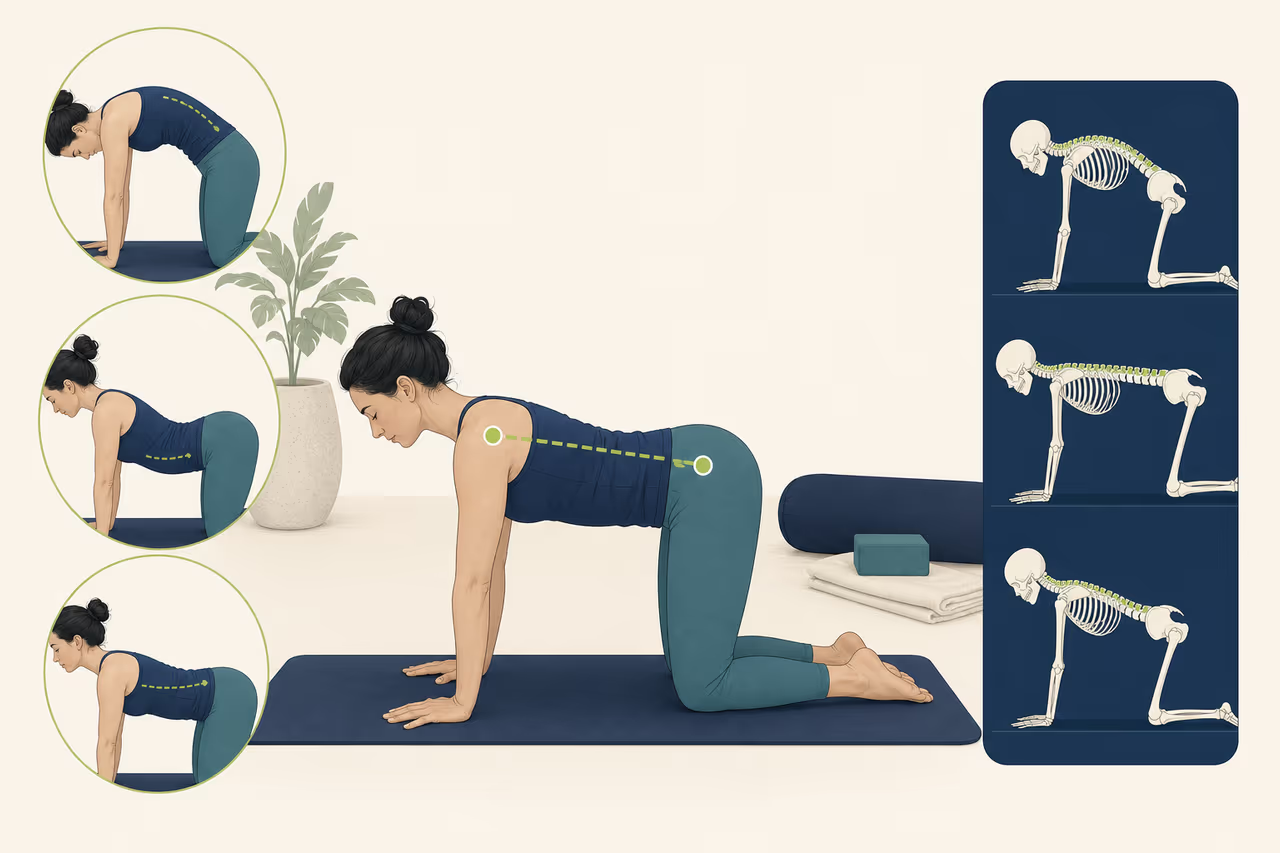
A neutral spine in a yoga class is a functional descriptive term rather than a rigid posture, acknowledging that human bodies vary and alignment cues should serve individual comfort. When a teacher calls out for a neutral spine, they are generally referring to a state where the spine maintains its natural curves in the neck, mid-back, and lower back without being forcefully flattened or overly arched.
Because yoga combines postures, breathing, and meditation, styles vary widely, and no single instruction fits every practitioner. Any amount of physical activity is better than none, all activity counts, and people should limit sedentary time, but interpreting alignment instructions safely requires an understanding of your own comfort and limits.
What 'Neutral Spine' Actually Means When a Teacher Says It in Class
Directly put, a neutral spine means working within your body's natural physiological curves rather than imposing an artificial geometric shape on your back.
In a typical class, you might hear this cue during standing poses, seated stretches, or prone backbends. Rather than tucking the tailbone aggressively or puffing the chest outward to create a flat back, a neutral approach invites you to distribute movement and support evenly along the length of the torso.
Yoga combines postures, breathing and meditation; styles vary, benefits should be described with uncertainty, and injuries can occur. Because of this variety, a neutral spine is not a single fixed photograph. It is a dynamic reference point that helps you breathe smoothly and distribute load while you move.
Why Alignment Cues and Interpretations Vary Between Different Yoga Teachers
Teachers use different cues because yoga lineages interpret movement through distinct philosophies, and human anatomy differs markedly from person to person.
| Teacher Cue | Common Interpretation | Potential Trade-Off |
|---|---|---|
| "Keep your back flat" | Encourages core engagement and reduces deep lumbar arching. | Can lead to holding the breath or flattening natural spinal curves if taken too literally. |
| "Find a neutral spine" | Encourages honoring natural curves while supporting the torso. | Can feel abstract or vague if the practitioner does not know what their neutral range feels like. |
| "Lengthen through the crown" | Encourages axial extension and decompressing the vertebrae. | May cause neck strain if the chin is lifted too high or tucked too aggressively. |
Yoga combines postures, breathing and meditation; styles vary, benefits should be described with uncertainty, and injuries can occur. When one instructor emphasizes a flat lower back in a forward fold, another might focus on hip hinge mechanics over spinal shape. Recognizing that styles vary helps you avoid treating any single cue as an absolute law.
How to Interpret Spine Cues Without Forcing Your Body
When a cue feels confusing or uncomfortable, back off to a range of movement that allows smooth breathing and ask a qualified instructor for individualized guidance.
- Prioritize the breath: If an alignment instruction pinches your ribs or forces you to hold your breath, the shape is likely too intense or misaligned for your current range of motion.
- Look for ranges, not rigidity: Treat cues like neutral spine as directions toward ease and support, not a mandate to freeze your vertebrae in place.
- Remember that all movement counts: Any amount of physical activity is better than none, all activity counts, and people should limit sedentary time. Perfection is never required to gain value from a practice.
Three Questions to Bring to Your Next Yoga Class
Static definitions cannot account for individual skeletal anatomy and daily mobility differences, and general class cues cannot replace tailored feedback from an experienced teacher. To move past a static glossary, use these reflection prompts in your next session.
- Notice whether a teacher's alignment cue helps you breathe more easily or makes you tense up.
- Ask a qualified trainer how they interpret neutral spine for your unique posture.
- Choose a guided session where you can ask clarifying questions about unfamiliar language.
Prime Tempr's trainer marketplace lets readers turn unfamiliar yoga language into better questions, then choose guided instruction instead of relying on a static glossary alone. You can Find a yoga teacher to receive personalized cues tailored to your body, or explore more articles via Yoga Language & Class Cues to deepen your understanding before your next class.
Sources
- Yoga: Effectiveness and Safety (opens in a new tab), National Center for Complementary and Integrative Health (NCCIH).
- Physical activity (opens in a new tab), World Health Organization (WHO).
Watch alongside this guide
An introductory yoga flow
Watch how spoken cues, breath, and transitions work together, then compare them with the article's guidance. Source: Yoga With Adriene. This optional video is context, not evidence or personal instruction.
The YouTube player stays unloaded until you choose to watch. Loading it connects to YouTube and may allow that service to process usage data.