What Is Ujjayi Breathing? A Practical Explainer
Learn the mechanics of Ujjayi breathing in yoga, its practical limits, and why professional guidance ensures a safe and sustainable practice.
https://primetempr.com/blog/what-is-ujjayi-breathing-a-practical-explainer
Ujjayi breathing is an audible breath technique used in yoga to focus attention. It uses slight throat constriction to create a rhythmic, oceanic hum. While useful for concentration during movement, it requires subtle control and is difficult to learn from text alone.
Because responses to breathwork vary, treat this as a foundational reference rather than a substitute for in-person guidance. Prime Tempr helps readers find trainers who explain breathing and meditation in context, keeping your practice comfortable and sustainable.
What is Ujjayi breathing?
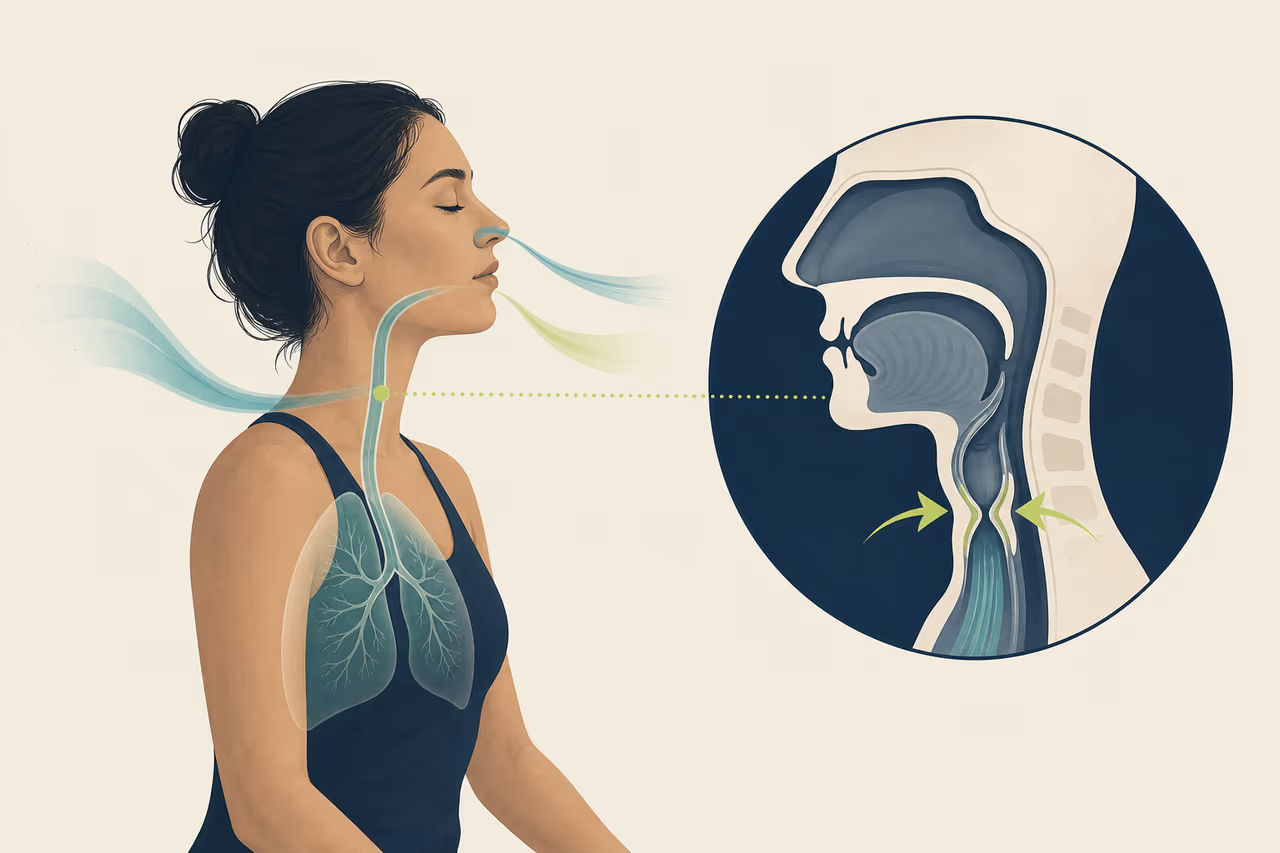
Ujjayi breathing is a yoga technique involving a slight throat constriction to create an audible, rhythmic breath. Unlike natural, passive breathing, Ujjayi requires active engagement of the glottis, the opening between your vocal cords.
Air passing through this narrowed space creates gentle friction. This produces a sound audible to the practitioner, providing a constant auditory feedback loop. The sound anchors the mind, helping you notice when your breath becomes shallow or erratic.
Why is it used in yoga practice?
During yoga, Ujjayi breathing focuses attention and establishes a consistent rhythm. Many practitioners find that linking the sound of the breath to their movements helps maintain a steady pace, particularly during vigorous sequences.
The utility of the technique lies in its ability to:
- Create a rhythmic anchor: Consistent sound provides a focal point, helping reduce mental distraction.
- Support movement tempo: Audible, controlled breathing makes it easier to match inhalation or exhalation length to movement duration.
- Encourage mindfulness: Maintaining subtle constriction keeps the practitioner present and aware of their physical state.
Practical limits and safety
While Ujjayi is common in yoga classes, it is not a universal requirement for all students. Approach the technique with a clear understanding of its limitations.
It is not a medical treatment
It is a common misconception that specific breathing techniques can act as a substitute for medical intervention. Relaxation approaches, including various breathing techniques, should not replace conventional medical care. If you are managing anxiety, respiratory issues, or other health conditions, Ujjayi should not be viewed as a treatment or a cure.
Individual variation and risk
Meditation and breathing practices vary, and a minority of participants report negative experiences. Evidence regarding the outcomes of these practices is mixed, meaning that what works for one person may not be comfortable or effective for another.
Common failure modes include:
- Straining the throat: Attempting to force the sound by tightening the neck muscles rather than the glottis.
- Creating unnecessary tension: Holding the breath or clenching the jaw and face while trying to control the airflow.
- Ignoring discomfort: Pushing through dizziness, lightheadedness, or throat irritation in an attempt to "perfect" the technique.
How to learn safely
Because Ujjayi involves internal mechanics that are not visible from the outside, it is easy to inadvertently develop habits causing tension. The most effective way to learn is working with a qualified yoga teacher who provides real-time feedback.
A teacher can help you:
- Identify the correct sensation: They can explain how to engage the glottis without tightening the jaw or neck.
- Monitor your progress: They can observe your posture and facial expressions to ensure you aren't holding tension.
- Adjust for your needs: If a technique causes you discomfort, a teacher can suggest modifications or alternative breathing patterns that better suit your physiology.
If you feel lightheaded, anxious, or physically strained at any point, stop practice immediately. Return to your natural, unforced breathing pattern and consult your instructor to review technique before trying again.
Is Ujjayi Right for Your Current Practice?
Use this reflection guide to determine if you are ready to incorporate Ujjayi into your routine or if you need further support.
- Observe your breath: Does your current breathing feel forced, or is it natural and effortless?
- Check for tension: Notice if you are holding tension in your jaw, shoulders, or face while attempting to control your breath.
- Monitor your response: Do you feel lightheaded or anxious during the practice? If so, stop immediately.
- Seek professional feedback: Consider finding guided breath and meditation support through a local trainer who can provide personalized feedback on your breath mechanics.
For more information on the broader context of these practices, you can explore our Breathwork & Meditation resources.
Sources
- Meditation and Mindfulness: Effectiveness and Safety (opens in a new tab), National Center for Complementary and Integrative Health.
- Relaxation Techniques: What You Need To Know (opens in a new tab), National Center for Complementary and Integrative Health.
Watch alongside this guide
Breathing meditation
This short guided meditation lets you follow the basic attention and breathing ideas described in the article. Source: UCLA Health. This optional video is context, not evidence or personal instruction.
The YouTube player stays unloaded until you choose to watch. Loading it connects to YouTube and may allow that service to process usage data.