Understanding Diaphragmatic Breathing: Practice, Limits, and Next Steps
Explore gentle breathing without forcing a deep breath, understand its limits, and know when discomfort or breathlessness needs medical advice.
https://primetempr.com/blog/understanding-diaphragmatic-breathing-practice-limits-and-ne
Diaphragmatic breathing is a breathing practice that draws attention to gentle movement around your lower ribs and abdomen. You can explore it for relaxation without trying to take the biggest possible breath. It is optional, and feeling uncomfortable is a reason to stop rather than try harder.
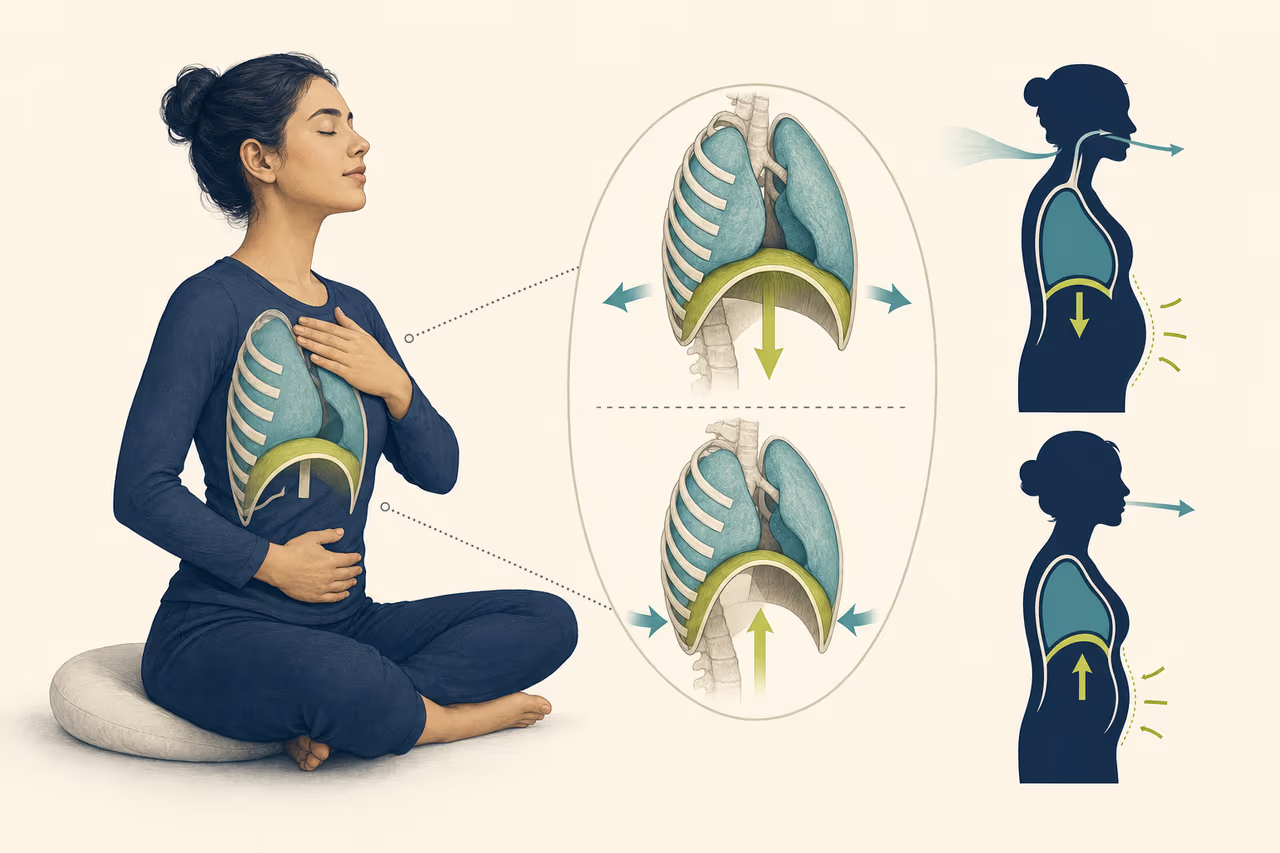
What your diaphragm does
Your diaphragm is a muscle below your lungs. When you breathe in, it contracts and moves down, making more room in your chest for your lungs to expand. Your rib muscles help too. As these muscles relax during a resting breath out, the space becomes smaller and air leaves your lungs.
People sometimes call this "belly breathing" because the abdomen may move as you breathe. Air still goes into your lungs, not your belly. You do not need to push your stomach out or hold your chest still. Chest movement does not, by itself, mean that you are breathing incorrectly.
Trying a gentle breath
Choose a time when you can sit comfortably and do not need to concentrate on driving or another task. This is a brief way to explore the practice, not a treatment plan or a test of lung health.
- Sit with your back supported and let your arms rest. Adjust clothing if it restricts comfortable breathing.
- Notice a few ordinary breaths before changing anything. You can keep your eyes open.
- If comfortable, breathe in gently through your nose and let the breath out gently through your mouth. Avoid pulling in extra air to reach a target.
- Notice any easy movement around your lower ribs or abdomen. You do not need to make a particular shape or match someone else's demonstration.
- Return to ordinary breathing whenever you want. There is no need to hold your breath or meet a counting target in this introduction.
If counting makes the practice feel like work, leave it out. The NHS breathing guide also makes counting optional and emphasises breathing without force. Its longer practice is linked below if you want to read it in full.
If focusing on breathing feels unpleasant
Stop the exercise if you feel dizzy, distressed or uncomfortable. Let your breathing return to its usual pattern. You can leave the exercise there; you do not owe it another attempt or a longer session.
Some people find relaxation practices increase anxiety or bring up unwanted thoughts. Choosing an activity that does not ask you to focus on your breath is a reasonable alternative. If symptoms persist or recur, seek advice from a healthcare professional rather than asking a wellness trainer to diagnose the cause.
What this practice can and cannot offer
NCCIH describes preliminary evidence that diaphragmatic breathing may help reduce stress. That does not establish it as a cure for anxiety, insomnia or a breathing condition, or guarantee that you will feel calmer after practising.
If you have a respiratory condition or have been given breathing exercises as part of clinical care, ask your clinician which instructions apply to you. Keep following your prescribed treatment. A general article cannot replace an individual assessment, and a yoga or breathing teacher's qualification does not necessarily include clinical training.
Breathlessness needs a different response
Do not assume new or worsening difficulty breathing is simply stress or a technique you need to correct. Seek urgent medical advice. Severe difficulty breathing, a tight or heavy chest, blue or grey lips or skin, or sudden confusion needs emergency help through your local emergency service. Do not spend time trying to finish a breathing exercise first.
Sources
- What breathing does for the body (opens in a new tab), National Heart, Lung, and Blood Institute: how the diaphragm, ribs and lungs work during breathing.
- Breathing exercises for stress (opens in a new tab), NHS: comfortable positioning and gentle breathing without force.
- Relaxation techniques: what you need to know (opens in a new tab), NCCIH: evidence, limitations and unwanted experiences.
- Shortness of breath (opens in a new tab), NHS: when breathing symptoms need urgent or emergency care. Use the equivalent service where you live.