Restorative Yoga: A Practical Guide
Restorative yoga uses supported stillness and props for deep rest. Learn how to find the right class.
https://primetempr.com/blog/what-is-restorative-yoga-a-practical-guide
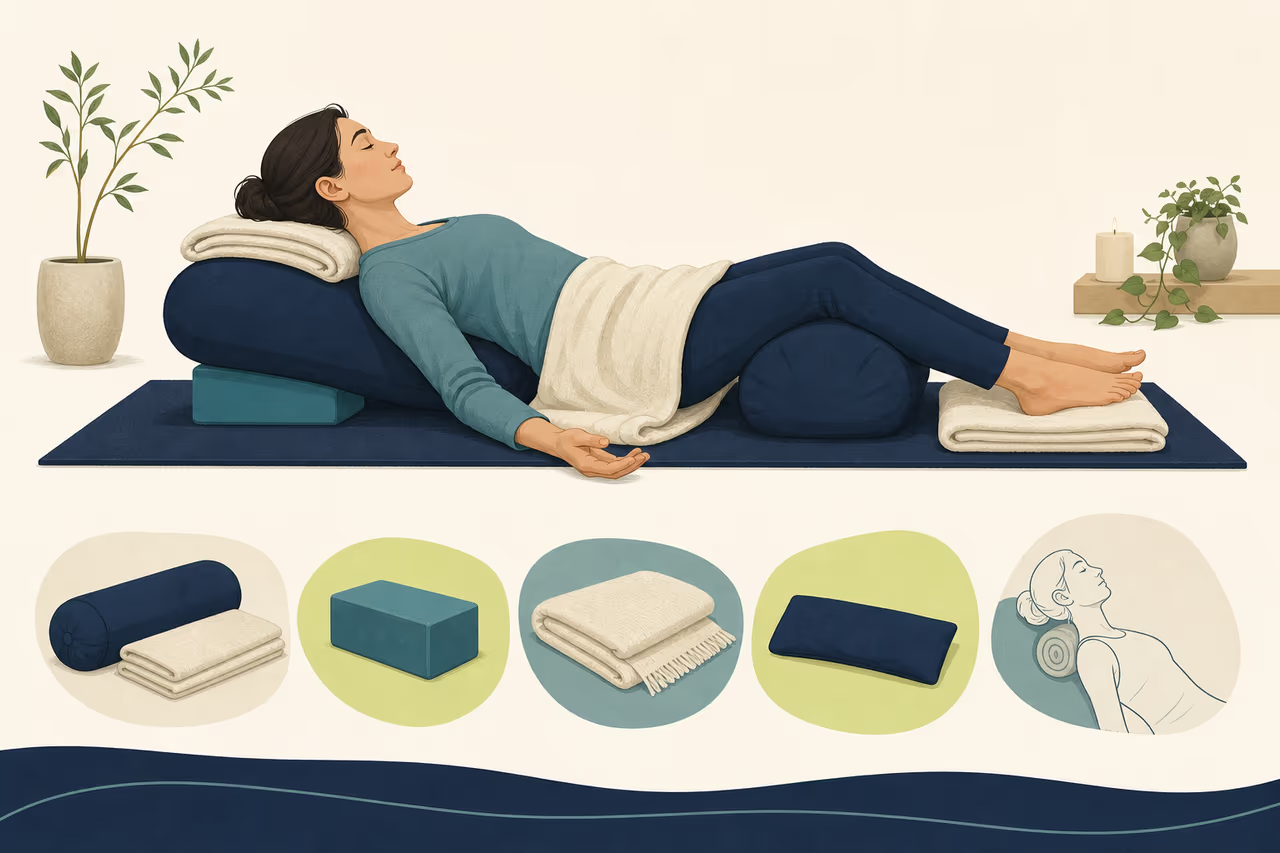
Restorative yoga is a low-intensity practice of supported stillness. Unlike active styles that prioritize movement, muscle engagement, or cardiovascular exertion, restorative yoga uses props,such as bolsters, blankets, and blocks,to support the body in various positions for extended periods. Its primary goal is deep rest, often incorporating breathing and meditation.
Restorative yoga combines postures, breathing, and meditation, but styles vary significantly between studios and teachers. While many people seek this practice for stress management or recovery, its benefits should be described with uncertainty, as individual experiences differ widely.
Restorative vs. Other Styles: Understanding the Differences
One of the most common points of confusion for those new to yoga is distinguishing between "slow" styles. Understanding these differences can help you manage your expectations before walking into a studio.
- Restorative Yoga: The focus is entirely on support. You are meant to feel completely held by props so that your muscles can release tension. There is minimal to no active stretching or muscle engagement.
- Yin Yoga: While Yin is also a "slow" practice, it is distinct from restorative. Yin yoga involves holding poses for several minutes to target the deep connective tissues and fascia. It is often physically intense and can be uncomfortable, as it is designed to create sensation rather than passive support. See our guide on Yin or Restorative Yoga? Ask whether you want sensation or support for a deeper comparison.
- Hatha or Slow Flow: These styles involve active movement, balance, and muscle engagement. They are designed to build strength and mobility, making them more physically demanding than a restorative session.
If stillness feels mentally overwhelming or physically boring, Hatha or Slow Flow classes may be a better fit. These styles allow for movement and engagement, which can be more effective for stress management for some individuals.
Practical Trade-offs and Safety
Restorative yoga is not a universal solution for stress or injury recovery. It is a specific tool with inherent trade-offs:
- Limited Physical Output: Because the practice is designed for stillness, it provides minimal cardiovascular or strength-building benefits. If your goal is to improve physical fitness or bone density, restorative yoga should be viewed as a supplement to, not a replacement for, active movement.
- The Challenge of Stillness: For many, the most difficult part of restorative yoga is the mental requirement. Being still for long periods can bring up restlessness or anxiety. This is a normal reaction, but it means the practice is not automatically "relaxing" for every person.
- Instructional Variability: The quality of the experience depends heavily on the teacher. A skilled instructor will know how to adjust props to fit your specific body type and injury history. Without proper guidance, you may not achieve the intended support, or you might inadvertently place your body in a position that causes strain.
Injuries can occur during yoga practice, as with any physical activity. Listen to your body and communicate with your teacher if a pose feels painful or unstable. Any amount of physical activity is better than none, but your choice of style should align with your current capacity and goals.
Is Restorative Yoga Right for You Today?
Use this decision guide to determine if this style matches your current needs before committing to a session.
| Consideration | Question to Ask Yourself |
|---|---|
| Energy Levels | Do you need to move to burn off excess energy, or do you need to pause to recover from exhaustion? |
| Environment | Do you have access to the necessary props (blocks, blankets, bolsters) at home or in the studio? |
| Expectations | Are you looking for a workout, or are you looking for a period of supported rest? |
| Safety | Do you have any injuries that require specific modifications or professional oversight? |
How to Find a Class That Fits
Instruction quality is the most important factor in your experience; avoid choosing a class based solely on a generic label. Prime Tempr lets you compare trainers and yoga businesses by profile, location, and offering, helping you find a better-fit class than a generic recommendation.
When looking for a teacher, consider these steps:
- Review Profiles: Use our Find a yoga teacher tool to look at local instructors. Look for trainers who explicitly mention "supported" or "restorative" practice in their bios or class descriptions.
- Ask Questions: Don't hesitate to reach out to a studio or teacher before signing up. A simple, direct question like, "How much of the class is spent in stillness versus movement?" can tell you a lot about whether the class will meet your needs.
- Start Small: Commit to one trial session. It is impossible to know if a specific teacher's style resonates with you until you have experienced their instruction firsthand. If the first class doesn't feel right, it may be the style, the teacher, or simply the wrong day for that type of practice.
For more help navigating the wide world of yoga, read our guide on How to Choose a Yoga Style That Actually Fits Your Life.
Sources
- Yoga: Effectiveness and Safety (opens in a new tab), National Center for Complementary and Integrative Health.
- Physical activity (opens in a new tab), World Health Organization.
Watch alongside this guide
A beginner Yin yoga practice
This slower practice gives you a concrete style example to compare with the goals and class formats in the guide. Source: Yoga with Kassandra. This optional video is context, not evidence or personal instruction.
The YouTube player stays unloaded until you choose to watch. Loading it connects to YouTube and may allow that service to process usage data.