Yin or Restorative Yoga: Do You Seek Sensation or Support?
Compare Yin and Restorative yoga by their intention, support, and sensation to choose the ideal practice.
https://primetempr.com/blog/yin-vs-restorative-yoga-sensation-or-support
Yin and Restorative yoga may appear similar, with practitioners close to the floor surrounded by mats, blankets, and bolsters. The key distinction lies within the pose: Yin typically involves deliberate, sustained sensation, while Restorative yoga aims to provide ample support, allowing effort and discomfort to recede.
That distinction is more useful than asking which style is “more relaxing.” Either class may feel quiet. Only one may match the kind of quiet you need today.
Both are slow, but they do different work
In a Yin class, teachers guide you to settle into a shape, reduce muscular effort, and remain with manageable sensation. Poses are not tests of depth; you retain agency over depth, duration, and when to exit.
In a Restorative class, props like blankets, blocks, straps, or bolsters are arranged to support the pose. The Cleveland Clinic describes fewer poses held for longer periods, with props supporting areas like the knees, neck, or lower back. Crucially, discomfort is not the aim.
Yoga Journal's comparison highlights the contrast: Yin deliberately introduces sustained sensation, while Restorative yoga uses support to make prolonged rest possible. This describes a general tendency, not a medical prescription or a guarantee for every class.
| Question | Yin class may emphasize | Restorative class may emphasize |
|---|---|---|
| What is the intention? | Staying attentive with chosen sensation | Reducing effort and making rest possible |
| How are props used? | To adjust depth, access or unwanted strain | To support the body more completely |
| What should you monitor? | Intensity, location and change in sensation | Comfort, ease and whether support is sufficient |
| Why might you leave a pose? | Sensation becomes sharp, painful, unstable or hard to interpret | Effort or discomfort persists despite adjustment |
This comparison cannot determine the right class for an injury or health condition. Consult a qualified health professional and an appropriately trained teacher for such guidance.
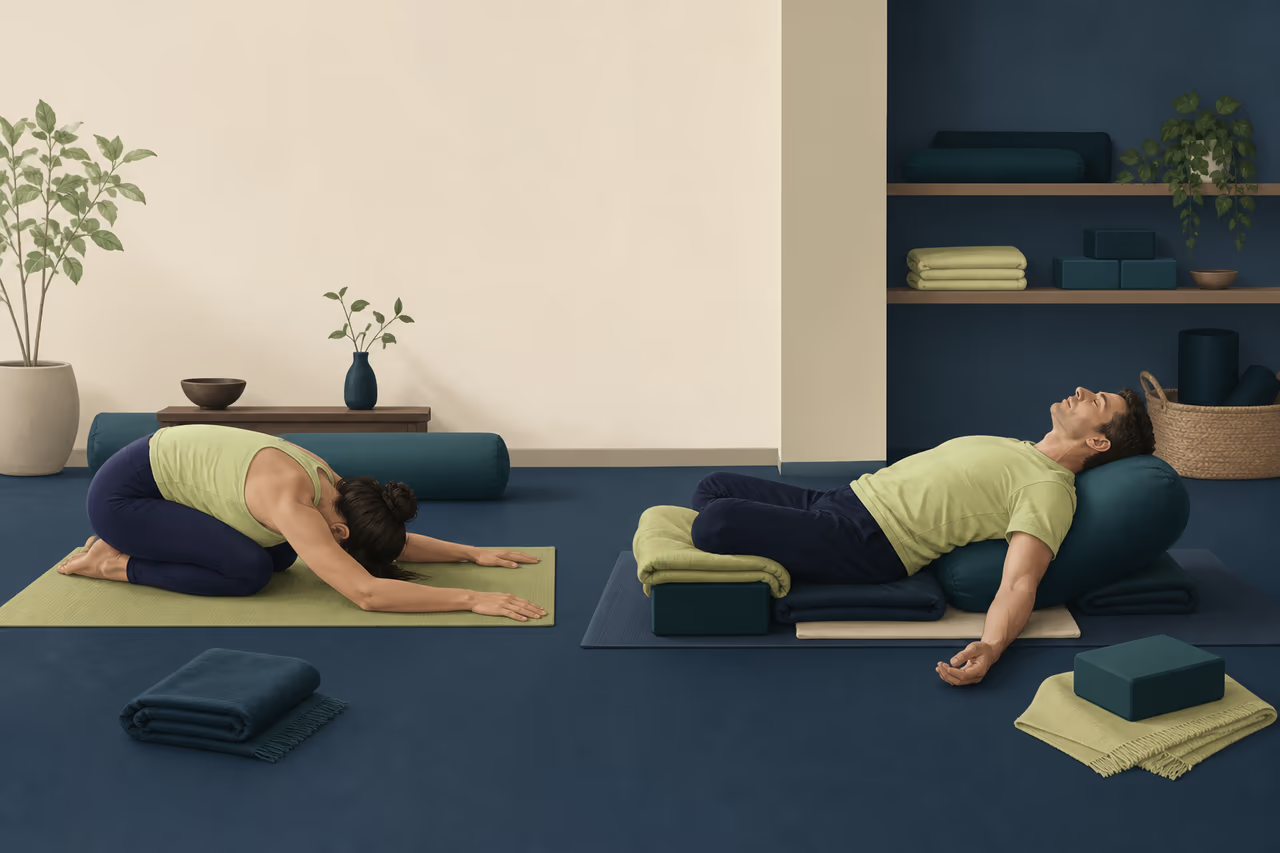
Props do not decide the style
“Yin uses no props; Restorative uses props” is an attractive rule because it is easy to remember. It is also too crude. A Yin teacher may use blocks, blankets or a bolster to reduce strain or make a shape accessible. A Restorative teacher may use many props because complete support is central to the class.
Ask what the props are doing. Are they helping you choose a workable amount of sensation? Or are they removing effort so you can rest? The same bolster can fulfill either intention.
Public labels also overlap. Yoga Alliance places Yin and Restorative among names sometimes used for gentle yoga. That makes sense for a directory, but it is another reason to read beyond the category. “Gentle,” “slow,” and “relaxing” do not specify the intended sensation, the length of holds or how much support the teacher will build.
Choose by the intended experience
Start with the outcome you can describe without making a health claim.
Opt for a Yin description if you seek fewer transitions, are willing to focus on sustained sensation, and appreciate clear guidance on options. Choose a Restorative description when you prefer poses built around support, minimal effort, and comfort. If neither description clarifies the class demands, continue reading or ask the teacher.
Then compare the practical details:
- Level: Is the class explicitly suitable for someone learning the style?
- Intensity: Does “slow” still carry a moderate or strong intensity label?
- Duration: Are you comfortable with the total class length and the described hold times?
- Props: Do you have the equipment the teacher expects, and are alternatives explained?
- Teacher context: Does the teacher describe how options, pain and individual differences are handled?
Prime Tempr allows readers to compare programs using separate fields for style, level, intensity, and duration, and to inspect the trainer behind each class. This article demonstrates why a slow style label is only one input, offering a concrete way to inspect the actual class before choosing.
You can browse yoga programmes to compare those details or find a yoga trainer when you want to ask how a class is taught.
Read a slow-class description in four passes
Use this checklist before choosing:
- Intention: Does the description say sensation, mobility, rest, support or relaxation?
- Support: Are props used to adjust sensation or to remove effort as fully as practical?
- Dose: Do the level, intensity, hold time and class duration fit your present capacity?
- Exit: Does the teacher offer options and make it clear that pain is a reason to stop?
The NCCIH advises beginners to start slowly, select a suitable class level, ask for modifications, and stop for pain or fatigue. A slow pace does not negate this guidance.
When the class you chose does not fit
Exiting a pose early provides information, not failure. Reduce the range, add support, change position, or rest. If the class demands attention or sensation you did not intend, choose a different description next time.
You may find that the right choice changes. Yin may suit one day, Restorative another. The decision rests on the actual class and your present capacity, not loyalty to a label.
Sources
Watch alongside this guide
A beginner Yin yoga practice
This slower practice gives you a concrete style example to compare with the goals and class formats in the guide. Source: Yoga with Kassandra. This optional video is context, not evidence or personal instruction.
The YouTube player stays unloaded until you choose to watch. Loading it connects to YouTube and may allow that service to process usage data.