What Is Coherent Breathing? A Practical, No-Hype Guide
Learn how coherent breathing works, how it affects your physiology, and how to practice this evidence-supported technique safely.
https://primetempr.com/blog/what-is-coherent-breathing-a-practical-no-hype-guide
If you have searched for ways to manage daily stress, you have likely run into claims about "instant healing" or "permanently rewiring your nervous system" through breathwork. These overhyped promises can make simple wellness practices feel overwhelming and confusing.
Coherent breathing is a simple, evidence-supported practice of breathing at a rate of roughly five to six breaths per minute to promote physiological balance. It is a supportive tool for self-regulation rather than an instant cure for complex stress or trauma. Understanding how this practice works, its physical effects, and its limitations can help you decide if it is a useful addition to your daily routine.
What Is Coherent Breathing?
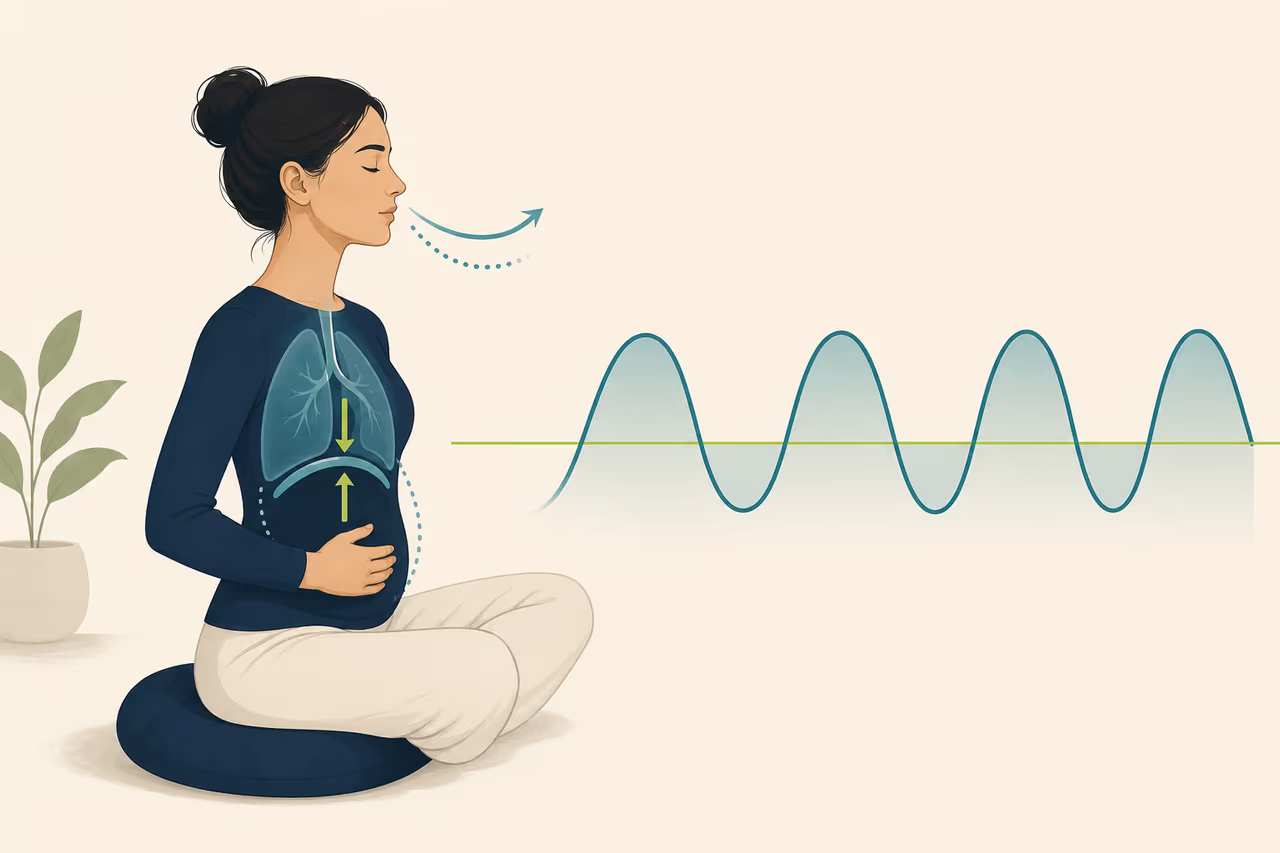
Coherent breathing, also known as resonant frequency breathing, involves breathing at a consistent rate of about 5 to 6 breaths per minute. Instead of shifting between rapid, shallow breaths and sudden deep gasps, this practice focuses on a steady, rhythmic cycle where your inhalations and exhalations are of equal length.
The practice aims to align heart rate variability, respiration, and blood pressure rhythms. When these systems are synchronized, they work in harmony rather than opposition. It is not about achieving an altered state of consciousness. Instead, it is a conscious effort to coordinate your breathing rate with your body's natural biological rhythms to support overall equilibrium.
How Coherent Breathing Affects Your Physiology
Breathing at this resonant rate optimizes cardiovascular efficiency and autonomic nervous system balance. Under normal circumstances, your heart rate naturally increases slightly when you inhale and decreases when you exhale. By pacing your breath to roughly 5 or 6 cycles per minute, you help maximize this natural variation, which is a key indicator of cardiovascular adaptability and resilience.
Additionally, this slow, rhythmic pattern stimulates the vagus nerve, which helps transition the body into a parasympathetic, or rest and digest, state. The vagus nerve acts as a primary pathway for communication between your brain and your internal organs. When you slow your respiration to a steady, even rhythm, you signal to your brain that you are safe, allowing your body to step away from the sympathetic fight or flight response. This physiological shift can help you feel more grounded, though these changes are temporary supportive states rather than permanent structural rewrites of your nervous system.
How to Practice Coherent Breathing Safely
To practice coherent breathing safely, you must prioritize comfort and ease over rigid execution. A common failure mode for beginners is trying to force an exact 6-second count too quickly. Forcing a breathing pace that is too slow can trigger air hunger, hyperventilation, or increased anxiety. If your body feels like it is starving for oxygen, your nervous system will perceive this as a threat, triggering the exact stress response you are trying to soothe.
If you feel short of breath, dizzy, or anxious during the practice, return to your natural breathing pattern immediately. Do not try to push through the discomfort. To build up your tolerance safely, starting with a shorter count, such as 4 seconds in and 4 seconds out, helps beginners adapt without strain. Once a 4-second rhythm feels completely effortless and natural, you can gradually explore longer counts.
Your 5-Minute Coherent Breathing Starter Plan
This structured plan is designed to help you explore resonant breathing at a gentle and manageable pace.
- Find a comfortable position: Sit in a supported chair with your feet flat on the floor, or lie down on your back with a pillow under your knees.
- Soften your focus: Gently close your eyes or soften your gaze toward a single point in front of you.
- Begin the quiet inhale: Inhale quietly through your nose for a count of 4 seconds. Focus on expanding your abdomen rather than chest.
- Begin the quiet exhale: Exhale quietly through your nose or pursed lips for a count of 4 seconds. Let the air flow out smoothly without forcing it.
- Establish the rhythm: Repeat this 4-second cycle for 2 minutes to establish a comfortable, strain-free rhythm.
- Gradually extend the count: If you feel completely comfortable and do not experience any air hunger, gradually increase the count to 5 or 6 seconds for both the inhale and the exhale.
- Keep it brief: Practice this for 5 minutes daily. Stop immediately if you feel dizzy, lightheaded, or anxious.
Limitations and When to Seek Guided Support
While coherent breathing is an accessible tool, it is essential to understand its real-world trade-offs and limitations. First, it requires consistent practice to notice long-term self-regulation benefits. A single five-minute session may offer temporary calm, but building lasting resilience requires integrating the practice into your daily routine over weeks or months.
Second, coherent breathing is a supportive self-regulation tool and not a replacement for medical or psychological treatment. It does not cure clinical anxiety, depression, or post-traumatic stress disorder. According to the National Center for Complementary and Integrative Health, relaxation approaches,including breathing exercises, guided imagery, and progressive muscle relaxation,are helpful supportive practices but should not replace conventional medical care. Research on meditation and mindfulness practices shows that evidence of effectiveness is mixed depending on the specific outcome, and a minority of participants report negative or distressing experiences during quiet, introspective practices.
If you find that focusing on your breath increases your anxiety, or if you struggle to find a rhythm that feels safe, you do not have to navigate this alone. This is where personalized instruction becomes invaluable. At Prime Tempr, an introductory article should serve as a starting point rather than a substitute for responsive, individual guidance. Prime Tempr helps readers Find a yoga teacher who can explain breathing and meditation in context, tailoring the practice to your unique physical and emotional needs. Working with a qualified professional allows you to explore these techniques safely, ensuring you receive real-time feedback and adjustments. You can also Browse yoga programmes to find structured, trainer-led environments that incorporate breathwork alongside physical movement and recovery.
Frequently Asked Questions
| Question | Answer |
|---|---|
| Can I practice coherent breathing while walking? | Yes. You can coordinate your breath with your steps (e.g., inhale for 4 steps, exhale for 4 steps) to support active recovery and mobility. |
| Should I breathe through my nose or mouth? | Inhaling and exhaling quietly through your nose is generally recommended, but you can exhale through pursed lips if it helps you slow down. |
| What should I do if I feel dizzy? | Stop the exercise immediately, sit down if you are standing, and return to your normal, natural breathing pattern. |
Sources
- National Center for Complementary and Integrative Health (NCCIH): Meditation and Mindfulness: Effectiveness and Safety (opens in a new tab)
- National Center for Complementary and Integrative Health (NCCIH): Relaxation Techniques: What You Need To Know (opens in a new tab)
Watch alongside this guide
Breathing meditation
This short guided meditation lets you follow the basic attention and breathing ideas described in the article. Source: UCLA Health. This optional video is context, not evidence or personal instruction.
The YouTube player stays unloaded until you choose to watch. Loading it connects to YouTube and may allow that service to process usage data.