What Is Alternate Nostril Breathing? A Practical Explainer
Discover how alternate nostril breathing works, what sensations to expect, and why it is not a replacement for medical care.
https://primetempr.com/blog/what-is-alternate-nostril-breathing-a-practical-explainer
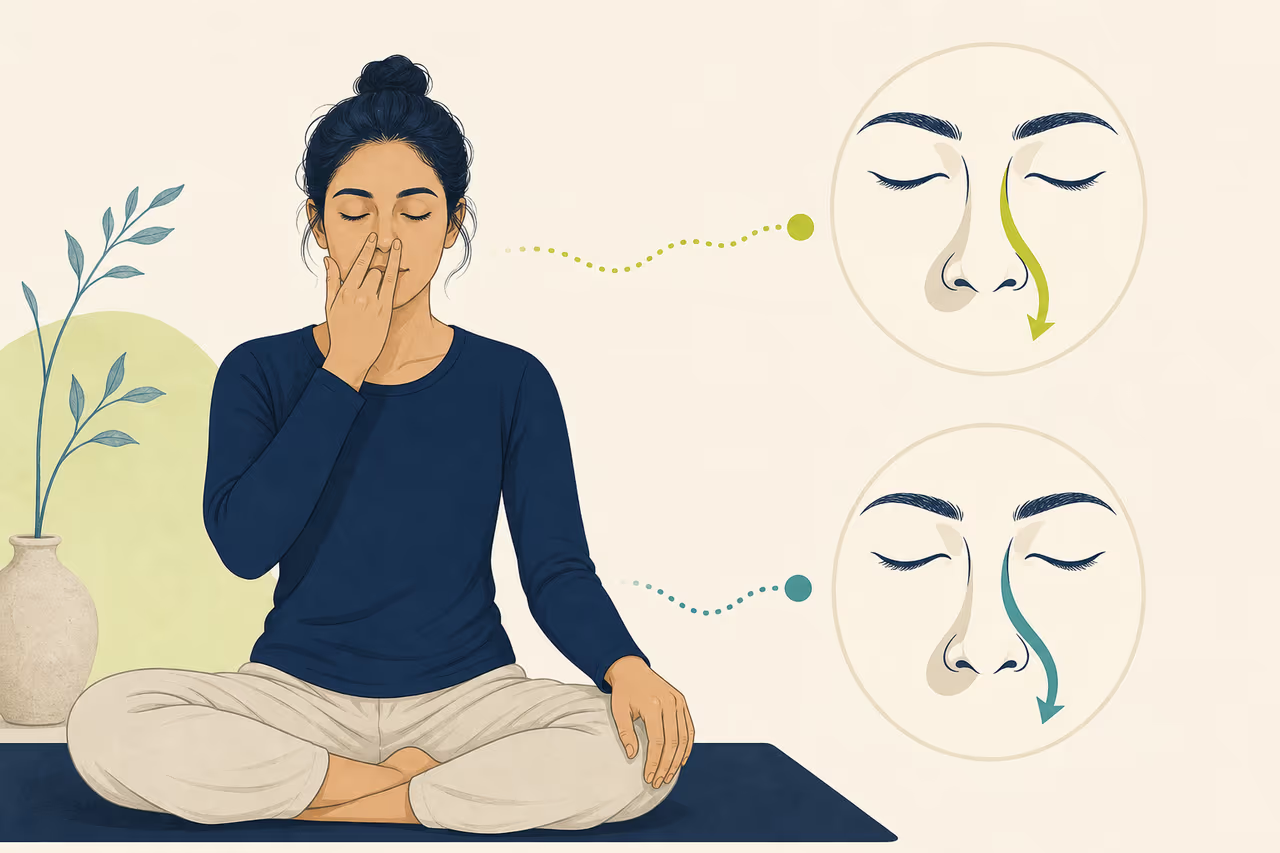
Alternate nostril breathing, often called Nadi Shodhana in traditional yoga, is a rhythmic, controlled breathing technique that alternates the flow of air between the left and right nostrils. It is a self-regulation tool. Using your fingers to gently close one nostril at a time creates a deliberate inhalation and exhalation pattern that directs your attention to the physical sensation of breathing.
While many practitioners use this technique to settle their focus or transition into a quiet state, it is simply a mechanical exercise rather than a cure-all. It belongs in your personal toolkit, but it does not replace conventional medical care or professional mental health support.
What to Expect During Practice
If you are new to this technique, you might wonder what the experience should feel like. The goal is not to achieve a specific "state" of enlightenment or to force your body into a rigid pattern. Instead, the practice is about observing the rhythm of your breath as it moves through your nasal passages.
During a typical session, you might notice the following:
- The Sensation of Airflow: One nostril may feel more open than the other, or the air temperature may change as it enters and exits.
- Mental Wandering: It is entirely normal for your mind to drift away from the breath. The practice is not about achieving a perfectly clear mind, but about noticing when thoughts wander and gently returning focus to the physical sensation.
- Variability: Your experience will change from day to day. Some sessions feel grounding, while others feel neutral or slightly distracting.
Meditation and breathwork practices vary significantly in their effects. Evidence regarding outcomes is mixed, and a minority of participants report negative experiences, such as increased anxiety or discomfort. If the practice does not feel right for you, you are under no obligation to continue.
Limitations and Safety Considerations
Because breathwork influences your internal state, approach it cautiously. Relaxation approaches, including breathing exercises, guided imagery, and progressive relaxation, support well-being, but they should never replace conventional medical care.
Failure Modes to Avoid
- Forcing the Breath: Never hold your breath to the point of strain or force your lungs to expand beyond a comfortable capacity. If you feel lightheaded, dizzy, or short of breath, stop the practice immediately.
- Ignoring Discomfort: If you experience physical pain, nasal congestion that makes breathing difficult, or a sudden onset of anxiety, do not try to "push through." Return to your natural, unforced breathing rhythm.
- Assuming a Cure: Avoid the trap of believing that a few minutes of breathing will resolve underlying health issues, chronic stress, or medical conditions. These techniques are supportive, not curative.
If you have a history of respiratory issues, cardiovascular concerns, or mental health conditions, consult a healthcare provider before starting a new breathwork routine.
Checklist: Is This Practice Right for You Today?
Before beginning, take a moment to assess your current state. This reflection helps you decide if now is the right time for a breathing exercise.
| Question | Consideration |
|---|---|
| Are you feeling calm enough to focus on your breath without frustration? | If you are in a state of high agitation, complex breathing patterns may feel overwhelming. |
| Do you have a comfortable, upright seat where you can remain for 2-3 minutes? | Physical comfort is necessary to avoid unnecessary tension. |
| Are you free from acute respiratory congestion? | If your nose is blocked, focus on natural breathing instead. |
| Are you willing to stop immediately if you feel lightheaded or anxious? | Your safety and comfort are the primary priority. |
| Have you considered booking a session with a trainer to refine your technique? | Personalized feedback helps ensure you are practicing in a way that suits your body. |
Next Steps for Your Practice
While articles like this provide a starting point, they cannot replace responsive, one-on-one guidance. A qualified instructor helps you adapt the technique to your specific needs, correct your posture, and explore these practices safely.
Prime Tempr helps readers find trainers who explain breathing and meditation in context, turning an introductory article into a starting point rather than a substitute for guidance. Explore guided breath and meditation support through our network of experienced professionals.
Learn how these practices fit into a broader wellness strategy through our Breathwork & Meditation resources. Working with a trainer moves you beyond general information, helping you build a practice tailored to your unique requirements and physical limitations.
Sources
- Meditation and Mindfulness: Effectiveness and Safety (opens in a new tab), National Center for Complementary and Integrative Health.
- Relaxation Techniques: What You Need To Know (opens in a new tab), National Center for Complementary and Integrative Health.
Watch alongside this guide
Breathing meditation
This short guided meditation lets you follow the basic attention and breathing ideas described in the article. Source: UCLA Health. This optional video is context, not evidence or personal instruction.
The YouTube player stays unloaded until you choose to watch. Loading it connects to YouTube and may allow that service to process usage data.