What Grounding Means in Yoga: A Clear, Practical Guide
Understand grounding cues in yoga for physical stability, breathing support, and varied postures.
https://primetempr.com/blog/what-grounding-means-in-yoga-a-clear-practical-guide
When you step onto a yoga mat for the first time, instructors often use vocabulary that can feel opaque or overly abstract. Phrases like "find your grounding" or "root down through your feet" are staples of modern classes, leaving many beginners wondering whether grounding refers to a physical stance, a state of relaxation, or an intangible mental shift.
In a yoga class, grounding refers to physical contact, structural stability, and mindful attention. It is a cue that helps you distribute weight evenly, engage muscles supporting your joints, and anchor awareness in your physical body, away from distractions.
Understanding grounding clarifies class instructions and highlights a common pitfall: treating it as a mystical state rather than a mechanical adjustment. Another error is pushing through physical discomfort in standing postures, falsely assuming rigid endurance equals stability.
What Grounding Actually Means in a Yoga Class
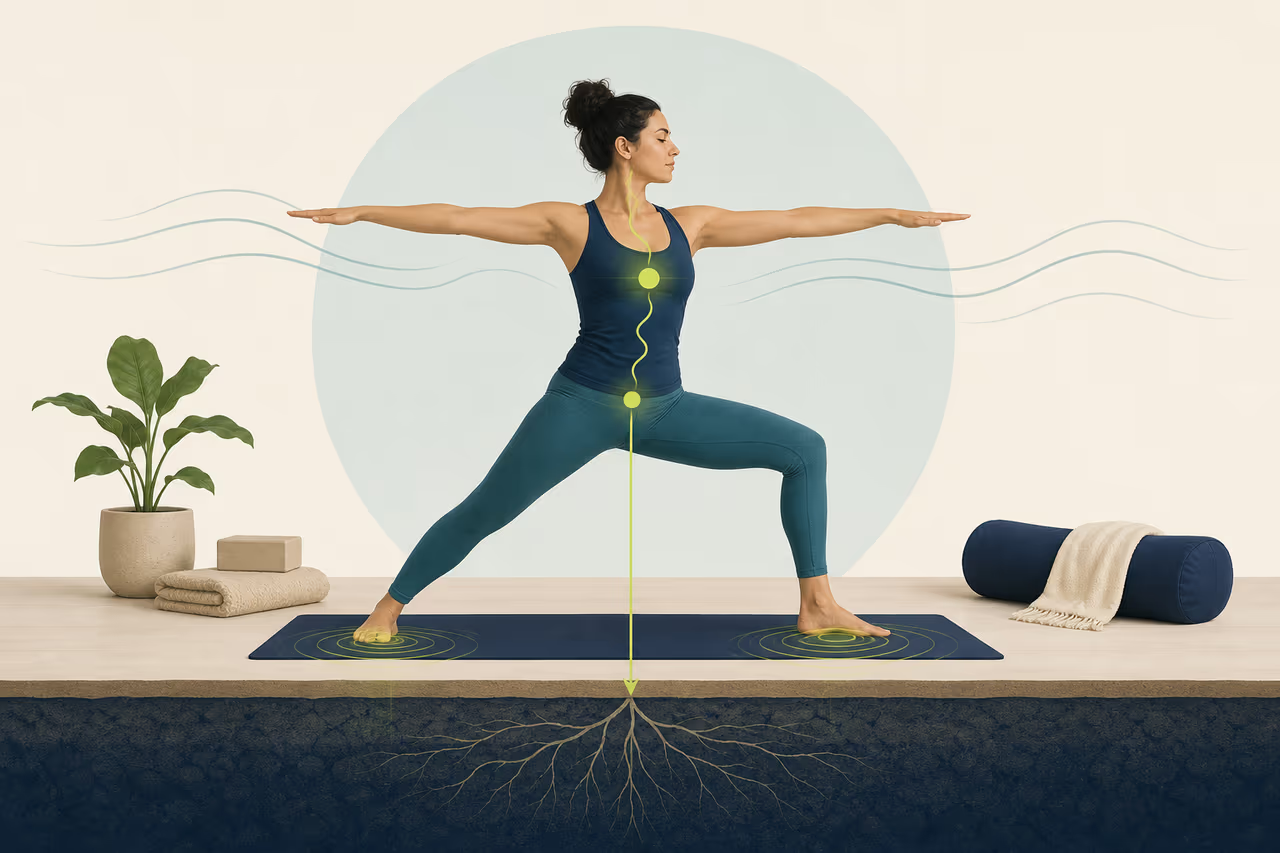
Grounding is a physical relationship with the floor. In standing or seated postures, it describes how your body transfers weight into the earth beneath you.
When a teacher cues you to ground your feet, they ask you to notice the contact points between your soles and the mat: the heels, the mounds beneath the big and little toes, and the outer edges of the feet. Noticing these points helps you adjust weight distribution, preventing collapse into your arches or locked knee joints.
Yoga combines postures, breathing, and meditation; styles vary, benefits should be described with uncertainty, and injuries can occur. Given this multifaceted nature, physical grounding is rarely about standing still. It is an active process of muscular engagement and breath awareness. Coordinating an inhale or an exhale with a stable base of support creates a feedback loop between your nervous system and physical alignment, helping you maintain balance during transitions.
Why Yoga Styles and Cues Vary
Different instructors often offer distinct interpretations of how grounding should feel or look. This variability stems from yoga's diverse traditions, lineages, and modern adaptations.
Styles range from fast-paced, fitness-oriented vinyasa flows to slow, alignment-focused hatha practices and restorative sessions. A teacher rooted in precise physical alignment might spend several minutes helping you micro-adjust your foot placement and pelvic tilt. Another teacher in a fluid flow class might use grounding as a quick transition cue to help you catch your balance before moving into the next posture.
Because styles vary, a cue that feels essential in one context may feel entirely irrelevant in another. Recognizing this lack of rigid standardization prevents you from assuming that any single teacher holds a monopoly on the "correct" way to feel grounded.
| Yoga Style Context | Typical Approach to Grounding Cues | What to Watch For |
|---|---|---|
| Alignment-Focused Hatha | Detailed instructions on foot placement, joint stacking, and weight distribution. | Can sometimes lead to over-thinking micro-movements instead of breathing. |
| Flow/Vinyasa | Fast, rhythmic cues to anchor balance during movement transitions. | Cues may fly by quickly; reduce range of motion if you feel rushed. |
| Restorative/Yin | Passive contact with props or the floor, emphasizing muscular release. | Focus shifts from active muscular engagement to gravity and rest. |
Recognizing Physical Limits and Safety Trade-offs
A frequent trap for practitioners is treating balance or grounding cues as a test of toughness. When a teacher asks you to root down deeply into a standing lunge or balancing pose, it is tempting to force your body into a shape despite joint pinching or sharp pain, assuming this builds discipline.
This approach carries real trade-offs. Injuries can occur in yoga when practitioners ignore their structural limits in pursuit of an aesthetic ideal or an instructor's approval. Any amount of physical activity is better than none, all activity counts, and people should limit sedentary time, but activity must be scaled to your body's current capabilities rather than a rigid standard.
If a standing posture causes knee strain or lower back compression, no amount of mental "grounding" will fix the underlying mechanical mismatch. The proper recovery path is simple: when general class cues feel confusing or difficult to replicate independently, pause, reduce your range of motion, and step back from the edge of discomfort.
How to Explore Class Language with a Qualified Trainer
Static glossaries and explanations can only take you so far. Reading about grounding cannot replace the real-time feedback of a live instructor who can watch your specific movement patterns and suggest proportionate modifications.
When general class cues leave you guessing, turn unfamiliar yoga language into actionable dialogue. Instead of nodding silently or mimicking someone else's shape, ask targeted questions before or after a session.
Prime Tempr's trainer marketplace offers guided instruction, providing an alternative to static glossaries. Working directly with a qualified professional allows you to explore how physical cues apply to your unique anatomy, ensuring your practice remains safe, sustainable, and entirely your own.
Three Questions to Ask Your Yoga Teacher About Grounding
- Which specific parts of my feet or body should be in contact with the mat during this standing posture?
- How can I adjust this posture if I feel unstable or experience joint pressure?
- Where should I direct my breath when trying to find balance in this movement?
Continue with guidance
Use this article as orientation, then Yoga Language & Class Cues when you want responsive guidance or a practice format matched to you.
Sources
Watch alongside this guide
An introductory yoga flow
Watch how spoken cues, breath, and transitions work together, then compare them with the article's guidance. Source: Yoga With Adriene. This optional video is context, not evidence or personal instruction.
The YouTube player stays unloaded until you choose to watch. Loading it connects to YouTube and may allow that service to process usage data.