What Breath Led Movement Means: A Clear Guide
Learn how breath-led movement works in yoga, understand its limits and trade-offs, and find personalized guidance for your practice.
https://primetempr.com/blog/what-breath-led-movement-means-a-clear-guide
Breath-led movement means using your natural breathing rhythm to pace and coordinate physical actions rather than forcing your breath to match a rigid mechanical tempo. When you encounter this phrase in a yoga class, it simply means your breath acts as an internal metronome for your transitions and holds, helping you stay grounded in the physical experience rather than rushing through postures.
What Does Breath-Led Movement Actually Mean in a Yoga Class?
In a practical yoga setting, breath-led movement guides the timing of your transitions. Instead of treating your breath and your body as two separate entities, you allow the natural inhalation or exhalation to initiate or accompany the physical shift. For instance, as you inhale, you might expand your chest and lift your arms; as you exhale, you fold forward or ground down into the mat.
This approach shifts your attention away from trying to mirror a neighbor or hit an idealized aesthetic shape. However, this does not mean there is one strict, universal breathing speed for every body. Your lung capacity, current fitness level, and daily energy will dictate a completely different pacing than someone else's in the same room.
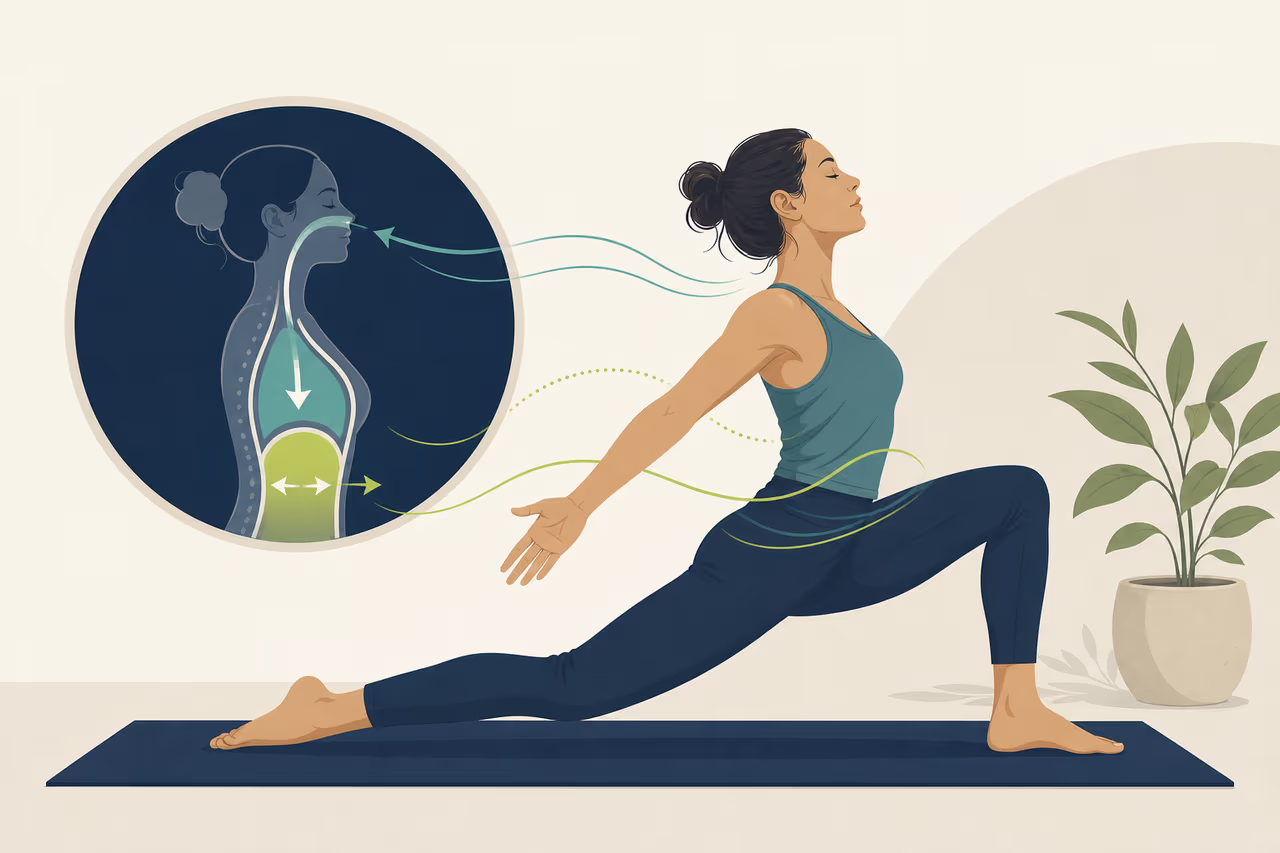
How Breathing and Postures Interact
Yoga combines postures, breathing, and meditation; styles vary, benefits should be described with uncertainty, and injuries can occur. Because yoga encompasses such a wide variety of traditions, from gentle restorative sessions to vigorous heat-building flows, the relationship between breath and movement changes significantly depending on the style you practice.
| Yoga Style Approach | Typical Pacing | Breath Role |
|---|---|---|
| Restorative & Yin | Slow and sustained | Supports relaxation and long holds without strict timing. |
| Vinyasa & Power | Moderate to fast | Coordinates continuous transitions directly with inhales and exhales. |
| Gentle Hatha | Variable and deliberate | Focuses on comfort, stability, and natural breathing intervals. |
While practitioners often report feeling calmer, more focused, or more mobile, these outcomes vary by individual. Any amount of physical activity is better than none, all activity counts, and people should limit sedentary time, but it remains important to approach breathing cues with flexibility rather than rigid perfectionism.
Practical Limits and Safety Trade-Offs
Strictly matching breath to movement can feel awkward or restrictive for beginners. When you first start practicing, trying to coordinate every inhalation and exhalation with a specific physical movement often creates unnecessary mental tension.
Two common failure modes frequently disrupt this process. Holding the breath involves straining to hold a challenging posture while accidentally starving your body of oxygen. Hyperventilating happens when you try to match an unnaturally fast or rigid class tempo that forces your breathing to become ragged and shallow.
If you lose your rhythm during a sequence, your recovery path is straightforward: return to a comfortable, natural breathing pattern first, then let movement follow naturally without strain. Disregarding this recovery step can lead to dizziness, lightheadedness, or muscle overexertion.
Breath-Led Movement Checklist
Use this simple checklist to keep your practice grounded, safe, and realistic.
- Notice your natural breathing rhythm before starting any movement.
- Allow your physical actions to follow your breath organically rather than holding your breath.
- Pause and rest whenever your breathing becomes ragged or forced.
- Bring specific questions about pacing and class cues to a qualified yoga teacher.
Moving Forward With Personal Guidance
Static glossaries explain terms, but personalized guidance from a teacher helps you find your actual physical rhythm. Reading about breath-led movement is a useful starting point, but it cannot replace real-time feedback from an instructor who can observe your unique pacing and body mechanics.
Prime Tempr's trainer marketplace lets readers turn unfamiliar yoga language into better questions, then choose guided instruction instead of relying on a static glossary alone. Whether you want to explore gentle mobility work or refine your alignment in a dynamic flow, connecting with an experienced professional ensures your practice stays safe, sustainable, and tailored to your actual needs.
Continue with guidance
Use this article as orientation, then Yoga Language & Class Cues when you want responsive guidance or a practice format matched to you.
Sources
Watch alongside this guide
An introductory yoga flow
Watch how spoken cues, breath, and transitions work together, then compare them with the article's guidance. Source: Yoga With Adriene. This optional video is context, not evidence or personal instruction.
The YouTube player stays unloaded until you choose to watch. Loading it connects to YouTube and may allow that service to process usage data.