What Balance Progressions in Yoga Mean: A Clear Guide
Learn what balance progressions mean in yoga, navigate safety trade-offs, and find qualified instruction for your practice.
https://primetempr.com/blog/what-balance-progressions-in-yoga-mean-a-clear-guide
Balance progressions in yoga are structured steps to explore stability rather than tests of perfection, helping you scale your practice safely with qualified guidance. Encountering unfamiliar terminology can make it seem like every posture requires an immediate, flawless hold. In reality, balance progressions provide a methodical pathway to build familiarity with movement, breath, and spatial awareness without forcing your body into shapes it is not ready for.
As physical practices combining postures, breathing, and meditation, yoga styles vary significantly; benefits should be described with uncertainty while recognizing that injuries can occur. Understanding how progressions work helps you navigate this variability with confidence rather than confusion.
What Are Balance Progressions in Yoga?
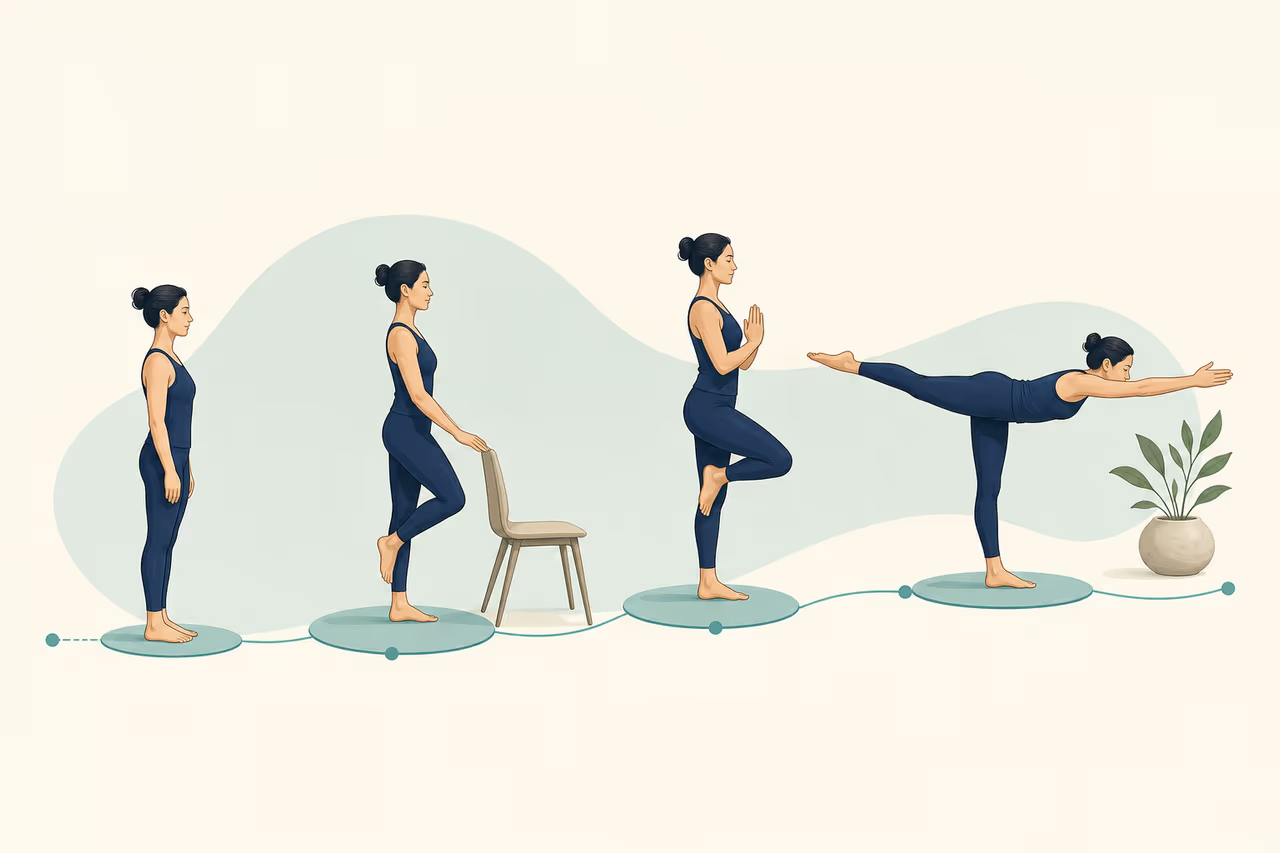
Balance progressions refer to the graded variations and preparatory steps a teacher offers before introducing a more complex balancing posture. Rather than treating a pose like Tree Pose or Half Moon as a binary pass-or-fail test, a progression breaks the movement down into manageable components.
These steps might include:
- Keeping one or both toes lightly grazing the floor while exploring single-leg weight shift.
- Using a wall, block, or chair for external support to test stability without strain.
- Focusing solely on pelvic alignment and breath control before lifting the arms or gazing upward.
Any amount of physical activity is better than none, all activity counts, and people should limit sedentary time. Approaching balance through gradual steps ensures your practice remains accessible and grounded in your actual physical capacity on any given day.
Why Teachers Use Progressions Instead of Perfection
Yoga teachers introduce progressions to accommodate diverse bodies, energy levels, and daily physical states. Pushing straight into an advanced pose often leads to compensatory tension, breath-holding, or sudden loss of balance.
| Traditional Approach | Progression-Based Approach |
|---|---|
| Attempting the full expression immediately | Building stability from the ground up with modifications |
| Treating wobbling as a failure | Treating wobbling as useful sensory feedback |
| Sticking to a rigid visual standard | Adapting range of motion to fit daily energy and mobility |
Treating balance as an ongoing exploration turns wobbling from an error into valuable information about where your weight is distributed.
Safety, Variability, and Knowing Your Limits
Because styles vary and injuries can occur, approach balance progressions with clear self-awareness. Treating them as a test of moral or physical superiority is a common failure mode that leads to overexertion or ignored joint pain.
If a progression feels unstable, step back to a foundational option, reduce your range of motion, or consult a qualified instructor for modifications. There is no universal timeline for mastering a posture, and what feels stable on one day may differ due to fatigue, stress, or sleep quality.
| Balance Challenge | Common Risk | Constructive Recovery Path |
|---|---|---|
| Ankle or foot fatigue | Gripping the mat with toes, holding breath | Lower the back heel, use a wall for support, rest |
| Loss of focus or dizziness | Staring rigidly at a moving point | Bring gaze to a non-moving point on the floor, pause |
| Over-stretching a joint | Forcing a range of motion beyond comfort | Micro-bend the standing knee, shorten the stance |
Moving From Glossary to Personal Guidance
Static glossaries explain terms intellectually but cannot account for individual physical variation or real-time safety needs. Self-guided practice also lacks real-time external feedback on alignment and safety.
Working with a live teacher transforms this understanding. Prime Tempr's trainer marketplace lets readers turn unfamiliar yoga language into better questions, then choose guided instruction instead of relying on a static glossary alone. Connecting with a qualified instructor ensures your practice evolves safely and intelligently.
Three Questions to Ask Before Your Next Balance Practice
Before stepping onto your mat or trying a new balance sequence, consider these three reflective questions to anchor your session:
- Am I approaching this balance posture as an exploration or a performance?
- What simpler variation or prop can I use to support my stability today?
- How can I check in with a qualified teacher to tailor this movement to my body?
Framing your practice around curiosity and sustainable pacing helps you explore balance progressions with greater ease and lower injury risk. To take the next step, Practise with a qualified trainer or explore Why Yoga Teachers Offer Pose Options (And How to Choose) for deeper insight into class structures. You can also read more about Yoga Language & Class Cues to familiarize yourself with common instruction styles.
Sources
Watch alongside this guide
An introductory yoga flow
Watch how spoken cues, breath, and transitions work together, then compare them with the article's guidance. Source: Yoga With Adriene. This optional video is context, not evidence or personal instruction.
The YouTube player stays unloaded until you choose to watch. Loading it connects to YouTube and may allow that service to process usage data.