Starting Kettlebell Training: A Practical Guide for Beginners
Assess your readiness, prioritize movement quality over high intensity, and choose the correct kettlebell training path for your personal goals.
https://primetempr.com/blog/starting-kettlebell-training-a-practical-guide-for-beginners
A beginner kettlebell class prioritizes movement quality and foundational mechanics over heavy lifting, providing a controlled environment to learn how to integrate strength into your routine safely. If you feel intimidated by the sight of iron bells or the high-intensity atmosphere often associated with them, you are not alone. These tools are designed to facilitate functional movement, not just to test your limits.
The Reality of Beginner Kettlebell Classes
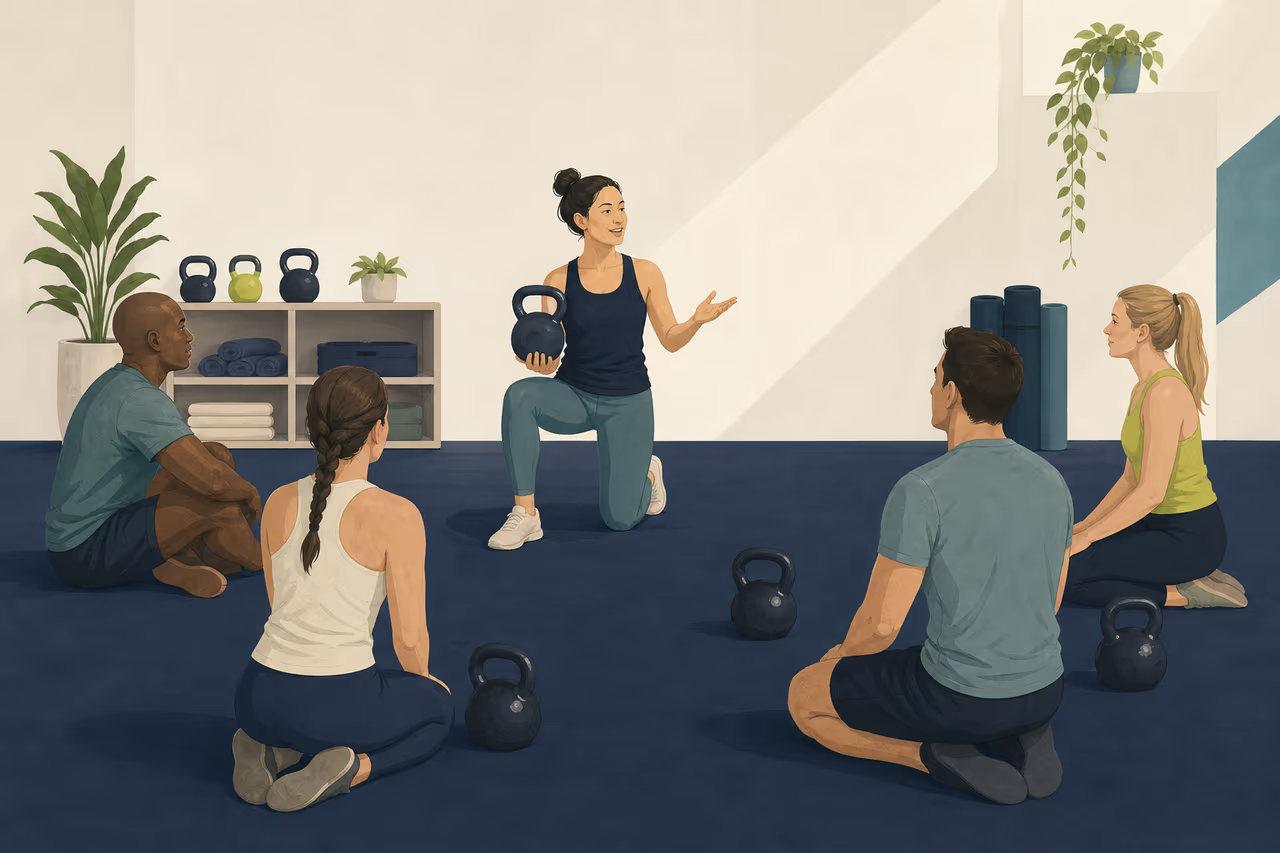
When you walk into a well-structured beginner kettlebell class, you should not expect to be handed a heavy weight and told to swing it until you are exhausted. Instead, you can expect a session that treats the kettlebell as a tool for learning body awareness.
A typical session usually begins with a thorough warm-up. Because kettlebell movements involve the entire body, instructors often focus on joint mobility,specifically in the ankles, hips, and shoulders. You will likely spend a significant portion of your first few classes using bodyweight or very light weights to master the "hip hinge" and the squat. These are the two pillars of kettlebell training. If a class moves straight into complex movements like the snatch or the clean without ensuring you can safely perform a hinge, it may be prioritizing intensity over your long-term progress.
Why Technique Matters More Than Intensity
The primary goal of starting with kettlebells is to build a foundation that supports your daily life. Any amount of physical activity is better than none, and muscle strengthening benefits everyone, but the way you build that strength matters.
Kettlebell training has a steeper learning curve than some other forms of resistance training because the weight is offset from the handle, which challenges your balance and core stability. If you rush into heavy lifting before mastering the mechanics, you risk reinforcing poor movement patterns.
Focusing on technique allows you to:
- Develop consistent movement patterns: Mastering the hip hinge ensures you are using your posterior chain,your glutes and hamstrings,rather than straining your lower back.
- Build functional strength: By learning the squat movement pattern correctly, you translate that strength into everyday activities like lifting objects or standing up from a chair.
- Control the load: Learning to manage a light bell effectively provides a better stimulus than struggling to control a heavy one.
Assessing Your Readiness
You do not need to be "strong" to start kettlebell training. In fact, the purpose of the class is to help you build that strength. According to current physical activity guidelines, adults can work toward 150 to 300 weekly minutes of moderate aerobic activity and muscle strengthening on at least two days. A beginner kettlebell class is an excellent way to check off those muscle-strengthening days.
If you are currently sedentary, start by focusing on your range of motion. If you can perform basic bodyweight movements, you are ready to begin. The most important "readiness" factor is a willingness to slow down and listen to the instructor's cues regarding your form.
What to Look for in a Beginner Kettlebell Class
Not all classes are created equal. Use this checklist to evaluate if an environment is right for your current needs:
- Foundational focus: The instructor emphasizes the 'hip hinge' and squat mechanics before adding weight.
- Dedicated mobility: The class includes a dedicated warm-up focusing on mobility.
- Scalable options: The instructor offers scaling options for different fitness levels (e.g., using a lighter bell or bodyweight).
- Supportive culture: The environment feels supportive, not competitive.
- Quality over quantity: There is a clear focus on technique over the number of repetitions performed.
Choosing Your Path: Group Classes vs. Personal Training
Deciding between a group class and one-on-one training often comes down to your learning style and your specific goals.
Group Classes Group classes offer community and accountability. They are often more affordable and can be a great way to stay motivated. However, the trade-off is that instructors must split their attention among many students. If you have specific mobility limitations or prefer detailed, immediate feedback, a large group class might not provide the level of oversight you need to master complex movements.
Personal Training Working with a trainer provides the highest level of individual attention. If you are nervous about your form or have specific physical considerations, a trainer can tailor the session to your exact needs. Prime Tempr helps readers compare trainer approaches and ongoing programmes, making it easier to add qualified progression when a general strength guide is no longer enough. You can find a trainer for your goals who specializes in kettlebell foundations, ensuring you get the personalized feedback necessary to build a safe, sustainable practice.
Recovery and Next Steps
If you attend a class and feel that the intensity is too high or you are not receiving the feedback you need to feel confident, do not feel pressured to keep up with the group. A key recovery path is to scale back. You can always return to bodyweight movements to refine your technique, or seek out a session with a trainer who can provide the specific cues you are missing.
Remember, the goal is to integrate strength into your life in a way that is sustainable. Whether you choose a group setting or private instruction, prioritize the movement quality that will serve you for years to come.
Sources
Watch alongside this guide
High-intensity functional training explained
This ACE overview shows how functional training is framed so you can compare it with the article's safer progression advice. Source: ACE Fitness. This optional video is context, not evidence or personal instruction.
The YouTube player stays unloaded until you choose to watch. Loading it connects to YouTube and may allow that service to process usage data.