The Squat Movement Pattern: A Practical Guide
Assess your own squat mechanics, understand common physical limitations, and learn how to adapt this fundamental pattern safely.
https://primetempr.com/blog/the-squat-movement-pattern-a-practical-guide
The squat is often presented as a rigid, standardized exercise that requires a specific aesthetic to be considered "correct." In reality, the squat is a fundamental human movement pattern,the simple act of lowering your center of gravity and returning to a standing position. Its value lies in its functional utility for daily life and its contribution to long-term physical health, rather than in achieving a single, idealized form.
Because every individual possesses unique anatomical structures, no two people will squat exactly the same way. Trying to force your body into a "perfect" stance that ignores your specific mobility constraints or injury history is a common failure mode that often leads to frustration or discomfort.
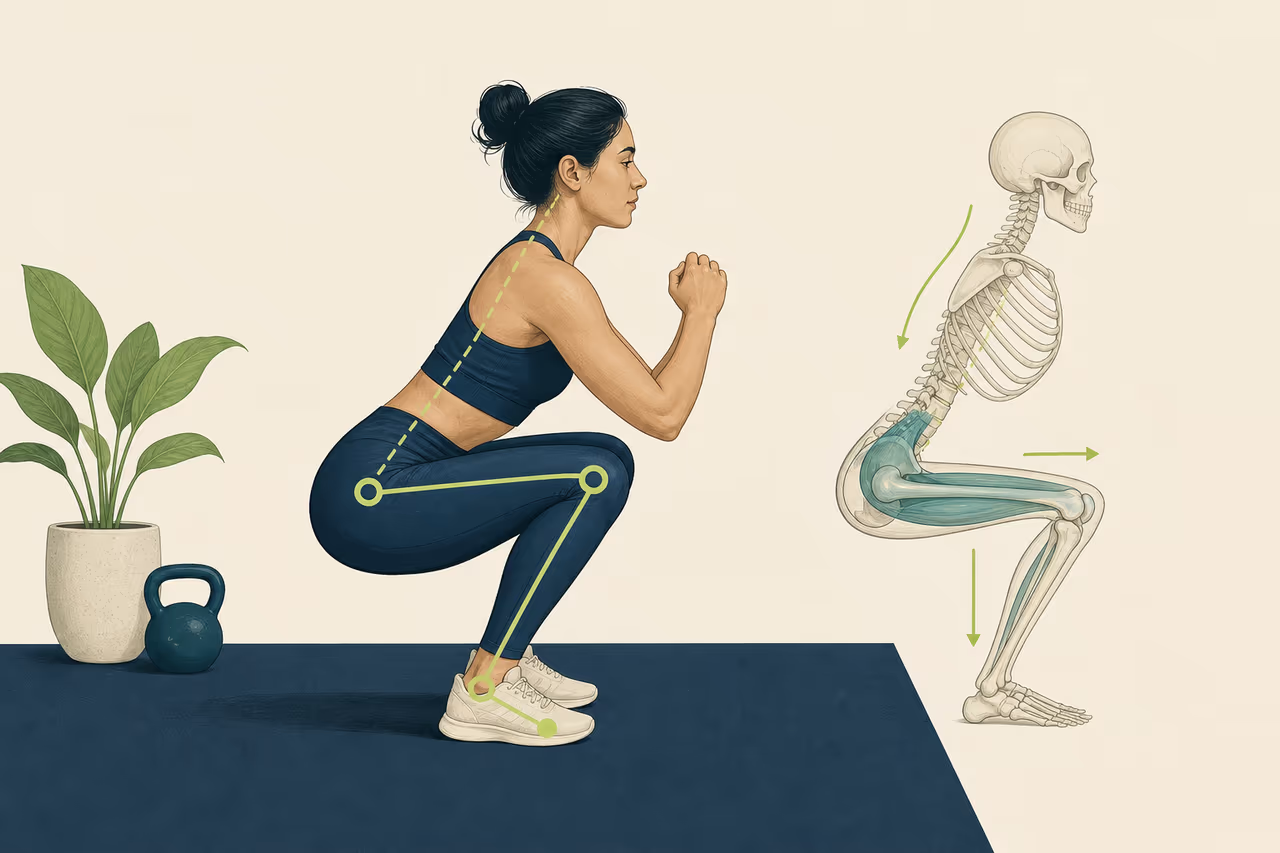
What is the squat movement pattern? The squat is a hinge and flexion pattern involving the hips, knees, and ankles. It is a functional movement because it mirrors the mechanics required for everyday tasks, such as sitting in a chair, picking up an object from the floor, or navigating stairs.
Muscle strengthening benefits everyone and is a key component of physical activity guidelines. By practicing the squat pattern, you are training your body to maintain the strength and coordination necessary for daily activities. The goal is to move with stability and control, not to meet an arbitrary standard of depth or foot placement that may not suit your skeletal structure.
Why it matters for your daily life
Functional movement patterns are the foundation of physical longevity. When you improve your ability to squat, you are effectively training your body to handle the physical demands of life with greater ease.
According to current health guidelines, adults should aim for muscle-strengthening activities on at least two days per week. The squat is an accessible way to incorporate this into your routine, whether you are performing bodyweight movements at home or working with external resistance in a gym. Consistent, moderate practice is far more beneficial than sporadic, high-intensity efforts that leave you feeling sore or discouraged.
Recognizing your limits
The most common mistake people make is assuming that a general guide replaces the need for personalized feedback. If you feel sharp pain, significant instability, or a sense of "locking up" during a squat, stop immediately.
Failure modes often include:
- Forcing depth: Attempting to squat lower than your current hip or ankle mobility allows, which often causes the lower back to round.
- Ignoring discomfort: Pushing through joint pain in the hope that it will "work itself out."
- Holding your breath: Using the Valsalva maneuver (holding breath) inappropriately, which can increase internal pressure and make the movement feel forced rather than fluid.
If a movement feels unstable, regress to a simpler variation. For example, use a chair as a target to sit down and stand up from without using your hands. This provides a safe, controlled range of motion that allows you to build confidence before attempting more complex variations.
Squat Movement Self-Check
Use this reflection to gauge your current relationship with the squat pattern. This is not a test of fitness, but a way to identify where you might need more support.
- Can I sit down and stand up from a chair without using my hands? This indicates a baseline level of functional strength and coordination.
- Do I feel stable and balanced throughout the entire movement? If you feel like you are falling backward or shifting weight unevenly, your current setup may need adjustment.
- Is my breathing steady, or am I holding my breath to force the movement? Steady, rhythmic breathing is a sign that the movement is within your current capacity.
- Am I ready to seek a trainer to refine my technique for long-term strength? If you feel you have hit a plateau or are unsure how to progress safely, this is the right time to look for professional support.
When to seek professional guidance
General guides are excellent for starting, but they cannot account for your specific injury history or unique mobility constraints. When you feel ready to move beyond basic bodyweight movements, or if you find that general advice is no longer helping you progress, it is time to look for a more personalized approach.
Prime Tempr helps readers compare trainer approaches and ongoing programmes, making it easier to add qualified progression when a general strength guide is no longer enough. A trainer provides the objective, real-time feedback that a video or article cannot, helping you adapt the squat pattern to your body rather than forcing your body to adapt to a rigid ideal.
Whether you are looking for Strength & Functional Fitness or want to Find a trainer for your goals, remember that the ultimate objective is to build a movement practice that you can sustain for years, not just weeks.
Sources
- Physical activity (opens in a new tab), World Health Organization.
- Top 10 Things to Know About the Physical Activity Guidelines (opens in a new tab), Office of Disease Prevention and Health Promotion.
Watch alongside this guide
High-intensity functional training explained
This ACE overview shows how functional training is framed so you can compare it with the article's safer progression advice. Source: ACE Fitness. This optional video is context, not evidence or personal instruction.
The YouTube player stays unloaded until you choose to watch. Loading it connects to YouTube and may allow that service to process usage data.