Splitting Movement Time Without Guilt: A Caregiver's Guide
Manage caregiving schedules by fairly sharing movement time through clear handovers and modular routines, without guilt.
https://primetempr.com/blog/splitting-movement-time-without-guilt-a-caregiver-s-guide
Fair exercise-sharing among caregivers relies on explicit shift handovers, modular time blocks, and recognizing that any amount of movement beats none, rather than demanding rigid, uninterrupted workout hours. Caregivers often struggle to carve out movement time without feeling guilty or clashing with other household members who also need rest or task handovers. When a household juggles desk jobs, small living spaces, and continuous family responsibilities, traditional fitness advice that assumes an empty calendar and a silent room usually falls apart.
The reality of sharing care and movement time
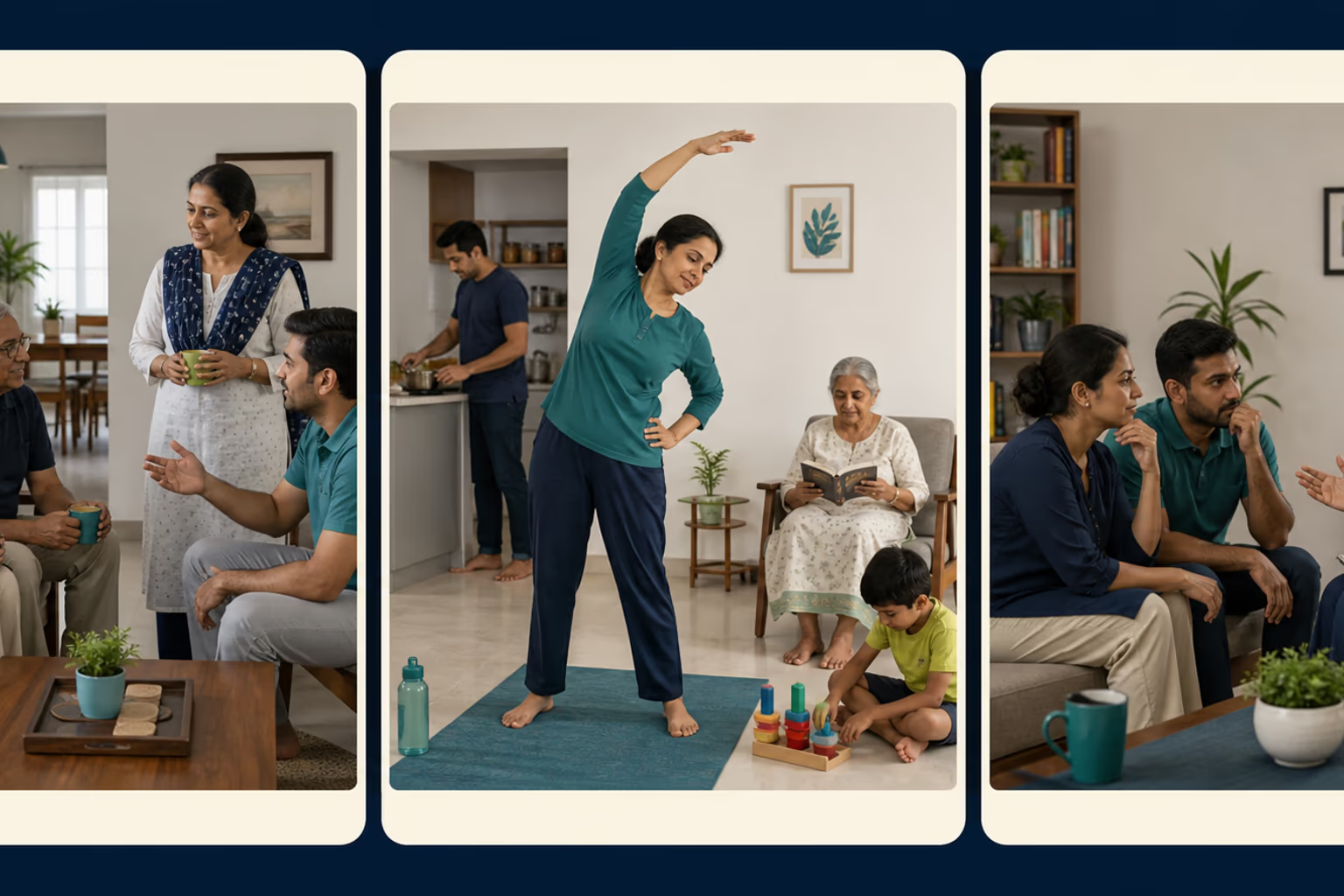
When two or more adults share domestic and care work, exercise time frequently becomes a silent negotiation. One person resents sneaking away while the other feels trapped under an endless stack of tasks. Strict schedule symmetry is rarely possible in multigenerational or demanding households. Fairness often looks like rotation rather than simultaneous equal hours.
A common failure mode is treating exercise as an all-or-nothing block that collapses the moment a child or elder needs attention. If you expect a pristine, uninterrupted 45-minute gym session, a single wake-up call or household interruption ruins the entire plan. This creates a cycle of frustration where caregivers abandon physical activity entirely.
Another frequent pitfall is silently resenting other household members instead of setting a clear rotating handover window. Without an explicit agreement, every request feels like an intrusion. A sustainable approach acknowledges that any amount of physical activity is better than none, all activity counts, and muscle strengthening benefits everyone.
Three ways to structure a caregiver rotation
To make movement sustainable, households can adopt structured tiers based on daily capacity. Shorter, fragmented movement sessions mean you may need to accumulate minutes across the day to meet broad guidelines, which suggest adults can work toward 150 to 300 weekly minutes of moderate aerobic activity and muscle strengthening on at least two days.
- The Minimum Version: A 10-minute movement block used on high-demand days. This involves bodyweight movements, gentle stretching, or short mobility sequences in a living room corner while another caregiver holds a passive supervision role.
- The Normal Version: A 30-minute dedicated window where caregivers swap active duty. One adult takes complete charge of the domestic environment while the other steps away for focused exercise or a brisk walk.
- The Shared Version: A family walk or active transport session where movement happens alongside care work. This accommodates different speeds and energy levels without isolating anyone.
When standard routines fail to fit your household schedule, you can Find family-aware guidance to explore flexible options.
Handling interruptions and schedule breakdown
When a planned 30-minute block gets interrupted, drop immediately to a 10-minute minimum movement version or swap solo time for a shared family walk. Attempting high-intensity routines that lead to burnout or injury without proper pacing will only increase household friction. If an older family member requires sudden assistance or a child wakes early, pause the session without self-blame.
When schedules shift unexpectedly, communicating the breakdown immediately prevents mismanaged expectations. If your allocated window shrinks from thirty minutes to five, use those five minutes for light joint mobilization or basic breathing. All activity counts toward your well-being, and preserving consistency matters more than maintaining rigid duration targets.
Caregiver exercise handover checklist
Use this structured decision guide to coordinate movement time without friction or guilt.
- Agree on one daily 15-to-30 minute movement window per caregiver before the day starts.
- Establish a clear physical handover signal so the active caregiver is not left guessing when they can step away.
- Use the minimum version, such as 10 minutes of movement, on high-demand days without guilt.
- Explore flexible online or local guidance if standard routines fail to fit your household schedule.
For additional strategies on blending movement with family life, read A Movement Plan for Parents Who Are Interrupted Every Few Minutes or try A Family Walk That Works for Different Speeds and Energy Levels to keep everyone engaged safely.
Follow-along reflection
Use the prompts below to review the idea in context, without turning it into a diagnosis or a fixed rule.
Caregiver exercise handover checklist
- Use the minimum version (10 minutes of movement) on high-demand days without guilt.
Trade-offs to keep in view
- Strict schedule symmetry is rarely possible in multigenerational or demanding households; fairness often looks like rotation rather than simultaneous equal hours.
- Shorter, fragmented movement sessions mean you may need to accumulate minutes across the day to meet broad guidelines.
Questions to carry forward
- How can two or more caregivers split daily care duties so everyone gets movement time?
- What counts as valid physical activity when you only have 10 or 15 minutes between tasks?
- How do we handle household friction when schedules shift unexpectedly?
- What is the difference between a minimum version, a normal version, and professional support?
Sources
- World Health Organization, Physical activity, https://www.who.int/news-room/fact-sheets/detail/physical-activity (opens in a new tab)
- Office of Disease Prevention and Health Promotion, Top 10 Things to Know About the Physical Activity Guidelines, https://odphp.health.gov/our-work/nutrition-physical-activity/physical-activity-guidelines/current-guidelines/top-10-things-know (opens in a new tab)
- Physical activity (opens in a new tab)
- Top 10 Things to Know About the Physical Activity Guidelines (opens in a new tab)
Watch alongside this guide
Just walk
This short walking overview offers an easy shared-activity reference. Family members can choose their own pace, route and participation without pressure.
The YouTube player stays unloaded until you choose to watch. Loading it connects to YouTube and may allow that service to process usage data.