Identifying an Inclusive Yoga Teacher
Evaluate yoga teachers through clear communication, varied movement options, transparent touch policies, and supportive, non-judgmental guidance.
https://primetempr.com/blog/signs-of-an-inclusive-yoga-teacher
Inclusive teaching appears in ordinary choices: how a teacher describes the class, responds to questions, offers options, manages touch, and avoids ranking bodies. No teacher anticipates every access need, but a good one is honest about the format and collaborates without making the student responsible for educating the room.
Class labels are a starting point. Two classes with the same label may differ in pace, room setup, language, and support. Ask for concrete details and decide based on the answers rather than assuming that beginner, gentle, or accessible has one standard meaning.
Start with the access conditions that matter
Begin with the conditions that determine if participation is practical. Separate essential access needs from preferences, but do not minimize either. A preference such as lower music may be the difference between staying engaged and leaving early. The aim is to find a format where you can make informed choices.
- options presented as equally valid choices rather than easier and better versions
- consent requested before touch and respected without a public explanation
- language focused on the task and experience instead of body shape or moral value
- clear boundaries about what the teacher can and cannot personalize
A helpful provider describes what exists, what can be adjusted, and what cannot. Honest limits are more useful than an enthusiastic yes followed by surprises on arrival. If staff need time to check a detail, ask for the answer in writing before booking.
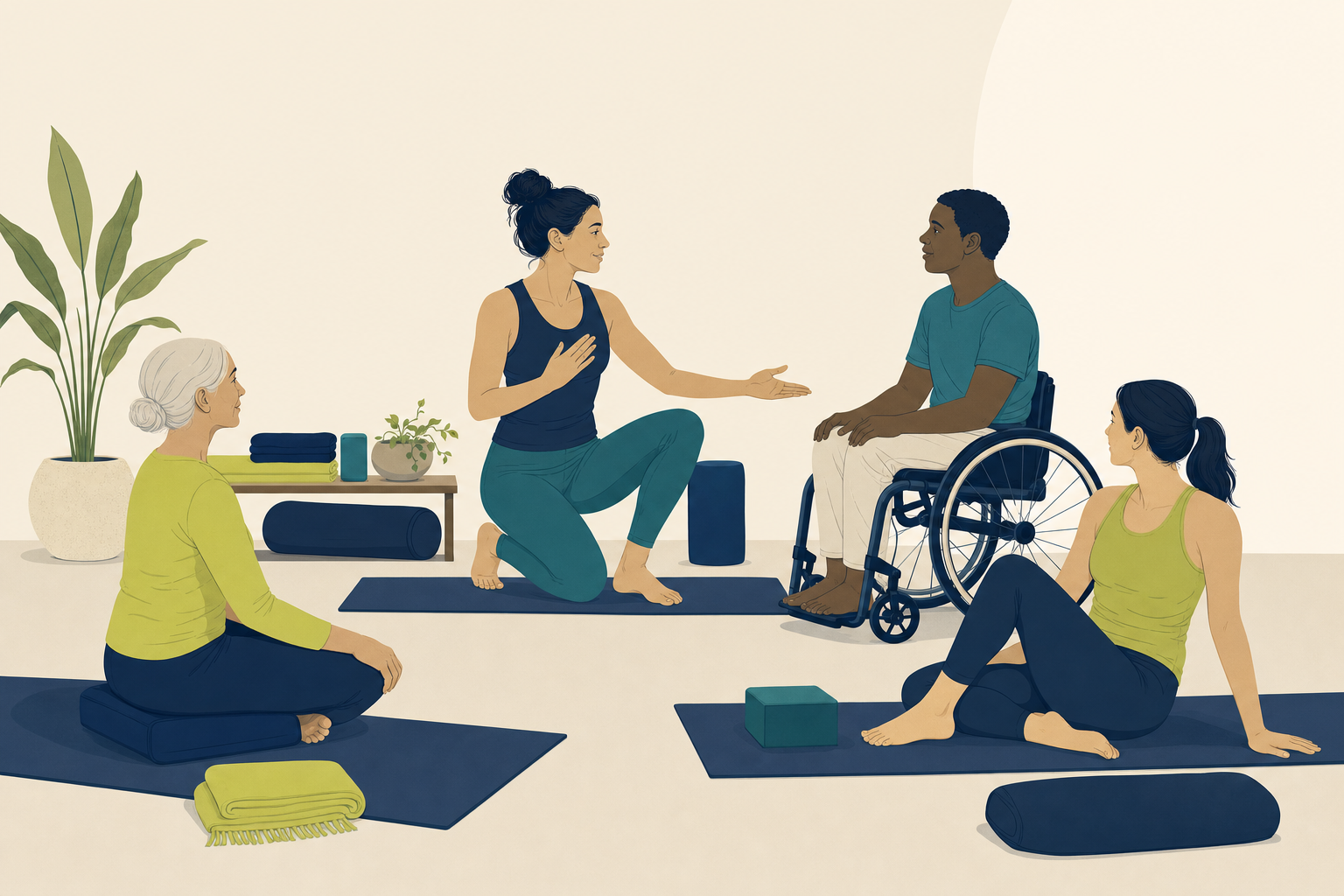
Questions to ask before you book
You do not need to share a diagnosis to ask about a class. Describe the practical information you need: the route into the room, how instructions are delivered, whether touch is used, what choices are available, and how breaks work. A short email creates a record for reception and the teacher.
- How do you offer alternatives when floor access, kneeling or balance is difficult?
- What is your approach to hands-on assistance and consent?
- Can I observe part of a class before deciding whether to book?
- How should I communicate an access need without sharing a diagnosis?
Notice whether the reply is specific. A useful answer names the actual setup and acknowledges uncertainty. A vague assurance that the teacher can modify everything places too much responsibility on the student and may hide limits that should be discussed first.
What respectful choice looks like during class
Choice is built into the teaching rather than offered only after someone struggles. Options can change position, range, speed, equipment, sensory input, or the decision to observe. They do not have to look equivalent to be valid. A teacher explains the purpose of an activity and lets students choose how, or whether, to explore it.
Consent is ongoing. Agreeing to attend does not mean agreeing to touch, partner work, photography, or every activity. Students should be able to change their mind without being questioned in front of the group. If a teacher needs more information to support a request, that conversation should be private and relevant.
Warning signs worth taking seriously
- guarantees that one class is suitable for every person
- praise based on depth, flexibility, weight or appearance
- defensiveness when a student asks for clearer access information
One unclear answer does not automatically make a class unsuitable, but repeated vagueness is useful information. So is a response that treats access as an inconvenience, asks for unnecessary medical detail, or claims one option addresses every access need. It is reasonable to keep looking.
Make the first visit a low-pressure trial
When possible, choose a single class, observation visit, or short recording before committing to a package. Confirm details on the day, arrive with time to orient yourself, and identify how to pause or leave. Afterward, review the experience: Could you follow the information? Were choices respected? Did the environment match the description? Would one small change make the next visit workable?
Use the answers to compare options, then Browse yoga programmes when you want to contact a trainer or studio about the access details that matter to you.
This guide is general education, not medical advice. If a health condition, recent injury, or persistent symptom changes what movement is appropriate, discuss that with a qualified health professional and share only the relevant practical guidance with the teacher.
Sources
- Yoga: Effectiveness and Safety (opens in a new tab) — National Center for Complementary and Integrative Health.
- Older Adult Activity: An Overview (opens in a new tab) — Centers for Disease Control and Prevention.
Watch alongside this guide
Accessible yoga for every body
This class demonstrates chair and support options that make the article's accessibility principles easier to see in practice. Source: Vancouver Coastal Health. This optional video is context, not evidence or personal instruction.
The YouTube player stays unloaded until you choose to watch. Loading it connects to YouTube and may allow that service to process usage data.