Rocket Yoga: Intensity, Structure, and How to Choose a Class
Discover Rocket Yoga through its fast-paced structure, physical trade-offs, and practical guidance on matching your current mobility needs.
https://primetempr.com/blog/rocket-yoga-intensity-structure-and-how-to-choose-a-class
Rocket Yoga is often described by its speed and its ability to "get you there faster," but for many practitioners, the question is whether that speed aligns with their current physical capacity. If you are looking for a practice that prioritizes high-intensity movement and provides early access to advanced postures like arm balances and inversions, Rocket Yoga may be appealing. However, the same elements that make it exciting,its fast pace and repetitive sequences,also introduce specific trade-offs regarding alignment and recovery.
Understanding Rocket Yoga requires looking past the marketing of "intensity" to see how the practice is structured and how it differs from the traditional systems it was built upon.
What is Rocket Yoga?
Rocket Yoga is a high-intensity derivative of Ashtanga Yoga. It was developed to make the traditional Ashtanga sequences more accessible and dynamic by breaking the rigid order of postures found in the Primary and Secondary series. While traditional Ashtanga requires a student to master one pose before moving to the next, Rocket Yoga encourages practitioners to attempt "advanced" poses earlier in their journey.
The practice is characterized by a "Vinyasa" style, meaning movement is synchronized with the breath. However, in a Rocket class, the tempo is typically faster than a standard Vinyasa or Hatha class. The goal is often to build heat and cardiovascular endurance while working through a set sequence of postures that include standing poses, seated folds, and frequent opportunities for inversions.
Because yoga styles vary significantly in their approach to postures, breathing, and meditation, the benefits of such an intense style are not guaranteed and should be approached with realistic expectations. While one person may find the pace invigorating, another may experience physical strain.
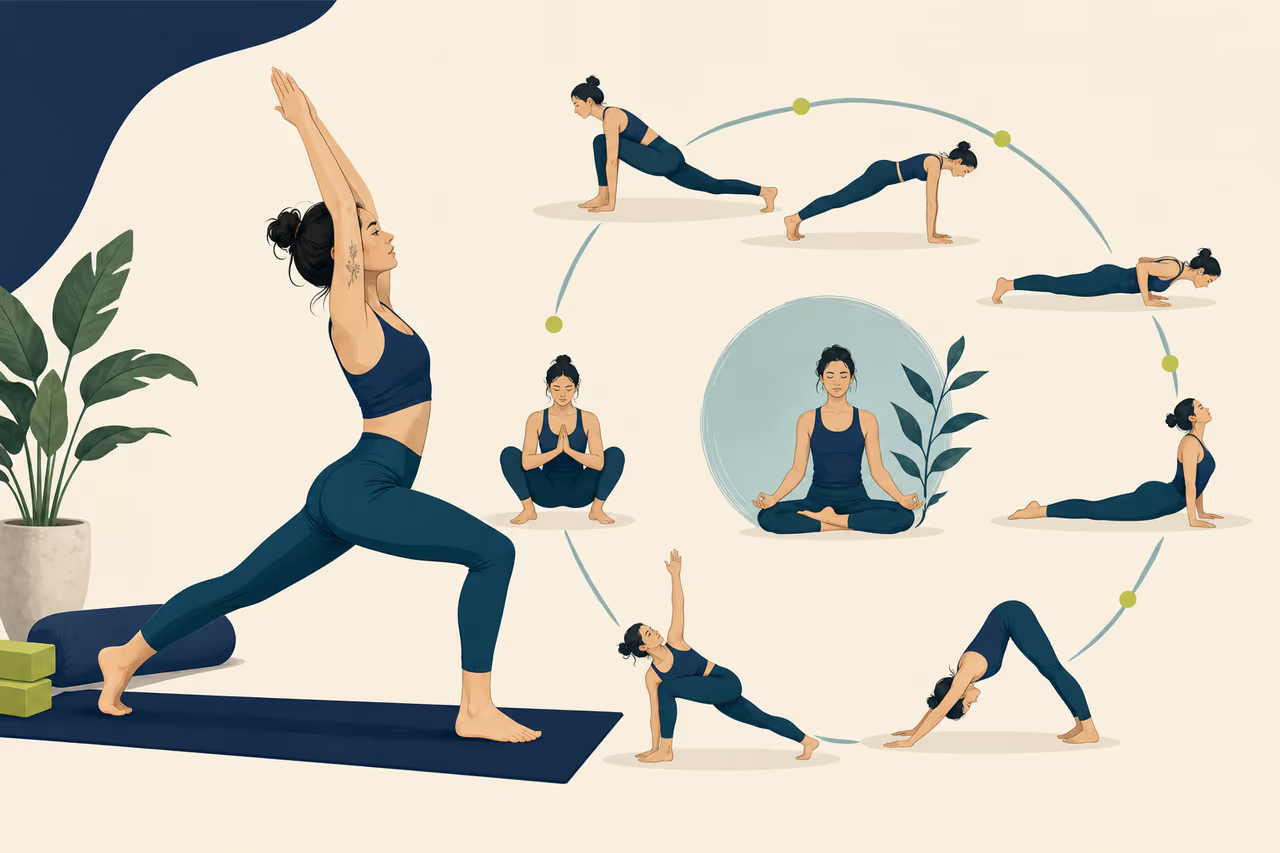
The Structure of the Practice
Rocket Yoga is typically divided into three main sequences, each with a distinct focus. These routines are repetitive, allowing practitioners to build familiarity with the movements over time while presenting ongoing physical demands.
- Rocket I: This sequence focuses primarily on the legs and the "Primary Series" of Ashtanga. It includes many forward folds and core-strengthening movements, designed to build a foundation of stability.
- Rocket II: This sequence is derived from the "Intermediate Series" of Ashtanga. It places a heavier emphasis on backbends and spinal flexibility, as well as more complex arm balances.
- Rocket III: Often called the "Happy Hour" class, this is a fast-paced fusion of both Rocket I and Rocket II. It is generally the most intense version of the practice, involving a high volume of transitions and inversions.
The repetitive nature of these sequences creates a distinct trade-on and trade-off. While repetition helps you learn the mechanics of a pose, performing the same high-impact transitions repeatedly can lead to overuse injuries if you do not balance the practice with adequate rest and recovery.
Rocket Yoga vs. Traditional Ashtanga
The primary difference between Rocket and traditional Ashtanga is the level of flexibility within the sequence. In a traditional Ashtanga setting, the teacher often dictates exactly which pose a student is "allowed" to perform based on their proficiency. Rocket Yoga removes these barriers.
| Feature | Traditional Ashtanga | Rocket Yoga |
|---|---|---|
| Sequence | Rigid, fixed order | Modified, flexible order |
| Pace | Measured, breath-synchronized | Fast-paced, high-intensity |
| Accessibility | Postures earned through mastery | Advanced postures encouraged early |
| Focus | Discipline and tradition | Movement and "playfulness" |
| Structure | Primary, Intermediate, Advanced | Rocket I, II, and III |
While the openness of Rocket Yoga is a hallmark of the style, it involves a significant physical trade-off. Attempting advanced poses like handstands or deep backbends without the foundational strength or mobility required by the traditional system can increase the risk of injury. You can learn more about the roots of this practice in our guide to Ashtanga Yoga: Understanding the Structure and the Risks.
Practical Trade-offs and Physical Demands
Choosing Rocket Yoga means accepting a specific set of physical demands. Because any amount of physical activity is better than none, Rocket can be an effective way to limit sedentary time and improve cardiovascular fitness. However, that intensity must always be weighed against your current capacity.
The Speed-Alignment Trade-off
The fast pace of Rocket Yoga often makes it difficult for trainers to provide detailed alignment cues for every student. When you move quickly between poses, there is a tendency to use momentum rather than muscle engagement. This can lead to "dumping" weight into the joints,particularly the shoulders and wrists during repetitive planks and "chaturangas",which may cause strain over time.
Cardiovascular Intensity vs. Recovery
Rocket Yoga is more cardiovascularly demanding than many other styles. While this can improve stamina, it also requires a higher level of recovery. If you are already under significant physical or mental stress, adding a high-intensity Rocket class might lead to burnout rather than rejuvenation. It is essential to assess whether your body needs a challenge or a more restorative approach before stepping onto the mat.
Accessibility vs. Safety
The "Rocket" philosophy encourages you to try poses you might not feel ready for. While this can be empowering, it requires a high degree of self-awareness. Without a solid mobility baseline, attempting weight-bearing inversions can put undue pressure on the neck and spine.
Is Rocket Yoga Right for You Today?
Before attending a class, use this decision guide to evaluate whether the style fits your current physical needs.
- Assess your current energy levels: Do you have the stamina for a high-intensity challenge, or does your body require recovery and slower movement today?
- Check your mobility baseline: Are you comfortable with repetitive, weight-bearing movements on your wrists and shoulders? If you have existing joint issues, the fast pace may exacerbate them.
- Ask the trainer: Before the class starts, ask, "How much individual modification is encouraged in this class?" A good trainer should support you in taking a slower pace or using props.
- Start with a "test" class: Observe the pace of a Rocket I class before committing to a more advanced Rocket III or "Happy Hour" session.
- Prioritize safety over speed: If a transition feels unstable or a pose feels forced, choose a safer, supported variation. Never sacrifice your alignment to keep up with the rhythm of the room.
If Rocket Yoga feels too intense or fast for your current level, you might find a better fit in a style that allows for more individual adjustment. You can read more about how to choose a yoga style that actually fits your life to explore other options.
How to Choose a Rocket Yoga Class
Not all Rocket classes are the same. Because the style is less standardized than traditional Ashtanga, the experience will vary significantly depending on the trainer's background and the studio's culture. Some trainers may focus heavily on the "gymnastic" elements of the practice, while others may incorporate more breathwork and mobility-focused transitions.
When searching for a class, look for descriptions that mention "modifications" or "all levels," even if the style is inherently intense. A trainer who acknowledges the risks of the fast pace and encourages students to listen to their bodies is often a safer choice for those new to the style.
Prime Tempr lets readers explore trainers and studios by profile, location, and offering. This allows you to research a trainer's specific approach to Rocket Yoga,looking at their experience and how they describe their classes,so your research leads to a better-fit real-world class rather than a generic recommendation. By comparing different offerings, you can find a space where the intensity of the "Rocket" is balanced with the professional guidance necessary to keep the practice sustainable.
Watch alongside this guide
A beginner Yin yoga practice
This slower practice gives you a concrete style example to compare with the goals and class formats in the guide. Source: Yoga with Kassandra. This optional video is context, not evidence or personal instruction.
The YouTube player stays unloaded until you choose to watch. Loading it connects to YouTube and may allow that service to process usage data.