Restarting Your Practice After Caregiving: A Realistic Guide
Restart your personal movement practice after a demanding care period using flexible micro-sessions built for shared homes.
https://primetempr.com/blog/restarting-your-practice-after-caregiving-a-realistic-guide
Restarting a personal movement practice after intensive caregiving does not require an idealized empty schedule or high-intensity routines. It starts with accepting micro-sessions and choosing flexible guidance that fits a shared home.
Parents and family caregivers often struggle to return to personal wellness because they wait for large blocks of uninterrupted time that simply do not exist in a household managing care duties. When standard routines break down under the weight of daily responsibilities, guilt sets in. Understanding how to adapt your expectations makes it possible to rebuild consistency without neglecting your family or burning out.
Why standard routines fail after caregiving
Standard fitness and wellness plans are usually built for individuals with predictable schedules, private spaces, and uninterrupted hours. When applied to a demanding caregiving environment, these rigid programs almost always fail.
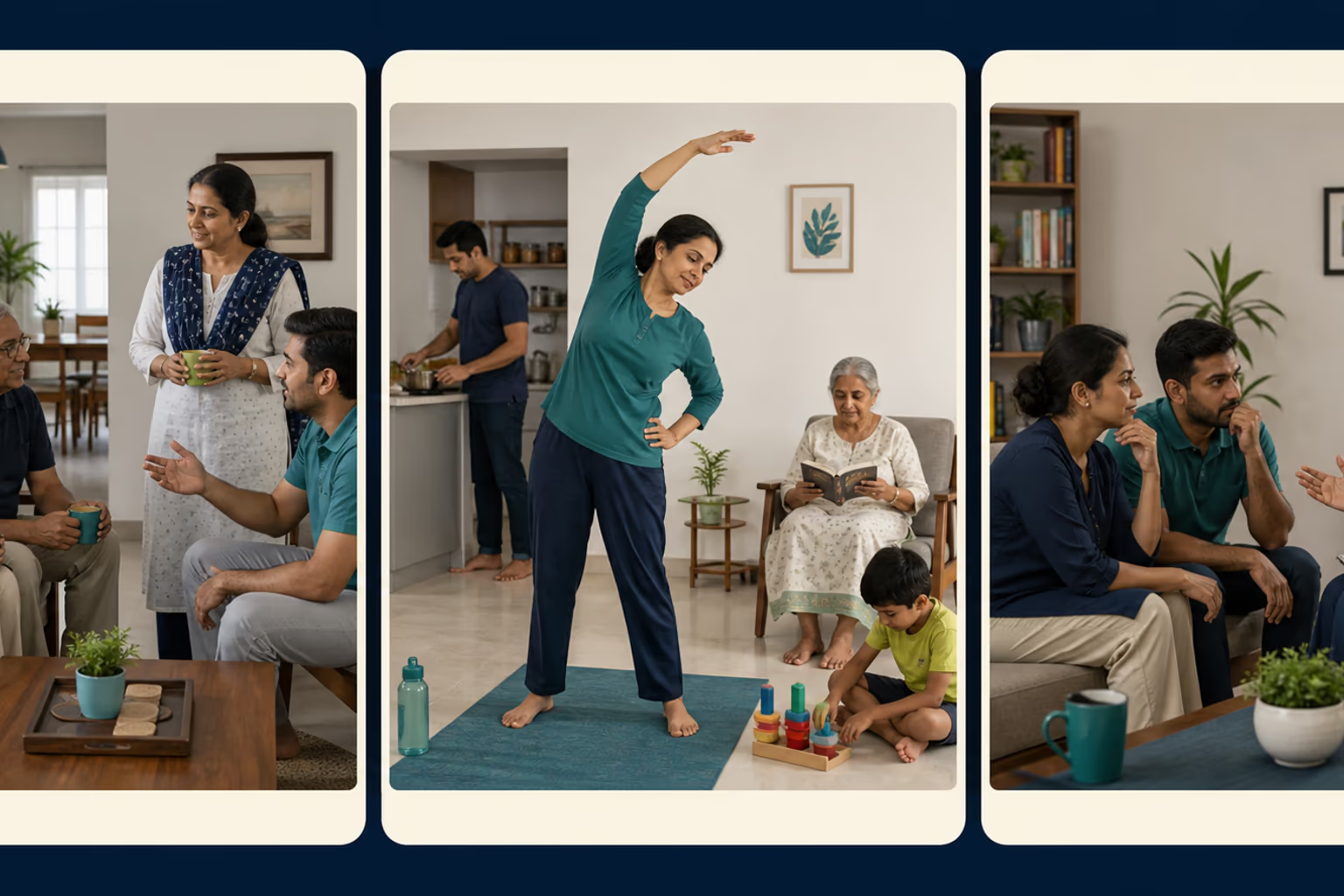
Families with multigenerational routines, desk jobs, and shifting care duties operate in a different rhythm. If a routine demands a full hour of absolute silence and an empty room, a single family request or sudden interruption can derail the entire plan. This creates an all-or-nothing mindset. If you miss the planned forty-minute session, you abandon movement for the entire week.
Any amount of physical activity is better than none, all activity counts, and muscle strengthening benefits everyone. Recognizing that a five-minute movement window holds genuine value helps break the cycle of procrastination and guilt.
The minimum version versus the normal version
To build sustainable momentum, separate your practice into two distinct formats: a minimum version for high-demand days and a normal version for days with slightly more breathing room.
| Practice Tier | Typical Duration | Focus Areas | Best Used For |
|---|---|---|---|
| Minimum Version | 3 to 5 minutes | Gentle spinal mobility, seated breathing, basic joint circles | High-demand days, unexpected interruptions, low energy |
| Normal Version | 15 to 30 minutes | Structured mobility, foundational strength, longer rest | Quieter mornings, scheduled personal time, moderate energy |
The minimum version prevents your practice from disappearing entirely during stressful weeks. When energy returns and time opens up, you can step into the normal version. Adults can work toward 150 to 300 weekly minutes of moderate aerobic activity and muscle strengthening on at least two days, but reaching that target is achieved by stringing together manageable sessions rather than forcing a single exhausting workout.
Handling interruptions without guilt
Interruptions are not anomalies in a caregiver life; they are the primary condition of it. Expecting a peaceful environment in a busy household leads to frustration.
When a planned twenty-minute session is cut short by care demands, immediately scale back to a three-minute minimum version or convert the remaining time into simple breathing and mobility. You do not need to apologize for pausing to attend to a family member, nor do you need to restart the entire sequence from the beginning. Letting go of absolute quiet and privacy allows you to practice in shared or compact living spaces without resentment.
Choosing flexible guidance that fits your life
Solo practice in a busy home can feel isolating, especially when you are unsure how to modify movements around fatigue or tight spaces. Professional instruction helps, provided the teacher understands real-world constraints.
Prime Tempr helps caregivers compare online and local trainers who offer flexible schedules, family-aware pacing, and guided alternatives when generic routines do not fit. Look for instructors who acknowledge that your living room may feature a sleeping child, a passing family member, or limited floor space. Finding a teacher who respects these boundaries ensures your practice remains a source of relief rather than another obligation on an already crowded list.
You can explore available options through Find family-aware guidance and read more about adapting movement through Movement for Families and Caregivers or a structured approach detailed in A Movement Plan for Parents Who Are Interrupted Every Few Minutes.
Caregiver restart checklist: three steps to reclaiming your practice
Use this practical checklist to establish a sustainable rhythm without waiting for perfect conditions.
- Define your absolute minimum version, such as five minutes of floor mobility or seated breathwork, for high-demand days.
- Identify one low-traffic time window in your daily household routine, such as early morning before others wake or a quiet afternoon slot.
- Compare flexible online or local teachers who respect caregiving constraints and can help you adapt when your schedule shifts unexpectedly.
Follow-along reflection
Use the prompts below to review the idea in context, without turning it into a diagnosis or a fixed rule.
Caregiver restart checklist: three steps to reclaiming your practice
- Define your absolute minimum version (e.g., 5 minutes of floor mobility) for high-demand days.
- Identify one low-traffic time window in your daily household routine.
- Compare flexible online or local teachers who respect caregiving constraints.
Trade-offs to keep in view
- Micro-sessions build consistency but take longer to deliver broad cardiovascular or strength adaptations
- Practicing in shared or compact living spaces requires letting go of absolute quiet and privacy
If this approach does not fit
When a planned 20-minute session is cut short by care demands, immediately scale back to a 3-minute minimum version or convert the remaining time into simple breathing and mobility.
Questions to carry forward
- Why do standard exercise routines fail after a demanding care period?
- How can I begin moving again when I have no guaranteed uninterrupted time?
- What is the difference between a minimum version and a normal version of a restarted practice?
- How do I choose between solo movement and finding a trainer who understands caregiving constraints?
- How do I handle interruptions without abandoning the movement session entirely?
Sources
Watch alongside this guide
Just walk
This short walking overview offers an easy shared-activity reference. Family members can choose their own pace, route and participation without pressure.
The YouTube player stays unloaded until you choose to watch. Loading it connects to YouTube and may allow that service to process usage data.