Questions to Ask a Yoga Teacher Before Your First Class
Evaluate a yoga teacher’s qualifications, safety approach, and logistical fit to find a class that suits you.
https://primetempr.com/blog/questions-to-ask-a-yoga-teacher-before-your-first-class
Choosing a yoga teacher is about finding a professional whose scope of practice, communication style, and logistics align with your life. Many people feel overwhelmed by the variety of offerings and fear committing time or money to a class that does not fit their physical needs or schedule.
Prime Tempr organizes trainer profiles and local listings into one discovery path so you can compare fit before booking. Asking the right questions upfront helps you avoid the frustration of attending a session that does not meet your needs.
Know the scope of practice
The most important step in vetting a teacher is understanding their professional boundaries. A qualified yoga teacher works within their education, training, and competence. They are not medical professionals and should clearly state when a student's needs fall outside their scope of practice.
If you have a specific injury or health concern, ask the teacher directly: "How do you handle students with my specific physical limitations?" A professional teacher will not promise a cure or guarantee a specific health outcome. Instead, they will explain how they adapt their teaching to accommodate different needs or, if necessary, refer you to a healthcare provider. If a teacher seems dismissive of your health history or makes bold claims about curing conditions, treat that as a significant red flag.
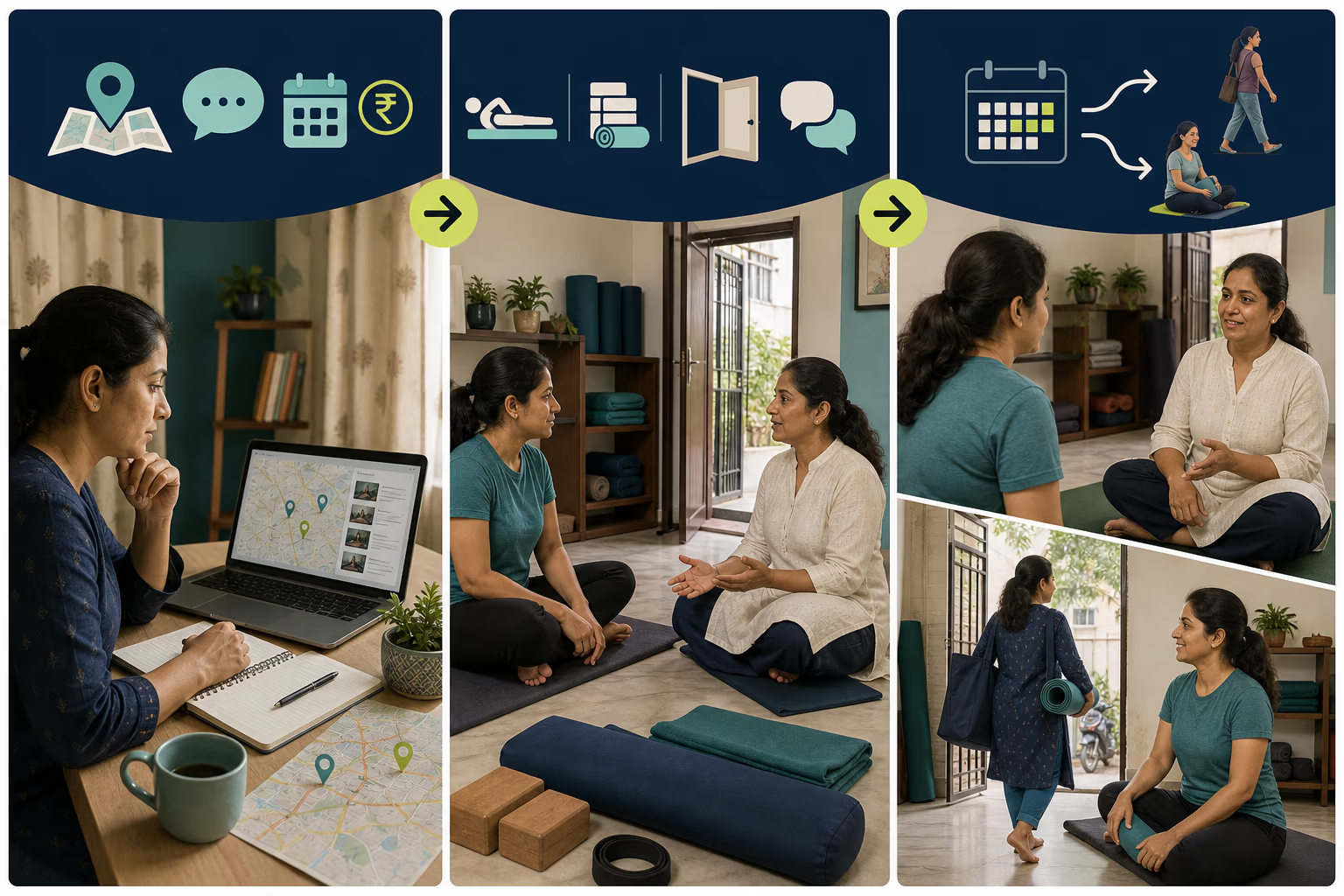
Ask about modifications and safety
Yoga styles and demands vary significantly. Because of this, teacher qualifications, suitable modifications, and honest class descriptions matter. You want to find a teacher who prioritizes your individual safety over generic intensity or "perfect" form.
When speaking with a potential teacher, ask: "How do you provide modifications for different energy levels and body types?" A good teacher will explain how they use props like blocks, straps, or chairs to make poses accessible. They should encourage you to listen to your own body rather than pushing for a specific aesthetic or intensity level. If a class is marketed as "all levels" but the teacher cannot explain how they support a beginner or someone with limited mobility, look for another option.
Clarify logistics and communication
Yoga practice often happens alongside the realities of a busy life, such as desk jobs and public transport. A teacher who understands these constraints is often a better long-term fit than one who ignores them.
Ask about the practical side of the service before you book:
- What is the cancellation policy if your work or family schedule shifts?
- Is the studio or practice space accessible via your preferred transport?
- What is the total cost, including fees for equipment or registration?
Complete, accurate, and verified local business information helps you assess a service before visiting. If a teacher or studio is vague about their location, pricing, or policies, remain cautious. Do not feel pressured to commit to a long-term membership before you have tested the teacher's communication style and the class environment.
The pre-class assessment checklist
Use this checklist to evaluate your options. If you find yourself checking most of these boxes, you are likely on the right track to finding a sustainable practice.
- Confirm the teacher's experience with your specific goals or physical limitations.
- Ask how they handle modifications for different body types and energy levels.
- Verify the class logistics: location, transport, and cancellation policies.
- Check if the teacher can clearly explain their scope of practice and when they refer students to other specialists.
- Book a single trial session instead of a monthly membership to test the fit.
Take a small next step
The best way to assess fit is to experience it firsthand without a long-term commitment. Instead of signing up for a monthly membership, look for a single drop-in class or a trial session.
If a teacher's answers feel vague or dismissive, trust your intuition and look for a different provider. You can compare local teachers and studios or find a yoga teacher through our discovery tools to compare multiple profiles before you reach out. Taking the time to ask these questions now prevents the frustration of attending a class that does not respect your time, budget, or physical boundaries.
Follow-along reflection
Use the prompts below to review the idea in context, without turning it into a diagnosis or a fixed rule.
Trade-offs to keep in view
- Asking questions takes time, but it prevents the frustration of attending a class that doesn't meet your needs.
- A teacher may be excellent at yoga but still not be the right fit for your specific lifestyle or accessibility requirements.
If this approach does not fit
If a teacher's answers feel vague or dismissive, trust your intuition and look for a different provider. Use Prime Tempr's discovery tools to compare multiple profiles before booking.
Questions to carry forward
- How do I know if a teacher is qualified to handle my specific physical needs?
- What questions reveal if a teacher understands my time and space constraints?
- How can I tell if a teacher will prioritize my safety over intensity?
- What should I ask to understand the true cost and commitment of a class?
- When is it appropriate to ask for a referral to another professional?
Sources
Watch alongside this guide
Accessible yoga for every body
This Vancouver Coastal Health class makes choice, support and accessibility visible, giving readers concrete features to look for when comparing local or online teaching.
The YouTube player stays unloaded until you choose to watch. Loading it connects to YouTube and may allow that service to process usage data.