Practical Rest Strategies When Your Schedule Peaks
Protect your energy during busy seasons by planning realistic rest through small, consistent recovery habits that fit your schedule.
https://primetempr.com/blog/practical-rest-strategies-when-your-schedule-peaks
During high-stress or exceptionally busy periods, everyday routines collapse because rest is treated as an all-or-nothing luxury rather than a structural necessity. When deadlines pile up or daily demands multiply, people often wait for an entirely free weekend to catch up on recovery. That approach usually fails. Rest during a busy season is not about finding hours of idle time, but about anchoring small, consistent recovery habits that protect your energy without requiring schedule perfection.
Standard rest routines break down under pressure because they depend on ideal conditions. When those conditions disappear, flexibility is often mistaken for permission to abandon all consistent sleep and movement habits. Recognizing this failure mode allows you to shift toward realistic maintenance instead of waiting for impossible blocks of free time.
Why Busy Seasons Break Standard Rest Routines
When schedules peak, the temptation is to squeeze out time for work or family by cutting into sleep and downtime. This creates a deficit that builds over weeks. Shorter micro-rest practices cannot fully replace deep physical recovery, but they maintain continuity so that your baseline health does not completely unravel. Fitting rest into a packed schedule requires actively letting go of lower-priority commitments rather than trying to fit everything into a single day.
When a planned rest session gets interrupted by urgent demands, scale the practice down to a five-minute breathing or stretching pause rather than skipping it entirely. This keeps your habit loop intact.
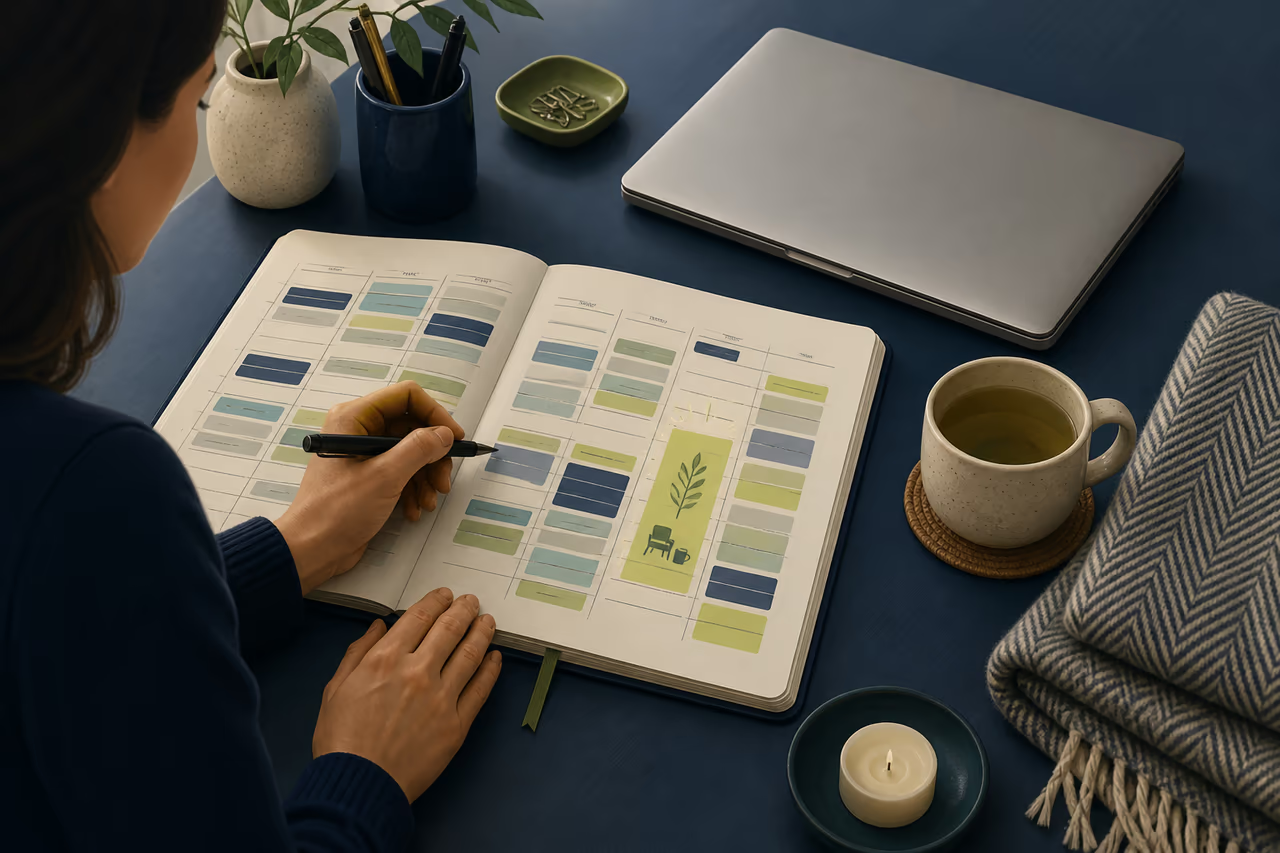
Protecting Sleep Quality When Schedules Shift
Sleep is the primary engine of physical and mental recovery, yet it is usually the first casualty of a busy season. Consistent schedules, daytime activity and a calmer sleep environment can support sleep even as daylight and routines change.
Maintaining a steady wake-up time, even on weekends, helps anchor your internal clock when evening hours fluctuate due to late work or social obligations. Pairing this with a simple wind-down routine, such as dimming lights or putting away screens thirty minutes before bed, signals to your body that the demanding part of the day has concluded.
Supporting Energy Through Simple Nutrition and Pacing
Energy demands do not just require mental focus; they require steady physical fuel. A varied diet can be built from locally available foods, while exact choices depend on context, culture and individual needs.
When your schedule is packed, elaborate meal preparation often falls away, leading to erratic eating patterns that drain energy further. Focusing on simple, nutrient-dense meals made from accessible ingredients helps maintain steady blood sugar and prevents the afternoon crashes that make high-stress days feel insurmountable. Keep meal planning uncomplicated, relying on basic staples that require minimal preparation time.
Finding Proportionate Support and Guidance
Navigating a busy season alone can make even basic wellbeing habits feel overwhelming. Having an external structure or a guide helps keep your efforts grounded. Prime Tempr helps readers find local studios, online teachers and trainer-shared practices that make broad seasonal ideas workable in their own setting.
Whether you join a short online breathwork session or visit a nearby studio for a weekly mobility class, external support takes the burden off decision fatigue. When you do not have to invent your own recovery routine from scratch, it becomes much easier to maintain consistency.
Your Busy-Season Rest Audit
This checklist provides a structured way to evaluate and protect your rest during demanding periods. Use these four steps to maintain continuity without adding pressure to an already full schedule.
- Identify one consistent sleep and wake window you can protect most days, even when work or personal schedules shift.
- Schedule a mandatory five-to-ten-minute pause during your highest-stress hours to step away from screens and reset your breathing.
- Incorporate light daytime movement or a short walk to signal recovery to your body and break up long periods of sitting.
Continue with guidance
Use this article as orientation, then Build a practice for this season when you want responsive guidance or a practice format matched to you.
Sources
- Healthy diet (opens in a new tab), World Health Organization.
- Heart-Healthy Living: Get Enough Good-Quality Sleep (opens in a new tab), National Heart, Lung, and Blood Institute.
Watch alongside this guide
A flexible home yoga practice
Use this adaptable session as a practical example of scaling movement to the day, weather, and energy available. Source: Yoga With Adriene. This optional video is context, not evidence or personal instruction.
The YouTube player stays unloaded until you choose to watch. Loading it connects to YouTube and may allow that service to process usage data.