Practical Movement for Caregivers: Working Out Near Playing Children
Build meaningful physical activity into your day alongside a playing child without lifting weights or demanding gym hours.
https://primetempr.com/blog/practical-movement-for-caregivers-working-out-near-playing-c
Caregivers can build physical activity into their day alongside a playing child without turning them into makeshift dumbbells or demanding unbroken gym hours. Finding time for personal movement while supervising children is a common struggle. Popular online advice often suggests using a toddler or child as resistance equipment, wearing them during high-intensity movements, or treating them as improvised weights. This approach introduces unnecessary injury risks for both adult and child due to shifting centers of gravity, sudden movements, and unexpected weight changes. A safer, more realistic path focuses on independent bodyweight movement, clear visual supervision, and flexible pacing that accommodates the unpredictable nature of care work.
The reality of exercising near care work
Uninterrupted deep focus is rare in caregiving environments, whether you are managing a household in a compact urban apartment, balancing a desk job from home, or coordinating multigenerational family schedules. Self-directed movement requires flexibility and a high tolerance for frequent pauses. When an exercise session is interrupted or falls short of the ideal plan, accept any amount of activity as valuable, reset your posture or breathing, and resume when manageable.
Any amount of physical activity is better than none, all activity counts, and muscle strengthening benefits everyone. This guidance removes the pressure to perform rigid, hour-long routines that inevitably break down the moment a child needs attention. Instead of abandoning movement altogether because a session got interrupted, you can break your activity into short blocks distributed throughout the day.
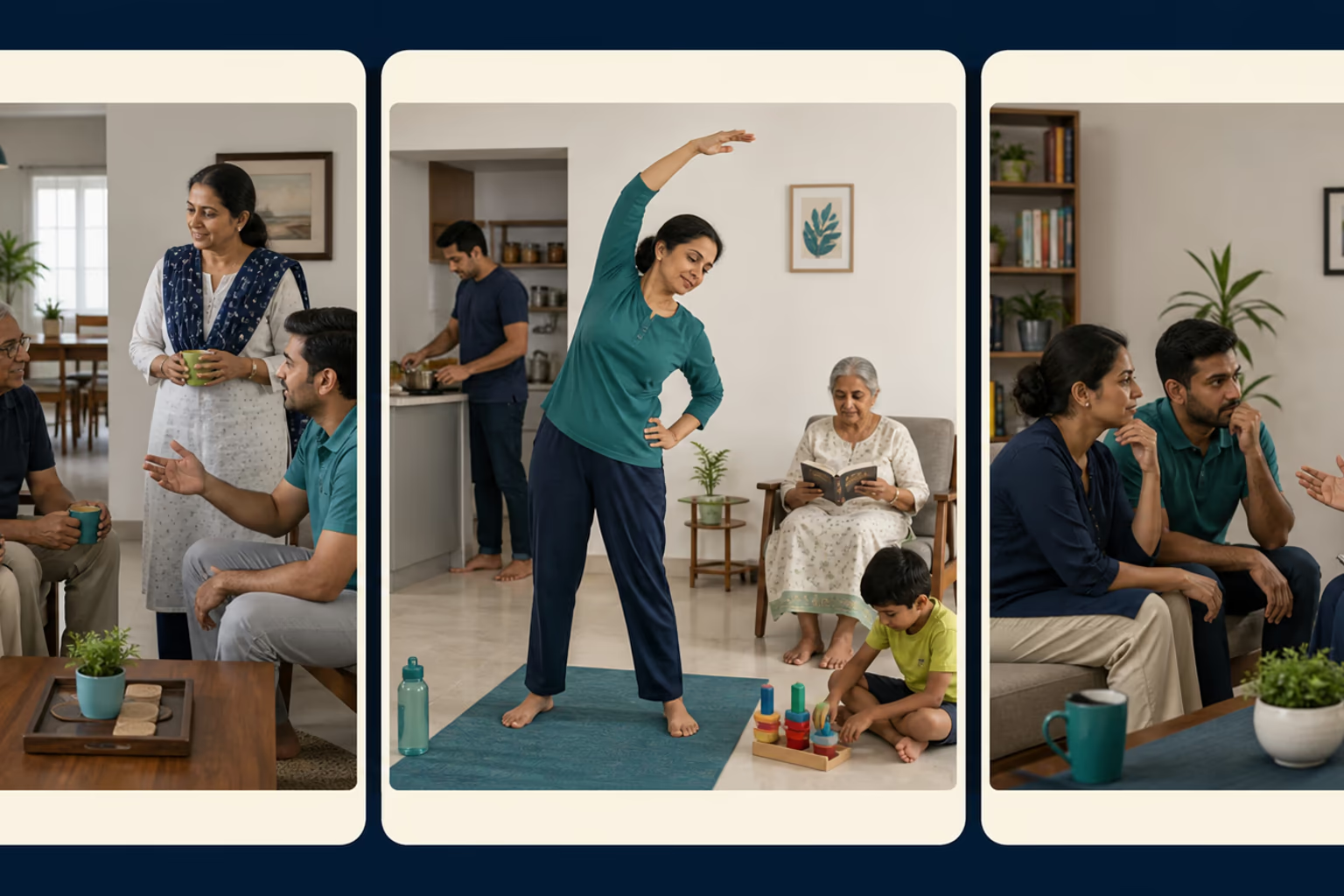
Why using children as equipment is unsafe
Lifting, tossing, or wearing a growing child as a substitute for exercise props creates significant mechanical risks. Children move unpredictably, which shifts load balances and strains the lower back, wrists, and shoulders of the adult. High-impact movements or deep squats performed while holding a child increase the risk of accidental slips, falls, or joint hyperextension. Safe movement keeps your body weight and simple structural props, such as a sturdy wall or a nonsip mat, entirely separate from the child. This separation allows you to maintain proper form, control your breathing, and react immediately if the child requires assistance.
A minimum version and a normal version
To make movement sustainable beside care duties, it helps to define two distinct tiers of practice.
The minimum version requires just five minutes. Set up a secure, visible play space where the child can play with blocks or toys within arm's reach or clear view. Perform a series of gentle standing wall stretches and supported bodyweight squats using household architecture for balance rather than external weights. This version requires no equipment, keeps you grounded in the same room, and provides a quick physical reset.
The normal version works toward broader health recommendations when time permits. Adults can work toward 150 to 300 weekly minutes of moderate aerobic activity and muscle strengthening on at least two days. In a household setting, you might split this target into three ten-minute movement sessions spread across the morning, afternoon, and evening. If a session is cut short after four minutes, log whatever activity you managed without guilt over incomplete sets.
Caregiver movement and supervision checklist
- Set up a safe, visible play space for the child within arm's reach or clear view.
- Choose a movement block of 5 to 10 minutes that does not require heavy equipment.
- Keep your body weight or simple resistance props (like a mat or sturdy wall) separate from the child.
- Embrace short pauses to attend to the child without abandoning your movement intention.
- Log whatever activity you managed without guilt over incomplete sets.
Finding family-aware guidance
When generic home routines do not fit your schedule, navigating physical activity alone can feel frustrating. Standard fitness plans rarely account for noisy environments, fragmented schedules, or the physical fatigue of care work. Prime Tempr helps caregivers compare online and local trainers who can offer flexible schedules, family-aware pacing and guided alternatives when generic routines do not fit. Professional guidance can help you adapt movements for small spaces, address specific joint or back sensitivities, and build a sustainable routine that honors your daily responsibilities. Find family-aware guidance and explore more ideas through Movement for Families and Caregivers.
Follow-along reflection
Use the prompts below to review the idea in context, without turning it into a diagnosis or a fixed rule.
Trade-offs to keep in view
- Uninterrupted deep focus is rare in caregiving environments.
- Self-directed movement requires flexibility and tolerance for frequent pauses.
Questions to carry forward
- How can I exercise safely while keeping an eye on a child?
- Why is using a child as exercise equipment a bad idea?
- What does a minimum version of a caregiver-friendly movement routine look like?
- How do I handle interruptions without giving up entirely?
- When should I look for professional or trainer guidance?
Sources
- Physical activity (opens in a new tab), World Health Organization
- Top 10 Things to Know About the Physical Activity Guidelines (opens in a new tab), U.S. Department of Health and Human Services
Watch alongside this guide
Just walk
This short walking overview offers an easy shared-activity reference. Family members can choose their own pace, route and participation without pressure.
The YouTube player stays unloaded until you choose to watch. Loading it connects to YouTube and may allow that service to process usage data.