Power Yoga: Understanding the Intensity and How to Choose a Class
Evaluate physical demands and trade-offs in Power Yoga classes, and learn how to select a trainer matching your fitness level.
https://primetempr.com/blog/power-yoga-understanding-the-intensity-and-how-to-choose-a-c
Power Yoga is a vigorous, fitness-oriented style of yoga that prioritizes strength, movement, and cardiovascular endurance. Unlike more traditional or restorative forms of yoga, Power Yoga is designed to be physically demanding and is often taught at a faster pace. However, Be sure to understand that "Power Yoga" is not a standardized, regulated practice with a single governing body. Instead, it is a style tendency; what you experience in a class labeled "Power" will depend almost entirely on the individual trainer’s background and methodology.
Because studios and gyms often use the term as a marketing label, students experience classes that vary widely in intensity. One instructor might emphasize slow, heavy strength-building poses, whereas another might run a fast-paced flow resembling an aerobic workout. Knowing these differences helps you determine whether this style aligns with your current physical needs.
Common Characteristics and Expectations
While every class is different, most Power Yoga sessions share a few core characteristics. You can generally expect a focus on the physical "asana" (postures) with less emphasis on the meditative or philosophical components found in other styles.
- Continuous Movement: Most Power Yoga classes are "flow-based," meaning you move from one pose to the next in sync with your breath. This is often referred to as a "Vinyasa" style, but in a Power context, the transitions may be faster or involve more weight-bearing movements like planks and push-ups (Chaturanga).
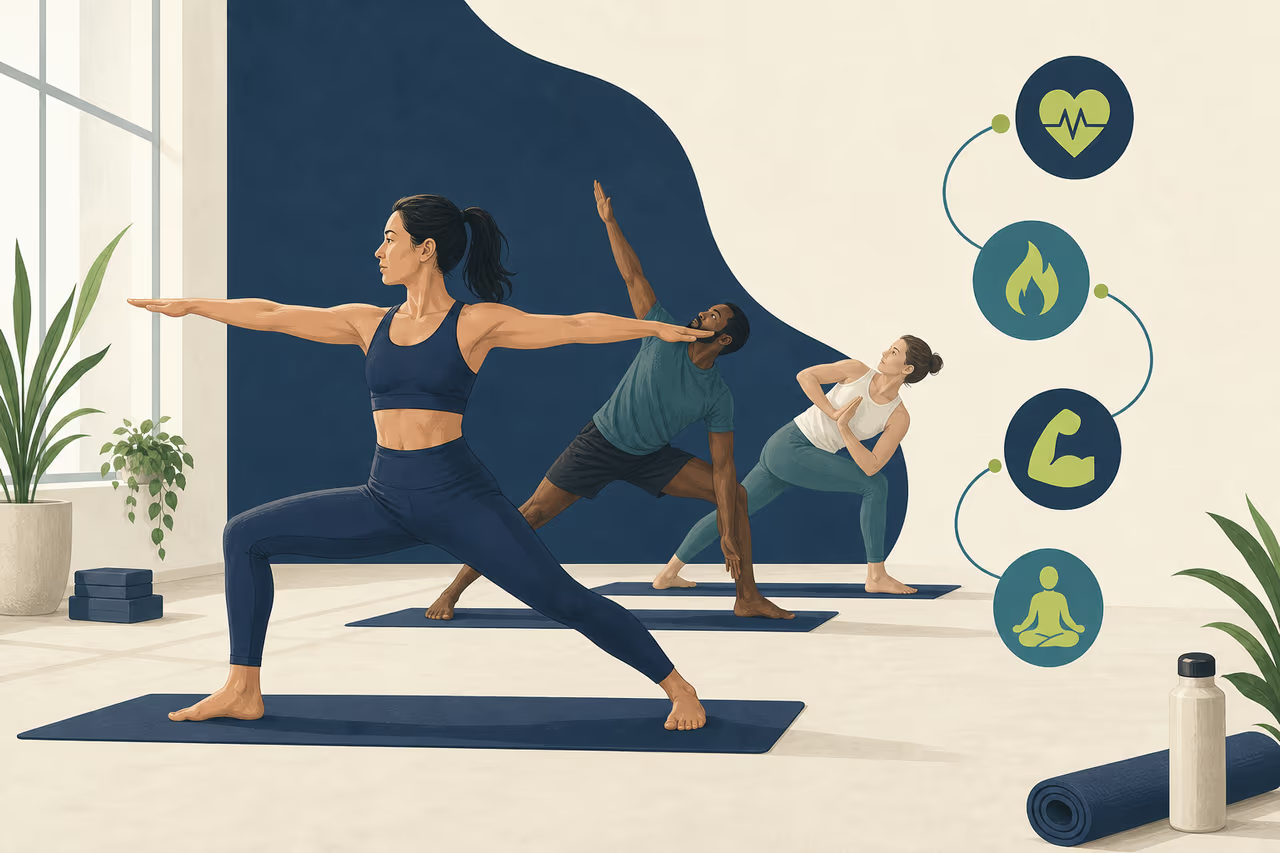
- Strength and Stability: You will likely spend more time in poses that challenge your muscular endurance, such as lunges, balancing postures, and core-focused movements.
- Increased Internal Heat: Due to the pace and the physical effort required, these classes are designed to build internal heat. Some studios may also heat the room externally, though this is not a requirement for a class to be considered "Power."
- Minimal Use of Props: While some trainers encourage blocks or straps, Power Yoga often emphasizes using your own body weight as resistance.
Any amount of physical activity is better than none, and Power Yoga can help reduce sedentary time while providing vigorous movement. Yet because the practice combines postures, breathing, and sometimes meditation in a high-intensity format, staying aware of your personal physical limits remains essential.
Power Yoga vs. Vinyasa and Ashtanga
Power Yoga is frequently compared to Vinyasa and Ashtanga. While these styles share common roots, they fulfill different purposes and maintain distinct structures.
| Feature | Power Yoga | Vinyasa Yoga | Ashtanga Yoga |
|---|---|---|---|
| Structure | Variable; depends on the trainer. | Creative; sequences change each class. | Fixed; follows a specific set of sequences. |
| Pace | Usually fast and vigorous. | Moderate to fast. | Moderate to fast, but highly disciplined. |
| Focus | Fitness, strength, and sweat. | Movement-breath synchronization. | Traditional lineage and specific progression. |
| Standardization | Low; no universal curriculum. | Moderate; varies by school. | High; standardized worldwide. |
Power Yoga emerged from the Ashtanga tradition during the 1990s. Early teachers sought to make Ashtanga physical benefits more accessible to fitness-oriented practitioners by discarding the fixed sequence of poses and removing strict requirements for traditional Sanskrit chanting or specific breathing techniques.
Practical Trade-offs and Safety
Choosing a high-intensity practice like Power Yoga involves clear trade-offs. While the style may improve your strength and cardiovascular endurance, the emphasis on speed and "keeping up" with a group can introduce risks.
The Risk of Injury
Yoga styles vary significantly, and while they offer many potential benefits, injuries can occur. In a Power Yoga setting, the most common failure mode is sacrificing alignment for speed. When transitions between poses happen quickly, it is easier to misplace a foot or collapse into a joint, which can lead to repetitive strain or acute injury.
The "Keeping Up" Trap
In a group fitness environment, there is often a psychological pressure to match the pace of the person next to you or the trainer at the front of the room. In Power Yoga, this can be dangerous. If the pace of the class exceeds your ability to maintain stable form, the physical activity may become counterproductive. It is essential to be your own advocate. If a transition feels too fast or a pose feels unstable, slowing down or taking a resting pose is a sign of progress, not a lack of ability.
Physical Activity and Recovery
The World Health Organization notes that all activity counts toward better health. Power Yoga certainly qualifies as vigorous activity. However, high-intensity movement requires adequate recovery. If you are already engaging in heavy weightlifting or high-impact sports, a daily Power Yoga practice might lead to overtraining. Balancing this intensity with how to choose a yoga style that actually fits your life is key to a sustainable routine.
Three Questions to Ask Before Your First Power Yoga Class
Because "Power Yoga" is an unstandardized label, you should not walk into a class without a basic understanding of that specific trainer's style. Use these three questions to help determine if a class is appropriate for your current fitness level and goals.
- How much experience is required for this specific class? Some "Power" classes are open-level, while others assume you already know the names of the poses and can transition safely without detailed instruction.
- Are modifications offered for high-impact or weight-bearing poses? A quality trainer will provide options for people with wrist, shoulder, or knee sensitivities. If the trainer expects everyone to perform the "full" version of every pose, it may not be the safest environment for a beginner.
- What is the typical pace of the transitions between postures? Knowing if the class is a "slow burn" strength session or a fast-paced cardio flow will help you set expectations and prepare your body.
Finding the Right Fit with Prime Tempr
Assuming that every Power Yoga class follows the same format is a common pitfall for students. A class hosted at a local gym may resemble a fitness bootcamp, while a session at a dedicated yoga studio often functions as a more athletic variation of a traditional flow.
Use the platform to explore trainers and studios and compare their specific profiles, locations, and offerings. Rather than depending on generic recommendations, you can review an instructor's background,whether their focus is mobility, athletic conditioning, or injury prevention,allowing you to pick a class based on actual utility rather than a marketing label.
The goal is to find a practice that supports your physical activity goals without compromising your safety.
Watch alongside this guide
A beginner Yin yoga practice
This slower practice gives you a concrete style example to compare with the goals and class formats in the guide. Source: Yoga with Kassandra. This optional video is context, not evidence or personal instruction.
The YouTube player stays unloaded until you choose to watch. Loading it connects to YouTube and may allow that service to process usage data.