Morning Light and Your Sleep Routine: A Practical Guide
Learn how morning light influences your sleep cycle, why routine matters most, and how to build lasting rest habits.
https://primetempr.com/blog/morning-light-and-your-sleep-routine-a-practical-guide
Morning light is a helpful environmental cue for regulating your sleep-wake cycle, but it is most effective when paired with consistent daily habits rather than treated as a standalone fix. If you are struggling with sleep consistency, you may have heard that stepping outside first thing in the morning is a "hack" for better rest. While light exposure is a piece of the puzzle, it is not a cure for clinical insomnia or a replacement for the fundamental pillars of sleep health.
We help you find restorative yoga, meditation, and trainer-led support to complement your lifestyle, while keeping this educational content distinct from personalized medical diagnosis.
The role of morning light in your sleep cycle
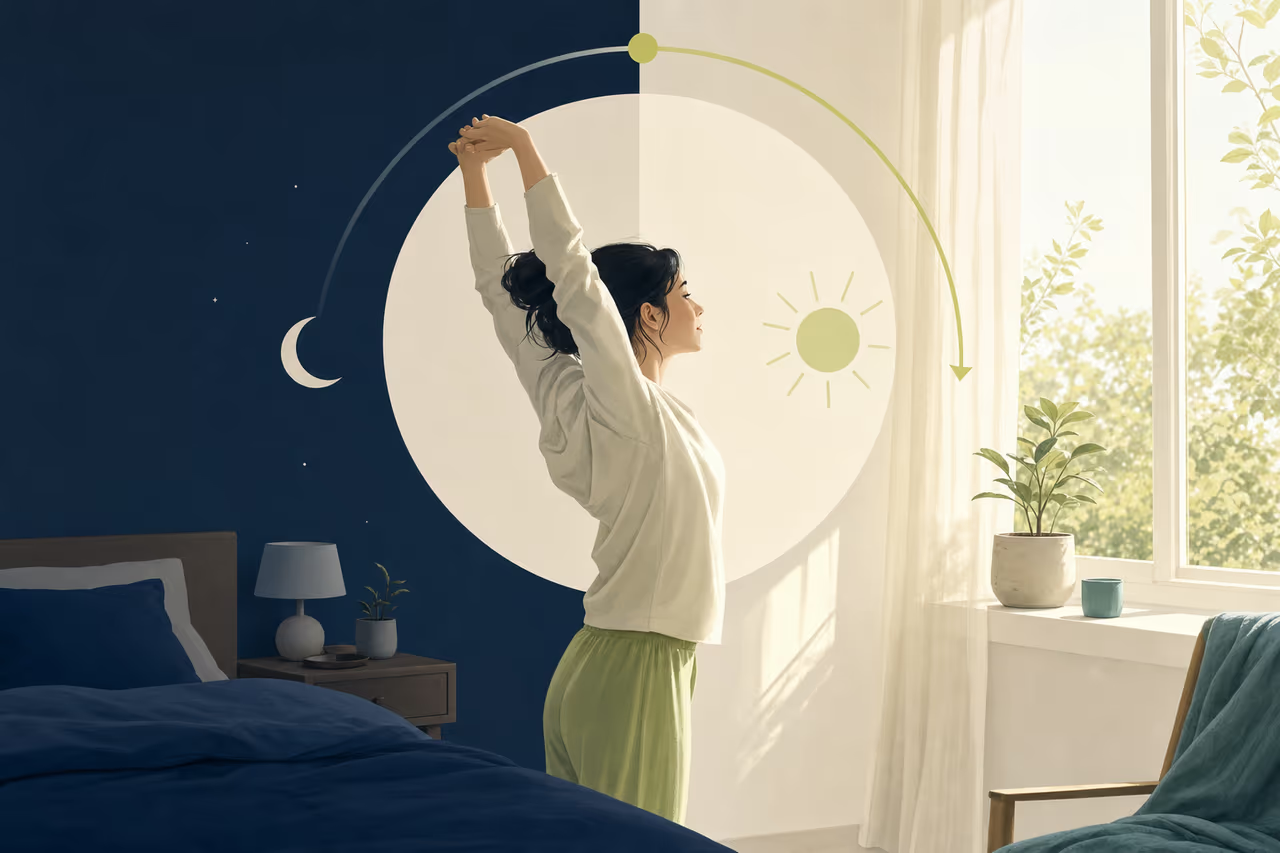
Your internal body clock, or circadian rhythm, relies on external cues to sync with the 24-hour day. Light is one of the most powerful of these signals. When you expose yourself to natural light shortly after waking, it helps signal to your body that the day has begun.
However, Be sure to manage expectations. Morning light is a supportive tool, not a medical treatment. It does not override the biological need for a consistent sleep schedule or the impact of high-stress environments. If you find yourself chasing the "perfect" morning light exposure but neglecting your evening habits, you may not see the results you are looking for. The goal is to use light as a gentle nudge for your system, not to add another source of stress to your morning.
Why consistency is the real foundation
While morning light is a useful tool, it is secondary to the foundational pillars of sleep health. Adult sleep needs vary significantly, and what works for one person may not be effective for another. Before focusing on light exposure, audit your environment and your schedule.
According to the National Heart, Lung, and Blood Institute, consistent schedules and daytime activity are foundational to supporting healthy sleep. A quiet, dark room combined with a calm pre-bed routine is essential for improving sleep quality.
If your schedule is erratic, or if you are not engaging in regular daytime movement, morning light alone is unlikely to solve your sleep challenges. Think of light exposure as the final polish on a routine, rather than the foundation itself. If you are looking for ways to build more structure into your day, you can learn more about how to build a consistent sleep routine that actually lasts.
Practical ways to support your sleep-wake routine
Building a better sleep-wake cycle does not require an overhaul of your entire life. In fact, small, low-pressure adjustments are often more sustainable than dramatic changes. You can practically integrate these concepts with a few focused steps.
- Prioritize the Schedule: Aim to wake up and go to sleep at similar times, even on weekends. This consistency does more for your internal clock than any specific morning ritual.
- Incorporate Light Naturally: You don't need a specialized device or a specific duration to benefit from morning light. Simply opening your curtains, having your coffee by a window, or taking a short walk outside for 5 to 10 minutes shortly after waking can provide the environmental cue your body needs.
- Calm the Evening: Relaxation approaches like breathing and guided imagery can support well-being, but they are most effective when they are part of a calm, consistent pre-bed routine. These techniques should not replace conventional medical care if you are dealing with significant health concerns.
- Stay Active During the Day: Regular movement helps build "sleep pressure," making it easier to fall asleep at night. Whether it is a walk, a yoga session, or general activity, keeping your body moving during the day is vital.
Trade-offs and Failure Modes
It is common to fall into the trap of "optimization stress." If you find yourself feeling anxious about whether you got enough light, or if you feel guilty for missing a morning walk, you are likely doing more harm than good.
- The Perfectionism Trap: Do not stress about the "perfect" timing or duration. If you work a night shift or have a schedule that makes morning light difficult, focus on the other pillars of sleep hygiene, such as a dark, quiet room and a consistent bedtime.
- The "Cure" Fallacy: Morning light is not a cure for clinical sleep disorders. If you are experiencing persistent sleep issues, relying solely on self-guided techniques may delay necessary care.
When to seek professional support
Educational content is a starting point for self-reflection, but it has clear limits. Persistent sleep issues, such as chronic difficulty falling asleep, staying asleep, or feeling unrefreshed despite adequate time in bed, warrant professional consultation rather than relying solely on self-guided relaxation techniques.
If you have tried adjusting your environment and your schedule without improvement, consult a healthcare provider. They can help rule out underlying medical conditions and provide a personalized plan that goes beyond general wellness advice.
Your Morning Light & Sleep Audit
Use this reflection to assess where you are currently and where you want to focus your energy next.
- Identify one way to get 5-10 minutes of natural light shortly after waking. (e.g., opening the blinds, sitting on your porch, or a quick walk to the mailbox).
- Assess your current sleep schedule: Is it consistent across the week, or do you have significant fluctuations between weekdays and weekends?
- Review your pre-bed routine: Is it calm and free of high-stress activities? If not, what is one small thing you could do to create more space for rest?
- Note one daytime activity that keeps you moving. This could be a walk, a stretch, or a short yoga flow.
- Decide if you need external support: Would a trainer or a studio class help you build the consistency you are looking for?
Sources
Watch alongside this guide
Stress management
Use this concise Mayo Clinic explainer alongside the article's practical steps for stress, sleep, and recovery. Source: Mayo Clinic. This optional video is context, not evidence or personal instruction.
The YouTube player stays unloaded until you choose to watch. Loading it connects to YouTube and may allow that service to process usage data.