How to Build a Consistent Sleep Routine That Actually Lasts
Build a sustainable sleep routine with simple habits that support your body rhythm without rigid, unrealistic rules.
https://primetempr.com/blog/how-to-build-a-consistent-sleep-routine-that-actually-lasts
The most effective sleep routine is not a complex, multi-step ritual that leaves you feeling exhausted before you even reach the pillow. Instead, a sustainable sleep routine relies on simple, repeatable environmental and behavioral cues that signal to your body that it is time to rest. Rather than aiming for a "perfect" streak,which often leads to frustration and burnout,the goal is to create a framework that supports your body’s natural rhythm.
Restorative yoga, meditation, and trainer-led support provide helpful resources, while educational content remains clearly distinct from medical care and diagnosis. Focusing on small, manageable shifts helps you build a foundation for better rest that fits your actual life.
The foundation of consistency
Consistency is the bedrock of sleep quality. While it is tempting to view sleep as a debt you can "catch up on" over the weekend, your biological clock thrives on regularity. According to the National Heart, Lung, and Blood Institute, consistent sleep schedules, a quiet, dark room, and daytime activity are key pillars that support better sleep quality.
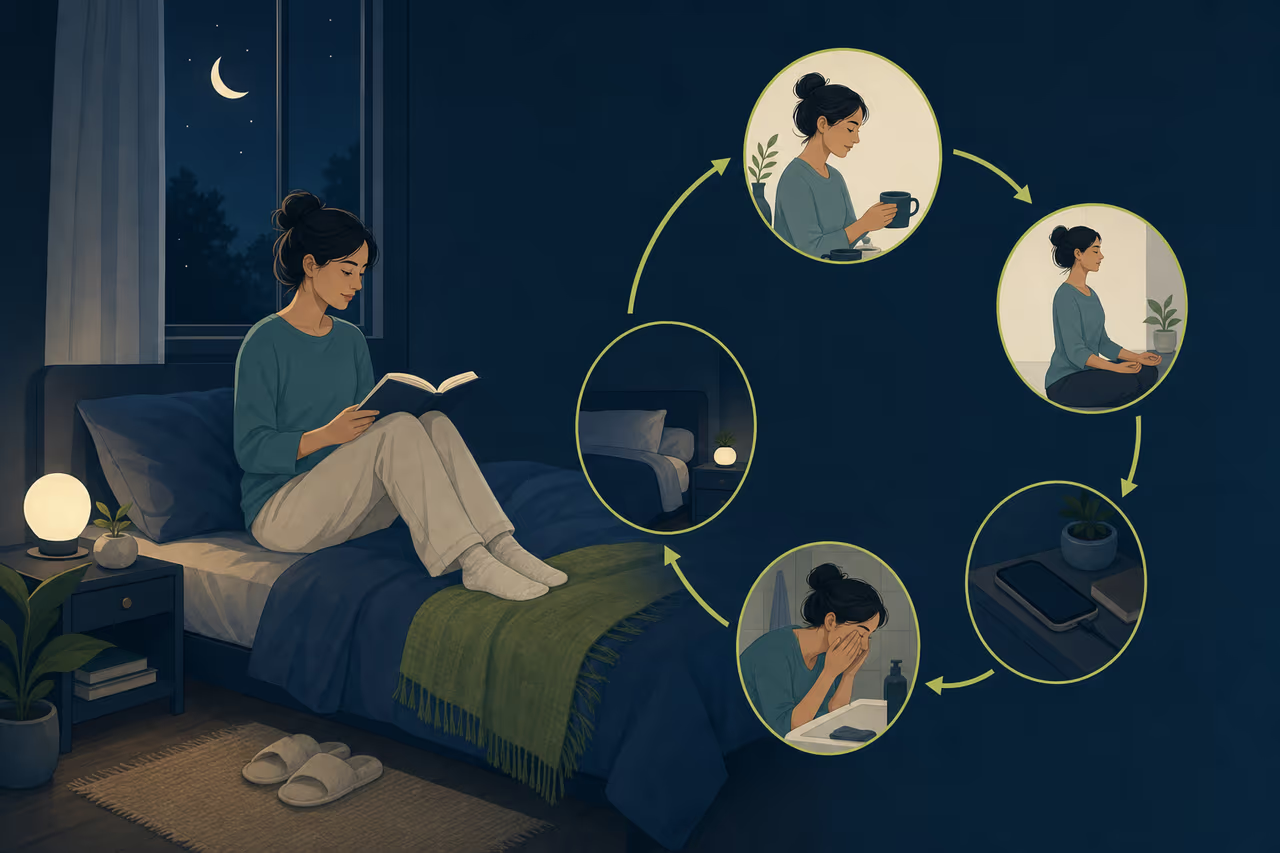
The most common failure mode for those trying to improve their sleep is treating the process as an all-or-nothing performance. If you miss your window or have a restless night, it does not mean your routine has "failed." It simply means you are human. Instead of trying to overhaul every habit at once, focus on these core environmental factors:
- Wake-up times: Aim to wake up at the same time each day, even on weekends. This helps anchor your circadian rhythm.
- Environment: Your bedroom should be a sanctuary. Keep it cool, dark, and quiet to minimize disruptions.
- Consistency over intensity: One small, repeatable habit,such as dimming the lights 30 minutes before bed,is more effective than a rigid, hour-long routine that you only manage to follow once a week.
The role of daytime movement
What you do during the day has a direct impact on how you sleep at night. Movement is not just about fitness; it is a vital signal to your body that helps regulate energy levels. When you incorporate regular physical activity into your day, you create a natural "sleep pressure" that makes it easier to drift off when the time comes.
However, the trade-off here is timing. While movement is beneficial, high-intensity exercise too close to bedtime can leave some people feeling too energized to wind down. If you find that late-evening workouts disrupt your sleep, consider shifting your movement practice to the morning or afternoon. If your schedule only allows for evening activity, opt for lower-intensity movement, such as a gentle walk or restorative yoga, which can help transition the body from "doing" mode to "resting" mode.
Calming the mind before bed
When your mind races, your body often struggles to follow. Relaxation techniques help you transition into sleep, but they have a specific role. Approaches like breathing and guided imagery are supportive tools, but they should not replace conventional medical care.
If you are feeling overwhelmed by the day, a five-minute breathing exercise can act as a circuit breaker for your stress response. This isn't about "curing" sleeplessness; it is about creating a buffer zone between the demands of your day and the quiet of your night. You can explore restorative guidance to find practices that help you settle into a calmer state of mind.
When to seek support
Recognize the boundary between educational guidance and medical intervention. While building a consistent routine can improve sleep quality for many people, it is not a substitute for professional medical advice.
If your sleep issues are persistent, severe, or interfere with daily life despite your efforts, consult a healthcare provider. Factors ranging from medical conditions to lifestyle stressors may require personalized diagnosis and treatment. Seeking professional support is a proactive step toward well-being.
Your next step: The sleep routine starter checklist
If you feel overwhelmed, remember you do not need to change everything at once. Choose one item from the list below to focus on tonight. Consistency in one small area outperforms a short-lived total lifestyle overhaul.
| Action | Why it helps |
|---|---|
| Set a consistent wake-up time | Anchors your internal clock. |
| Increase daytime activity | Builds natural sleep pressure. |
| Optimize your environment | Reduces external sensory disruptions. |
| Practice 5 minutes of breathwork | Signals the nervous system to slow down. |
| Choose one small wind-down habit | Creates a reliable cue for sleep. |
By choosing one manageable, proportionate next step, you move in the right direction. For further support, learn more about Sleep, Stress & Recovery to understand how these elements work together.
Sources
- Heart-Healthy Living: Get Enough Good-Quality Sleep (opens in a new tab), National Heart, Lung, and Blood Institute.
- Relaxation Techniques: What You Need To Know (opens in a new tab), National Center for Complementary and Integrative Health.
Watch alongside this guide
Stress management
Use this concise Mayo Clinic explainer alongside the article's practical steps for stress, sleep, and recovery. Source: Mayo Clinic. This optional video is context, not evidence or personal instruction.
The YouTube player stays unloaded until you choose to watch. Loading it connects to YouTube and may allow that service to process usage data.