Inclusive Yoga for Larger Bodies: A Practical Guide
Find inclusive yoga studios, communicate your needs effectively, and use modifications to support your unique body type.
https://primetempr.com/blog/inclusive-yoga-for-larger-bodies-a-practical-guide
Many yoga spaces can feel exclusionary or physically inaccessible, leading to the assumption that you must "fit" into a standard class format to participate. However, inclusive yoga is not about finding a "special" class; it is about identifying environments where teachers prioritize modifications, the use of props, and clear communication to support your unique body.
Yoga styles and demands vary. Qualified instruction and appropriate modification help reduce avoidable risk. Instead of forcing your body into a rigid shape, find a teacher and space that treat your body as the starting point for the practice rather than an obstacle.
What Inclusive Yoga Actually Means
Inclusivity in yoga is a practice of adaptation. It depends on a teacher’s ability to offer variations that accommodate different body sizes, ranges of motion, and comfort levels. A truly inclusive environment ensures the pose serves the student, not the other way around.
When a teacher is well-versed in adaptive practice, they do not view modifications as "lesser" versions of a pose. Instead, they treat them as essential tools to help every student find stability, breath, and ease. This approach acknowledges that bodies are diverse and that the same pose may require different structural support depending on the individual.
Evaluating a Studio Before You Go
Online photos can be misleading. Direct communication remains the most reliable way to gauge a studio's culture.
To evaluate a space, consider these steps: 2. Check the Atmosphere: Look for studios that provide clear information about their class levels and the types of equipment they maintain. 3. Reach Out Directly: If a studio’s website is vague, send a brief email or make a phone call. Ask specifically about their prop policy and whether they are familiar with teaching students of all body sizes.
The Role of Props and Modifications
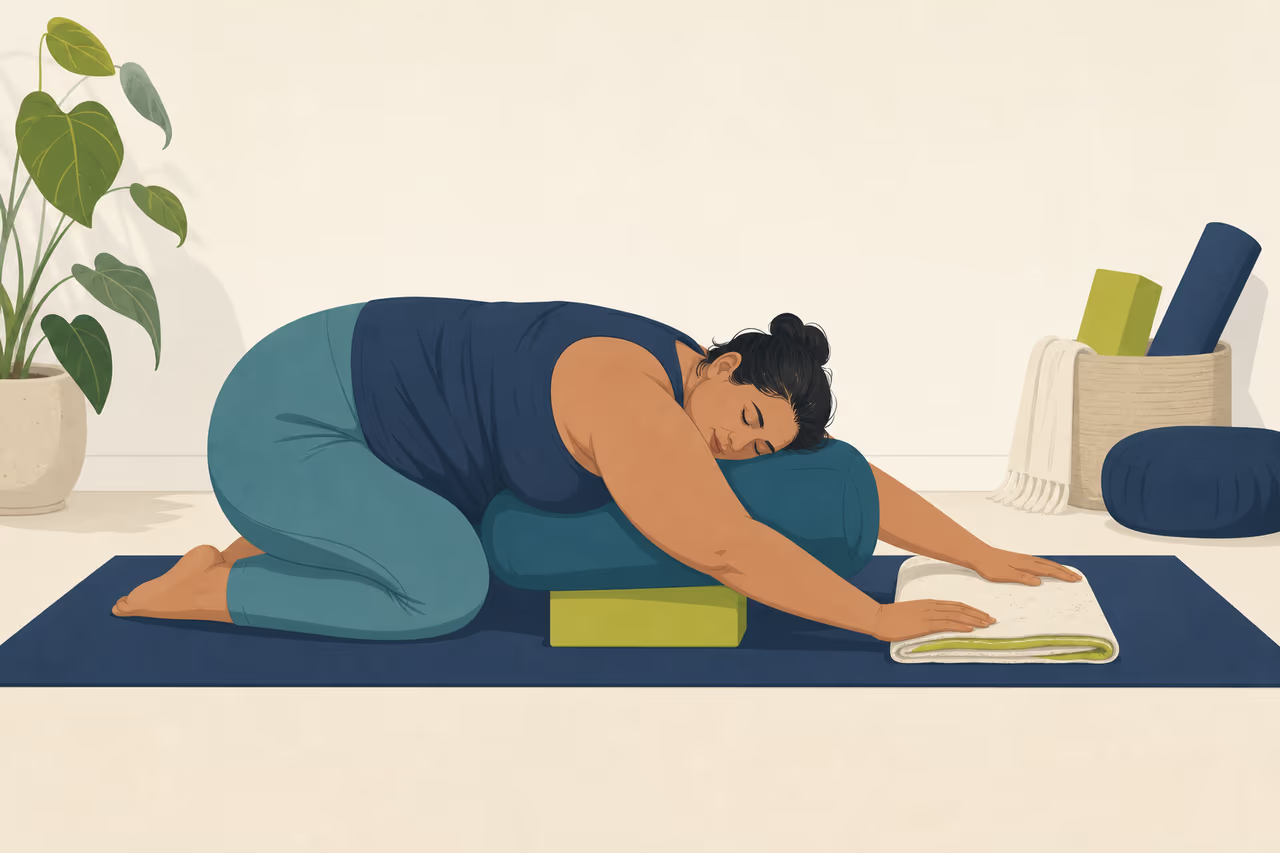
Props are structural aids, not signs of weakness. They bring the floor closer, provide stability, and support a sustainable practice. In an inclusive setting, blocks, straps, bolsters, and blankets are standard equipment.
You have the agency to use props even if a teacher does not mention them. A block supports your hands in a forward fold, and a strap helps maintain alignment in seated poses. If a studio lacks equipment or a teacher discourages props, consider whether that environment supports your long-term comfort and safety.
Communicating Your Needs to a Teacher
You do not need to justify your body or your needs to a teacher, but clear communication can set the stage for a positive experience. Before a class begins, you might approach the teacher and say, "I am looking for a practice that allows for modifications. Could you keep an eye out for me, or if there are specific ways to adjust [a common pose]?"
A teacher who is professional and experienced will appreciate this communication. If a teacher seems dismissive or suggests that you simply "try harder" to reach a standard shape, this is a clear indicator that the class may not be the right fit. You are not obligated to stay in a space that does not respect your physical boundaries.
Your Pre-Class Accessibility Checklist
Use this checklist to navigate your search and prepare for your first session.
- Check the studio website: Look for images that reflect diverse body types and ages.
- Email or call the studio: Ask, "Do you have props like blocks and straps available for all students?"
- Ask the teacher: "How do you approach modifications for different body sizes?"
- Assess the space: Confirm if the studio has enough room for you to move comfortably without feeling crowded by other students.
- Identify an exit strategy: Remember that you can always transition into a resting pose, such as Child’s Pose, if a specific movement does not feel right for your body.
Next Steps for Your Practice
Finding the right fit may require trial sessions or phone calls to different studios. It is normal if a space lacks the equipment or pedagogical approach that works for you.
Prime Tempr’s trainer and location profiles provide a centralized place to compare formats and locations. Use these tools to contact a business directly and confirm the accessibility details that matter to you. By taking these small, deliberate steps, you can move away from the frustration of "one-size-fits-all" yoga and toward a practice that honors your body.
For further exploration of how to adapt your practice, you can find an accessible class or find a yoga teacher who specializes in Accessible Yoga.
Sources
- Yoga: Effectiveness and Safety (opens in a new tab), National Center for Complementary and Integrative Health.
- Older Adult Activity: An Overview (opens in a new tab), Centers for Disease Control and Prevention.
Watch alongside this guide
Accessible yoga for every body
This class demonstrates chair and support options that make the article's accessibility principles easier to see in practice. Source: Vancouver Coastal Health. This optional video is context, not evidence or personal instruction.
The YouTube player stays unloaded until you choose to watch. Loading it connects to YouTube and may allow that service to process usage data.