How Yoga Class Levels Work: A Plain-Language Guide
Understand yoga class levels to choose the right session for your current physical state.
https://primetempr.com/blog/how-yoga-class-levels-work-a-plain-language-guide
Yoga class levels are guidelines, not strict gates. No universal governing body or standardized rating system exists, so studio definitions vary widely. Your current mobility, comfort with breathing practices, and willingness to modify matter more than the schedule's title.
Understanding these categories helps you avoid mismatched classes, reduce frustration, and find a session that fits your actual physical state, not an idealized goal.
Understanding the Spectrum of Yoga Class Levels
Yoga combines postures, breathing, and meditation. Because styles vary, a class's intensity depends heavily on the teacher, the room temperature, and the specific lineage being taught, rather than a single numerical label.
Standardized levels do not exist across the industry. One studio's gentle introduction might mirror another studio's intermediate flow. This lack of uniformity means you must look past the headline number and examine class descriptions, style names, and studio prerequisites before registering.
| Class Label | Typical Focus | Common Pitfall |
|---|---|---|
| Level 1 / Beginner | Foundational alignment, slower pacing, basic posture breakdown. | Assuming it is always gentle or restorative; it may introduce structural work rapidly. |
| Open / All Levels | Mixed experience levels, scalable postures, wider pacing. | Leaving beginners guessing while experienced practitioners move quickly. |
| Level 2 / Power / Advanced | Faster transitions, complex balance, higher physical demand. | Jumping in too early based purely on general athletic fitness. |
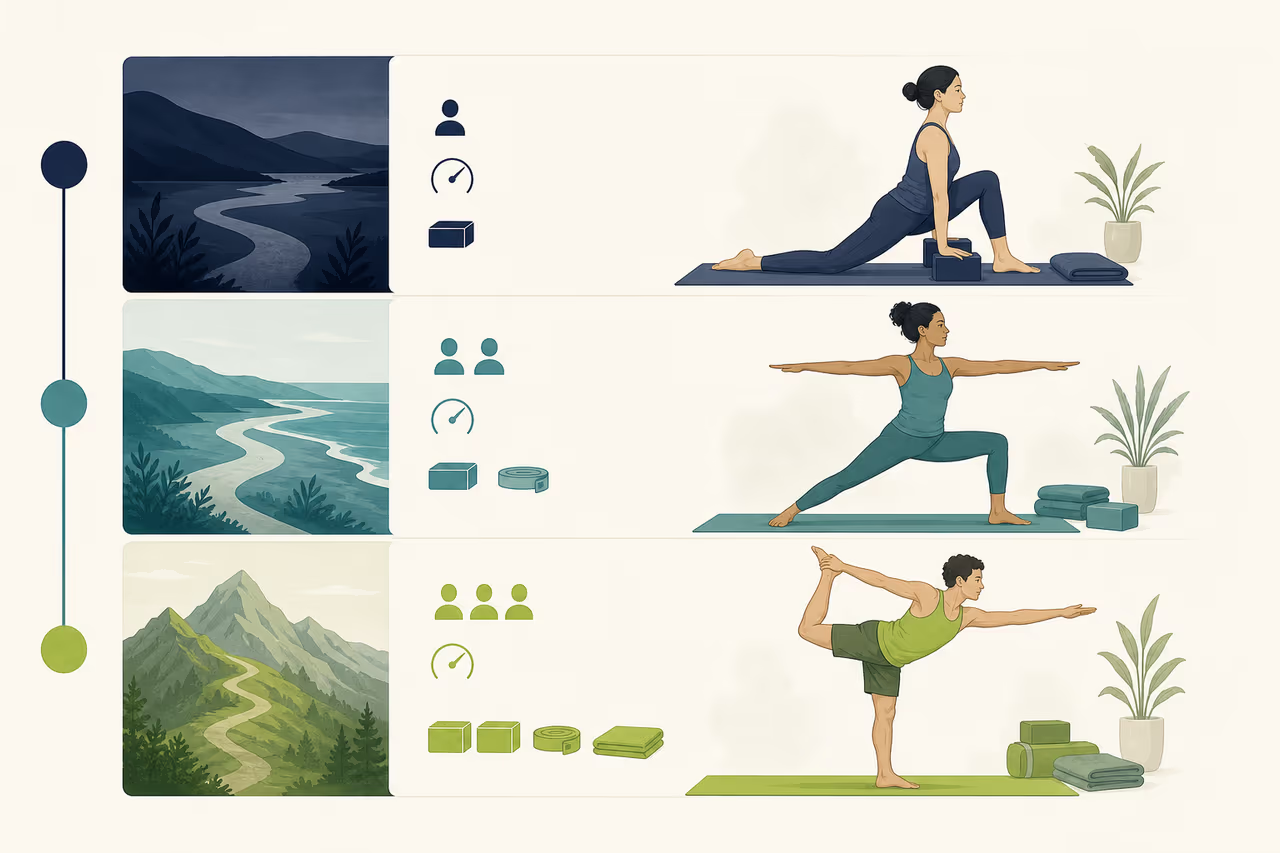
Level 1, Open, and Advanced: What the Labels Mean
Studio schedules typically group classes into three or four broad categories. Understanding what each term entails prevents common scheduling mistakes.
- Level 1 (Foundation): Designed to introduce basic postures, breathing techniques, and alignment cues. However, a Level 1 class is not automatically gentle. Some foundational classes require holding standing poses for extended periods, which can challenge muscle stamina even if the movements are simple.
- Open Level (All Levels): Built to accommodate both newer and experienced students. Teachers in these classes usually offer variations,such as using blocks or keeping knees down during push-ups,so you can scale the effort up or down. The trade-off is that the pacing can feel unpredictable if the room leans heavily toward experienced practitioners.
- Level 2 and Advanced: Geared toward practitioners comfortable with arm balances, inversions, and continuous transitions. These classes assume you already know your body's limits and how to modify without constant teacher supervision.
Why Yoga Style Matters More Than the Number
A class level label tells you very little if you do not also look at the underlying style of yoga. The physical demands of a practice are shaped primarily by its lineage and methodology:
- Restorative and Yin Yoga: Focus on deep relaxation, passive stretching, and longer holds using props. These are typically low-intensity regarding cardio, though deep holds can challenge joint comfort.
- Vinyasa and Ashtanga Yoga: Feature flowing sequences that link breath with movement. Even a Level 1 Vinyasa class can involve considerable cardiovascular exertion and repetitive weight-bearing on the wrists and shoulders.
- Power and Hot Yoga: Increase external temperature or physical speed, amplifying the cardiovascular and muscular load.
Any amount of physical activity is better than none, and all activity counts toward your overall movement goals. However, jumping straight into a hot power class without prior experience can lead to unnecessary strain.
How to Choose and What to Do If You Mismatch
If you attend a class that turns out to be mismatched, you do not need to push through discomfort. Any physical practice carries inherent risks, and injuries can occur if you ignore your body's signals.
Use this practical recovery path if a session feels too intense or too slow:
- Slow down: Rest in child’s pose or a comfortable seated position whenever you need to catch your breath.
- Use props liberally: Grab blocks, straps, or folded blankets to bridge the gap between your flexibility and the shape of the posture.
- Communicate with the teacher: Speak to the instructor briefly before or after class to let them know about any recent injuries or constraints.
To move from general education to a structured routine, you can explore local options. Prime Tempr helps a reader move from general education to guided practice by comparing trainer profiles, local studio listings and trainer-shared practice content in one place. You can Find yoga near you or Find a beginner-friendly trainer to start safely.
Yoga Class Level Selection Checklist
- Check if the studio description explicitly lists prerequisites or expects prior knowledge of basic poses.
- Verify the yoga style (such as Yin or Gentle versus Vinyasa or Ashtanga) before looking at the difficulty number.
- Confirm your own physical comfort level and any recent injuries that require modification.
- Choose a beginner-friendly trainer or studio listing to start your practice safely. You can also Browse yoga programmes to see structured options.
Sources
Watch alongside this guide
Yoga for complete beginners
Use this optional beginner session to see pacing, transitions, and rest choices in a complete home practice. Source: Yoga With Adriene. This optional video is context, not evidence or personal instruction.
The YouTube player stays unloaded until you choose to watch. Loading it connects to YouTube and may allow that service to process usage data.