How to Tell If a Yoga Class Is Truly Beginner Friendly
Learn how to decode studio schedules, spot misleading labels, and choose a beginner-friendly yoga class that matches your mobility and comfort level.
https://primetempr.com/blog/how-to-tell-if-a-yoga-class-is-truly-beginner-friendly
A truly beginner-friendly yoga class explicitly welcomes new practitioners, accommodates varying mobility levels with clear options, and prioritizes safe pacing over physical intensity. A beginner looking at studio schedules or online descriptions often cannot tell if a class is truly accessible or if it will throw them into an advanced pace without support. Because yoga combines postures, breathing, and meditation while styles vary widely, benefits should be described with uncertainty, and injuries can occur if a practice moves faster than your body is prepared for.
Understanding how to read class listings, recognize common marketing traps, and evaluate instructor guidance helps you step onto the mat with clarity rather than guesswork.
What Makes a Yoga Class Beginner Friendly?
Accessibility in yoga is not just about a slower pace; it is about instruction that respects individual differences in joint mobility, balance, and prior movement experience. Yoga styles vary significantly, ranging from vigorous, heated power sessions to restorative or foundational practices.
When a class is genuinely designed for beginners, the instructor focuses on foundational alignment and gives clear permission to rest or modify. Because any amount of physical activity is better than none and all activity counts, a well-run beginner class encourages you to build comfort at your own pace without feeling rushed to keep up with more experienced attendees.
Schedule Keywords and Description Clues
Studio schedules and online descriptions use specific terminology to signal who a class is built for. Knowing how to decode these terms helps you avoid accidental mismatches.
| Term on Schedule | Typical Meaning | What to Expect |
|---|---|---|
| Foundations / Basics | Introductory | Focus on fundamental postures, alignment, and prop use. Slower transitions. |
| Gentle Yoga | Restorative or low-intensity | Slower movements, often lower to the floor, emphasizing relaxation and mobility. |
| All Levels | Mixed experience | Can range from accessible to quite athletic depending on who attends and the teacher's style. |
| Vinyasa / Flow | Continuous movement | Moving dynamically from one posture to the next; can be fast-paced. |
When reading class descriptions, look for explicit mentions of foundational instruction, beginner support, or the use of props like blocks and straps. If a description emphasizes deep breathing alongside basic shapes rather than high-calorie burn or advanced arm balances, it is more likely to suit a newcomer.
Beginner Class Checklist: 4 Signs to Look For
Use this quick checklist when evaluating a local studio schedule or an online video library to gauge whether a session meets beginner needs:
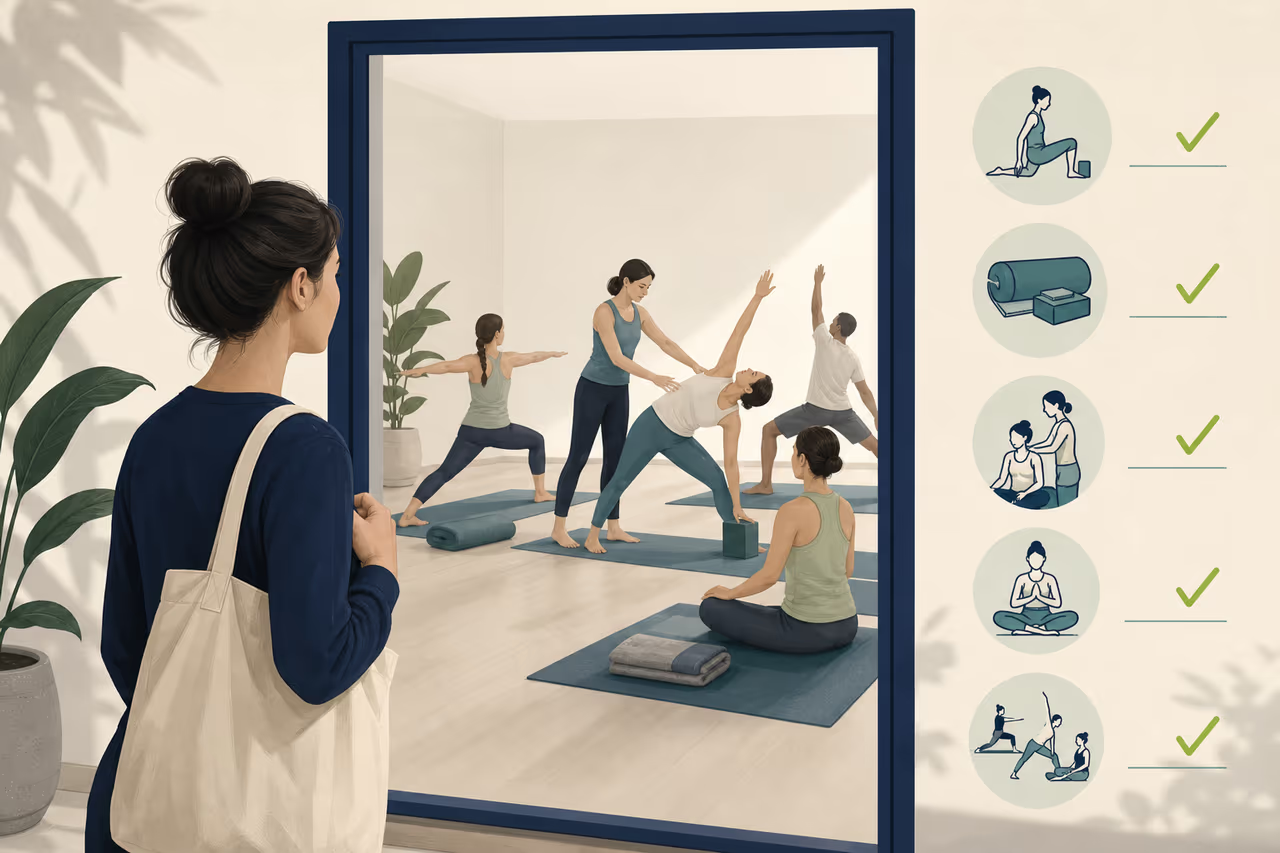
- Check class descriptions for explicit mentions of beginners, foundations, or slow pacing.
- Verify that the studio or platform encourages the use of props like blocks and straps to support different ranges of motion.
- Look for instructors who explicitly invite modifications throughout the session rather than demanding a single "perfect" shape.
- Ensure the session length and environment feel manageable for your current routine.
Red Flags: When a 'Beginner' Class Is Too Advanced
One of the most common pitfalls is assuming any class labeled "All Levels" is safe and welcoming for a brand-new practitioner. In many studios, an "All Levels" class defaults to an intermediate flow where instructors expect attendees to already know how to modify poses independently.
Other warning signs include descriptions that heavily feature terms like "sculpt," "power," "detox," or "sweat." While these styles have their place, they often sacrifice alignment detail for physical intensity. Conflating physical sweat or intense stretching with a successful yoga session can lead you to push past safe limits, increasing the risk of strain. If a class description lacks any mention of modifications or suggests that students must keep up with a rapid cadence, look elsewhere for your first session.
Managing Mismatches: The Recovery Path
Even with careful research, you may occasionally step into a class that moves too quickly or feels overwhelmingly complex. If a class turns out to be too advanced, scale back your range of motion, take resting poses like Child's Pose whenever needed, or speak briefly with the instructor before the next session. Introductory classes may sometimes feel slow if you are already athletic from other disciplines, but rushing into advanced classes increases injury risk. Yoga is a personal exploration of movement, breath, and awareness, and stepping back is a sign of practical self-regulation, not failure.
Your Next Step Into Practice
Moving from general education to a consistent, supportive practice involves finding environments that match your current needs. Prime Tempr helps a reader move from general education to guided practice by comparing trainer profiles, local studio listings, and trainer-shared practice content in one place. Explore Starting Yoga for foundational guidance, read Your First Yoga Class: What to Expect and What You Can Skip to prepare for day one, or find a beginner-friendly trainer who offers clear, accessible instruction tailored to your goals.
Sources
Watch alongside this guide
Yoga for complete beginners
Use this optional beginner session to see pacing, transitions, and rest choices in a complete home practice. Source: Yoga With Adriene. This optional video is context, not evidence or personal instruction.
The YouTube player stays unloaded until you choose to watch. Loading it connects to YouTube and may allow that service to process usage data.