How to Stay Active During Weddings, Festivals, and Travel
Learn to adapt your movement to busy schedules and changing environments without the pressure of perfection.
https://primetempr.com/blog/how-to-stay-active-during-weddings-festivals-and-travel
Movement during busy seasons is not about maintaining your peak routine. It is about finding the minimum viable practice that respects your current environment, safety, and social commitments. When your schedule is dictated by family events, weddings, or travel, the pressure to maintain a rigid exercise routine often leads to burnout or total abandonment of movement. Instead of viewing a missed session as a failure, you can treat flexibility as a sustainable strategy.
The reality of busy seasons
The struggle to stay active during high-intensity periods is common. Whether you are navigating a multigenerational household, working a desk job, or managing the logistics of travel, your capacity for movement will fluctuate. Success in these moments is defined by your ability to adapt rather than your ability to replicate your home routine. Activity can happen in many settings and can be adapted to ability, weather, and circumstance; any amount is better than none. By shifting your focus from intensity to consistency, you reduce the risk of abandoning movement entirely when life becomes demanding.
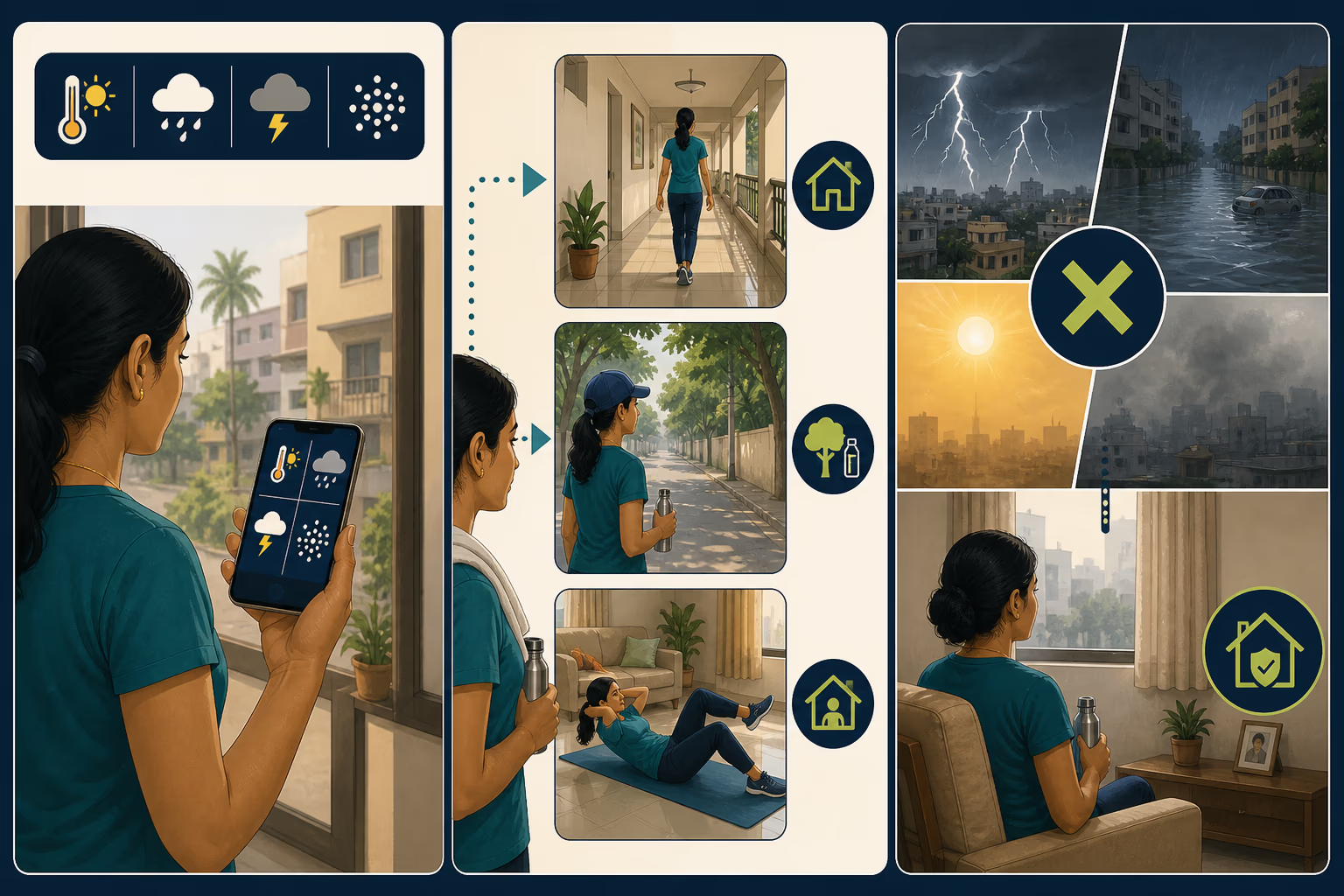
Safety first: check your environment
Before you plan any movement, especially when traveling or during seasonal shifts, assess your surroundings. Ignoring local weather or air quality warnings in favor of a workout is a common failure mode that can compromise your health. India's National Disaster Management Authority publishes current public-safety guidance for heat waves, cold waves, floods, lightning, and other seasonal hazards. Always check these official portals before heading outdoors.
If the air quality is poor or the heat is extreme, prioritize indoor alternatives or rest. For those navigating specific climates, you can find guidance on how to move safely during an Indian summer heat wave. Adapting to local weather might mean moving your practice indoors or choosing to skip outdoor activity entirely for safety.
The minimum viable practice
When you are short on time or energy, a 10-minute movement window is often more effective than a missed hour-long session. The goal is to lower the barrier to entry so that movement remains a part of your day rather than a source of stress.
If you find yourself in a hotel room or a busy family home, consider these approaches:
- The 10-minute reset: Use simple stretches or a brisk walk to maintain mobility.
- The non-negotiable block: Schedule 15 minutes of movement before family events begin. This ensures you prioritize your well-being before the day becomes unpredictable.
- Recovery path: If you miss a planned session, do not try to double up the next day. Simply reset by choosing a 5-minute movement window or a short walk.
Prioritizing social connection and rest during festivals is a valid choice, even if it means less time for formal exercise. Movement is a tool for your life, not a master you must serve.
Finding flexible support
Adapting to new environments can be difficult when you are used to a specific studio or trainer. Prime Tempr helps readers find nearby and online trainers whose schedules, spaces, and practice formats fit local climate and seasonal routines. Whether you are in a new city for a wedding or trying to maintain a routine at home during a festival, connecting with a trainer who understands your current constraints can provide the structure you need without the rigidity you want to avoid. You can find flexible local support through our directory.
The 'busy season' movement menu
Use this guide to maintain your rhythm during periods of high social or travel demand.
- Check conditions: Review local weather and air quality via official safety portals before planning any outdoor movement.
- Define your minimum: Identify a 10-minute movement window, such as basic stretching or a short walk, for high-intensity days.
- Schedule early: Treat movement as a non-negotiable 15-minute block before family events or travel commitments begin.
Remember that any amount of movement is better than none. By planning for flexibility, you ensure that your movement practice remains a sustainable part of your life, regardless of the season.
Follow-along reflection
Use the prompts below to review the idea in context, without turning it into a diagnosis or a fixed rule.
The 'busy season' movement menu
- Check local weather and air quality via official safety portals before planning outdoor movement.
- Identify a 10-minute 'minimum' movement window (e.g., stretching or a short walk) for high-intensity days.
- Schedule movement as a 'non-negotiable' 15-minute block before family events begin.
Trade-offs to keep in view
- Prioritizing social connection and rest during festivals may mean less time for formal exercise.
- Adapting to local weather might mean moving indoors or skipping outdoor activity entirely for safety.
If this approach does not fit
If a planned session is missed, reset by choosing a 5-minute movement window or a simple walk, prioritizing consistency over intensity.
Questions to carry forward
- How do I adjust my movement when my schedule is dictated by family events?
- How can I safely exercise when weather or air quality is poor?
- What is a 'minimum viable practice' for busy days?
- How do I find local support that fits my temporary location or schedule?
Watch alongside this guide
Just walk
This short walking overview is a visual reminder that useful activity can stay simple. Apply the article's local weather, air-quality and public-safety checks first.
The YouTube player stays unloaded until you choose to watch. Loading it connects to YouTube and may allow that service to process usage data.