How to Safely Restart Your Walking Routine After Extreme Heat
Resume your walking routine safely by recalibrating your intensity to current environmental conditions and your daily capacity.
https://primetempr.com/blog/how-to-safely-restart-your-walking-routine-after-extreme-hea
Returning to outdoor walking after a period of extreme heat is not about intensity or making up for lost time. It is about recalibrating your routine to current environmental safety and your actual daily capacity. When you have been sidelined by high temperatures, the pressure to jump back into your previous schedule can lead to overexertion. Instead, treat this transition as a necessary adaptation to your local environment.
check the conditions first
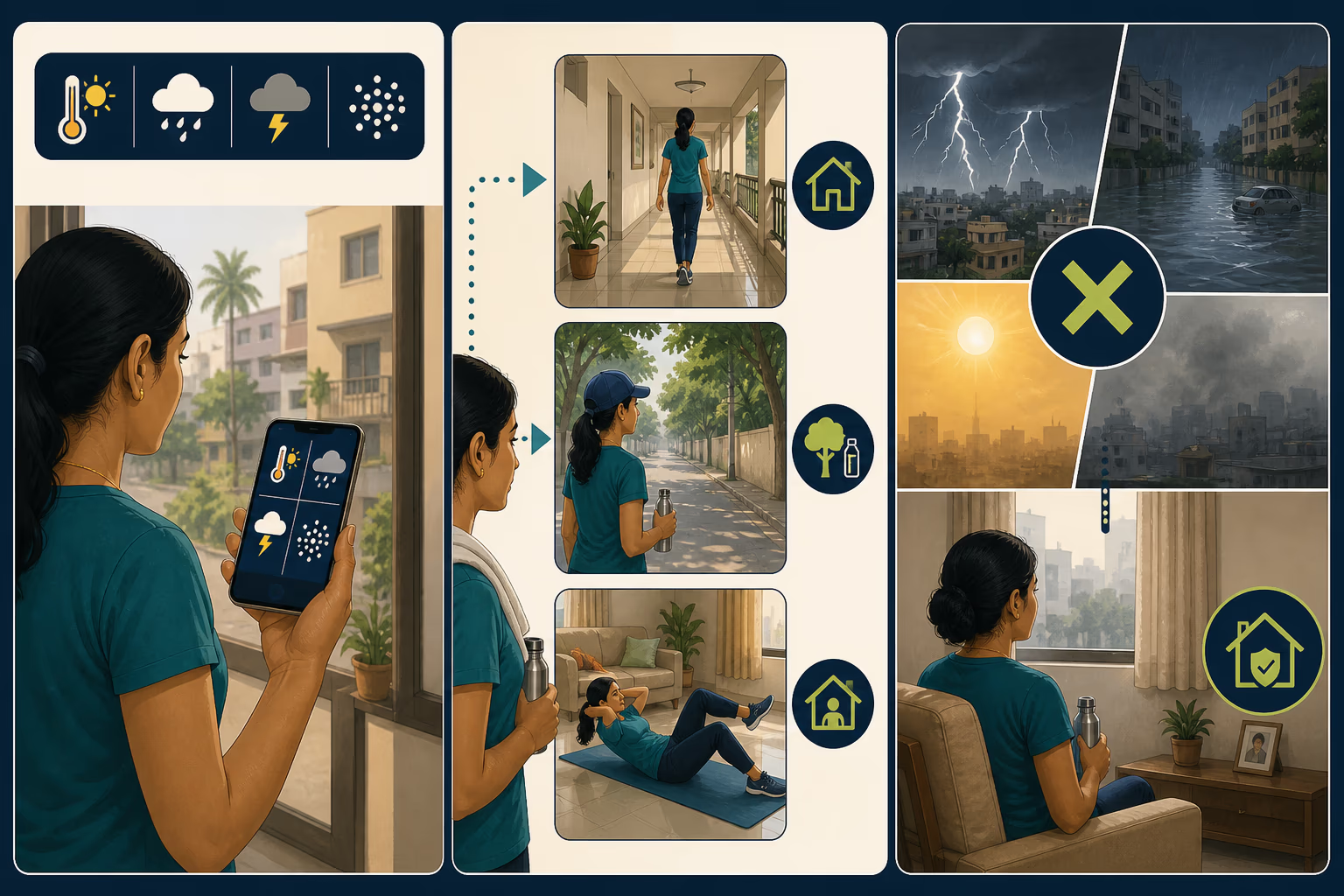
Before you step outside, your first filter must be the current environmental safety. Extreme heat does not just disappear when the sun goes down; it can linger in urban heat islands, and air quality often fluctuates during these periods.
India's National Disaster Management Authority publishes current public-safety guidance for heat waves, cold waves, floods, lightning and other seasonal hazards. You can consult the SACHET portal to see if the conditions in your specific area are safe for outdoor exertion. If the guidance suggests staying indoors, do not treat this as a failure of your discipline. It is a data-driven decision to protect your health.
If you find that outdoor conditions remain volatile, remember that physical activity can happen in many settings and can be adapted to ability, weather and circumstance. Any amount of movement is better than none, even if it does not look like your usual outdoor walk.
start with a minimum version
The most common failure mode when returning to exercise is attempting to resume at pre-heat-wave intensity immediately. Your body has likely deconditioned slightly, and your tolerance for heat may be lower than it was a few weeks ago.
Start with a minimum version of your routine. If you previously walked for forty minutes, commit to just ten minutes of light movement. This lower barrier to entry prevents the "all or nothing" mindset that often leads to burnout or injury. By keeping the session short, you allow your body to gauge its current response to the environment without the risk of heat exhaustion.
If you feel comfortable after ten minutes, do not feel obligated to extend the session. Consistency over the next week is more valuable for your long-term mobility than a single intense session that leaves you drained.
find flexible local support
One of the biggest challenges in maintaining a routine is the friction between your goals and your household or work schedule. If the heat forces you to avoid the middle of the day, but your work or family responsibilities make early morning or late evening walks impossible, you may feel stuck.
This is where external support becomes essential. Prime Tempr helps readers find nearby and online trainers whose schedules, spaces and practice formats fit local climate and seasonal routines. A trainer can help you design a "Plan B" that keeps you moving when the weather is unpredictable or your schedule is tight. Whether it is a short, guided yoga flow in your living room or a modified walking routine that fits into a smaller window of time, having a professional perspective helps you move away from the guilt of missing a "perfect" streak.
your 3-day return-to-movement plan
Use this simple framework to transition back to your routine without forcing a rigid structure that clashes with your life.
- Day 1: Check local safety guidance via SACHET and commit to just 10 minutes of light movement.
- Day 2: Assess your energy levels. If the air quality and heat index are safe, try a 15-minute walk at a conversational pace.
- Day 3: Evaluate your schedule. If outdoor walking is not feasible due to time constraints or weather, find a 10-minute indoor yoga flow or stretch.
Next Step: Visit /locations to find a local trainer who can help you build a weather-resilient routine.
managing the trade-offs
It is natural to feel a sense of loss when your routine is disrupted. However, prioritizing safety over consistency means your "streak" may break, but your long-term mobility remains intact. Choosing indoor alternatives,like stretching or bodyweight movements,may feel less satisfying than your usual outdoor walk, but it is a more sustainable approach during volatile weather.
If you find yourself struggling to stay motivated, remember that your health is not defined by a daily step count or a specific outdoor route. It is defined by your ability to adapt to the reality of your environment. When you stop viewing the break as a failure and start viewing it as a necessary adjustment, you remove the emotional weight that often prevents people from starting again.
If you are looking for more ways to adapt, read our guide on how to move safely during an Indian summer heat wave.
Watch alongside this guide
Just walk
This short walking overview is a visual reminder that useful activity can stay simple. Apply the article's local weather, air-quality and public-safety checks first.
The YouTube player stays unloaded until you choose to watch. Loading it connects to YouTube and may allow that service to process usage data.