How to Review a Trip and Make Your Next Travel Routine Easier
Reviewing a trip in five minutes locks in one portable practice, removes packing friction, and simplifies your next journey.
https://primetempr.com/blog/how-to-review-a-trip-and-make-your-next-travel-routine-easie
After returning from a trip, travellers often forget what worked or repeat the same packing and movement friction on the next journey. Reviewing a trip in five minutes, rather than conducting a massive debrief, lets you lock in one portable movement practice and streamline the next journey.
When you land back home, the temptation is either to ignore the trip entirely or construct an elaborate log of every missed workout. Both extremes miss the point. Travel exposes friction in your routine. If you do not capture those lessons quickly, you repeat them.
Why most travel routines fail to improve
Travellers often repeat packing and movement mistakes because they rely on memory rather than a structured check. When fatigue sets in after a journey, minor annoyances fade until the next departure, when they reappear with identical frustration.
Another common failure mode is treating a missed movement streak as a personal failure rather than useful trip data. Rigid streaks collapse the moment train schedules shift or luggage is heavy. Public transport delays, cramped seats, and changing hotel rooms alter daily availability.
It is also vital to separate ordinary travel stiffness from medical concerns. General movement guidance helps manage sedentary hours, but it remains distinct from medical care. If travel discomfort persists or sharp pain arises, consult a healthcare professional rather than attempting to stretch through it.
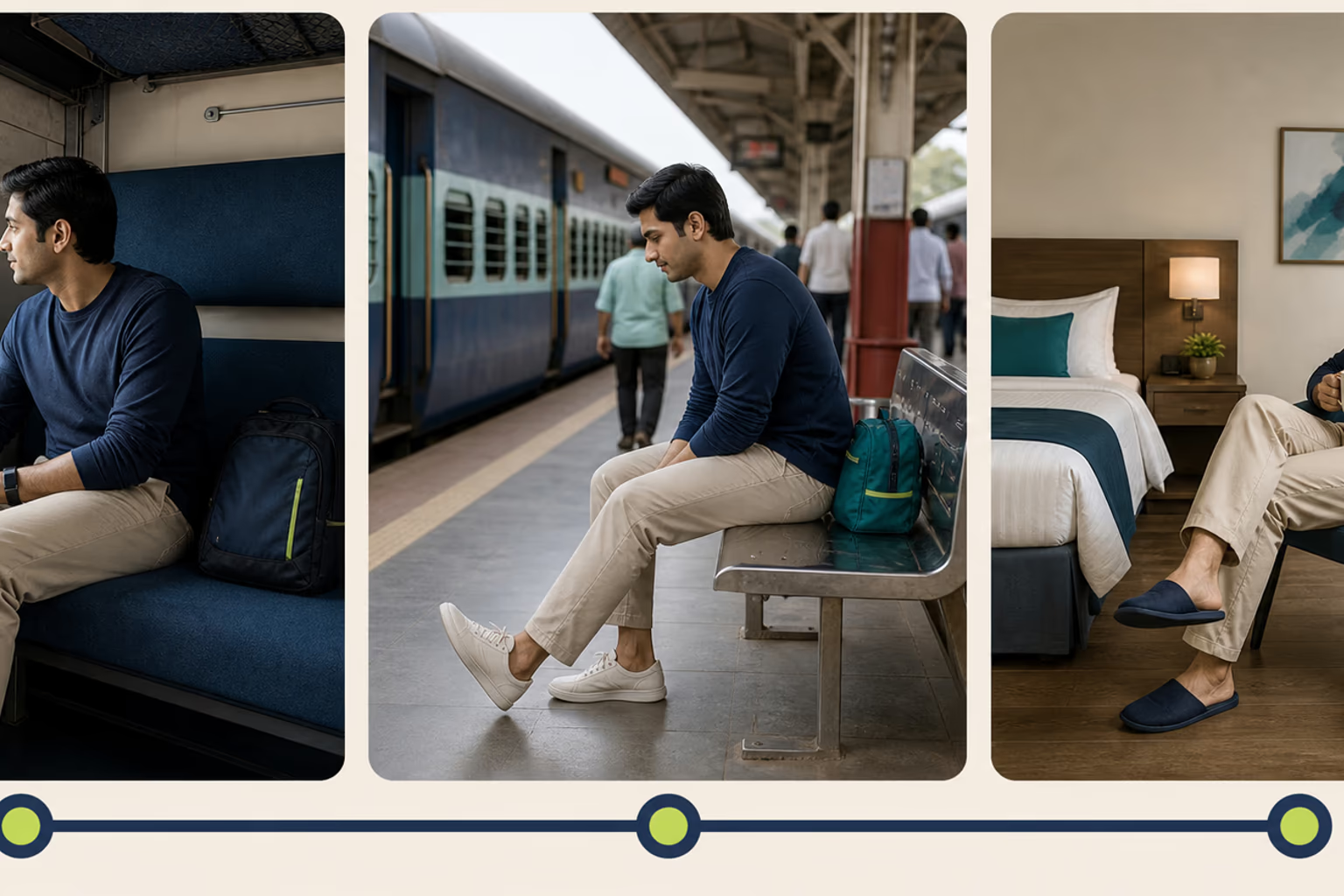
A simple five-minute post-trip review
A practical review does not require a blank journal or an hour of analysis. You can complete the process in five minutes by focusing on concrete physical friction points.
To conduct a minimum version of this review, ask yourself one question: what was the single heaviest luggage or sitting friction point, and how can you change one small packing or movement choice next time?
For a normal version, use the following structured reflection checklist to audit your physical comfort and packing decisions.
Five-Minute post-trip review checklist
- Identify the single most uncomfortable leg of travel, whether that involved prolonged sitting, carrying heavy bags, or standing in transit lines.
- Note whether packed props, resistance bands, or movement routines were actually used during the journey, or if they just added dead weight to your bag.
- Choose one portable practice or online trainer support to keep for next time, ensuring it requires minimal equipment and floor space.
- Decide what to leave out of the bag on the next trip to reduce physical load and decision fatigue.
This reflective approach acknowledges that any amount of physical activity is better than none, and all activity counts. Adults can work toward 150 to 300 weekly minutes of moderate aerobic activity and muscle strengthening on at least two days, even when schedules are irregular. However, forcing an ambitious training regimen into a travel day often backfires. Small, proportionate adjustments win over grand intentions.
Locking in portable practice for the next journey
Once you identify what actually worked, anchor it digitally so it travels with you. Prime Tempr helps travellers save online trainers and portable practices that can continue across cities while keeping general movement guidance separate from medical care.
A frequent traveller might save a ten-minute floor sequence that requires no mat, or a short mobility routine designed for hotel rooms. Instead of searching for new content in every city, you pull up a saved resource.
Reviewing your travel habits involves practical trade-offs. A quick five-minute review misses minor inconveniences, but it prevents review fatigue so you actually stick with the habit. Similarly, saving online practice support requires digital access and discipline while away from home.
By keeping your review short, realistic, and focused on single adjustments, you remove friction from future departures and maintain consistency across cities.
For more ways to maintain consistency on the road, explore Movement for Commutes and Travel or Find travel-friendly practice support.
Follow-along reflection
Use the prompts below to review the idea in context, without turning it into a diagnosis or a fixed rule.
Five-Minute post-trip review checklist
- Identify the single most uncomfortable leg of travel (sitting, carrying, or waiting).
- Note whether packed props or movement routines were actually used.
- Choose one portable practice or online trainer support to keep for next time.
- Decide what to leave out of the bag on the next trip.
Trade-offs to keep in view
- A quick five-minute review misses minor inconveniences but prevents review fatigue.
- Saving online practice support requires digital access and discipline while away.
If this approach does not fit
If your post-trip review feels overwhelming, drop down to a single question: what was the single heaviest luggage or sitting friction point, and how can you change one small packing or movement choice next time?
Questions to carry forward
- What actually went wrong with movement or packing during the last trip?
- How do I separate realistic adjustments from over-ambitious fitness goals?
- Which portable practice or online trainer support is worth saving for the next trip?
- How can I turn a quick trip debrief into an easier routine before my next departure?
Sources
Watch alongside this guide
Just walk
This American Heart Association overview supports the article's practical focus on ordinary walking. It is context, not a personalized travel or medical plan.
The YouTube player stays unloaded until you choose to watch. Loading it connects to YouTube and may allow that service to process usage data.